Text and photos by Ante Hamersmit

August sometimes feels like an in-between time – between late summer and autumn, between building up and withdrawing. This month at my apiary was also marked by subtle nuances: no major drama, but plenty of small insights.
Two topics particularly occupied me: a quality test that gave me new perspectives on honey – and a new method of treating Varroa that I tried for the first time.
Not all honey is the same. I knew that – and yet I was surprised by how big the differences are when you assess it not by colour or taste, but by enzyme activity.
I worked with the AMP laboratory and carried out what is known as the GOX test. It measures the activity of glucose oxidase – an enzyme that bees add to nectar, which has an antibacterial effect and is said to be a good indicator of how “alive” the honey is.
The test is simple:
My results?
All my honeys performed exceptionally well – deep blue strips and strong enzyme activity. I’m sure that’s because I don’t use mass-flowering crops, if anything I harvest only very small amounts, and I leave the bees plenty of time to themselves.
The comparison with shop-bought honeys – from cheap to very expensive – was sobering: many had significantly lower values. The strange thing was that even a honey that had previously tested high for GOX was down to budget-honey levels two years after bottling. Apparently, time is a decisive factor in GOX breakdown.
A self-test was also interesting: I pressed honey from the same comb once and extracted it by centrifuging another time, and left it in the comb on a third occasion. I had all three tested in the laboratory, with a clear result: the same high value. So processing alone does not seem to have an immediate effect.
My provisional conclusion: I know what is in my honey. But what I haven’t found out is even more important: Is GOX really THE indicator of good honey? What has a positive effect on the GOX value? What prevents it from breaking down? So does honey with high enzyme quality have an expiry date after all?
We’re currently exploring whether to set up a citizen science study. Anyone who would like to take part can add their name to this document. You can find the video about the test on YouTube.
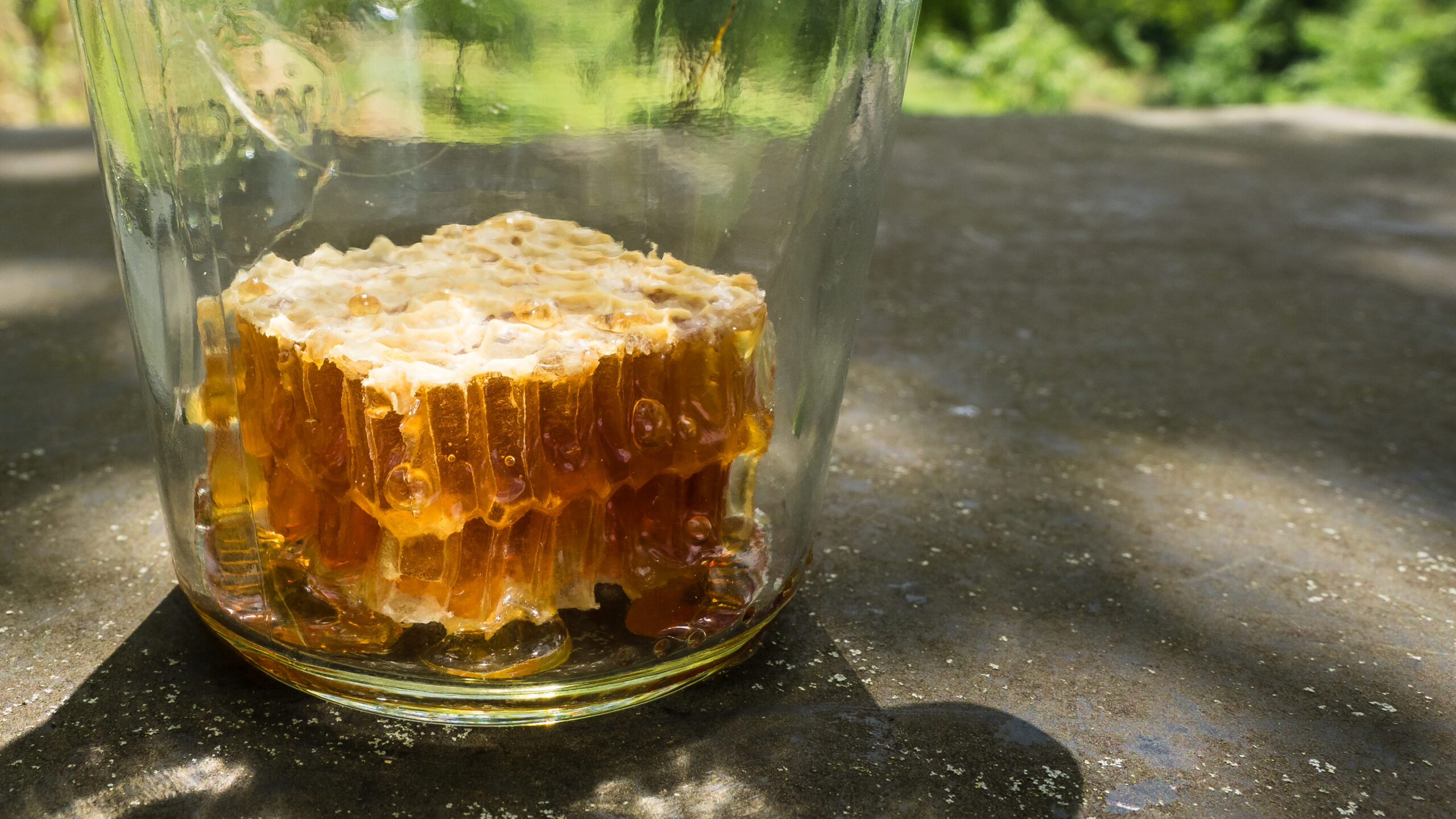 Taking samples of comb honey for the GOX test
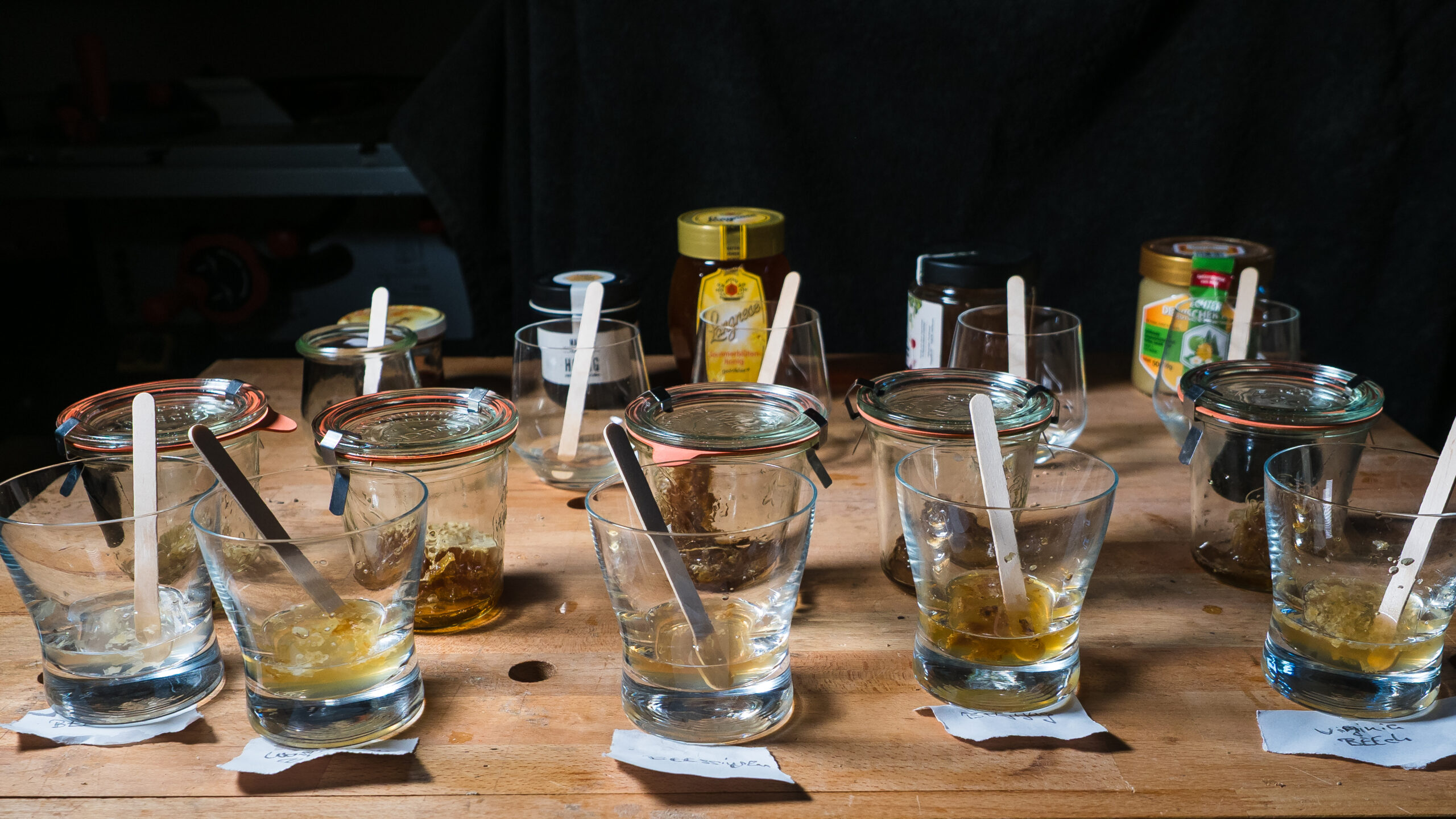
GOX rapid test setup
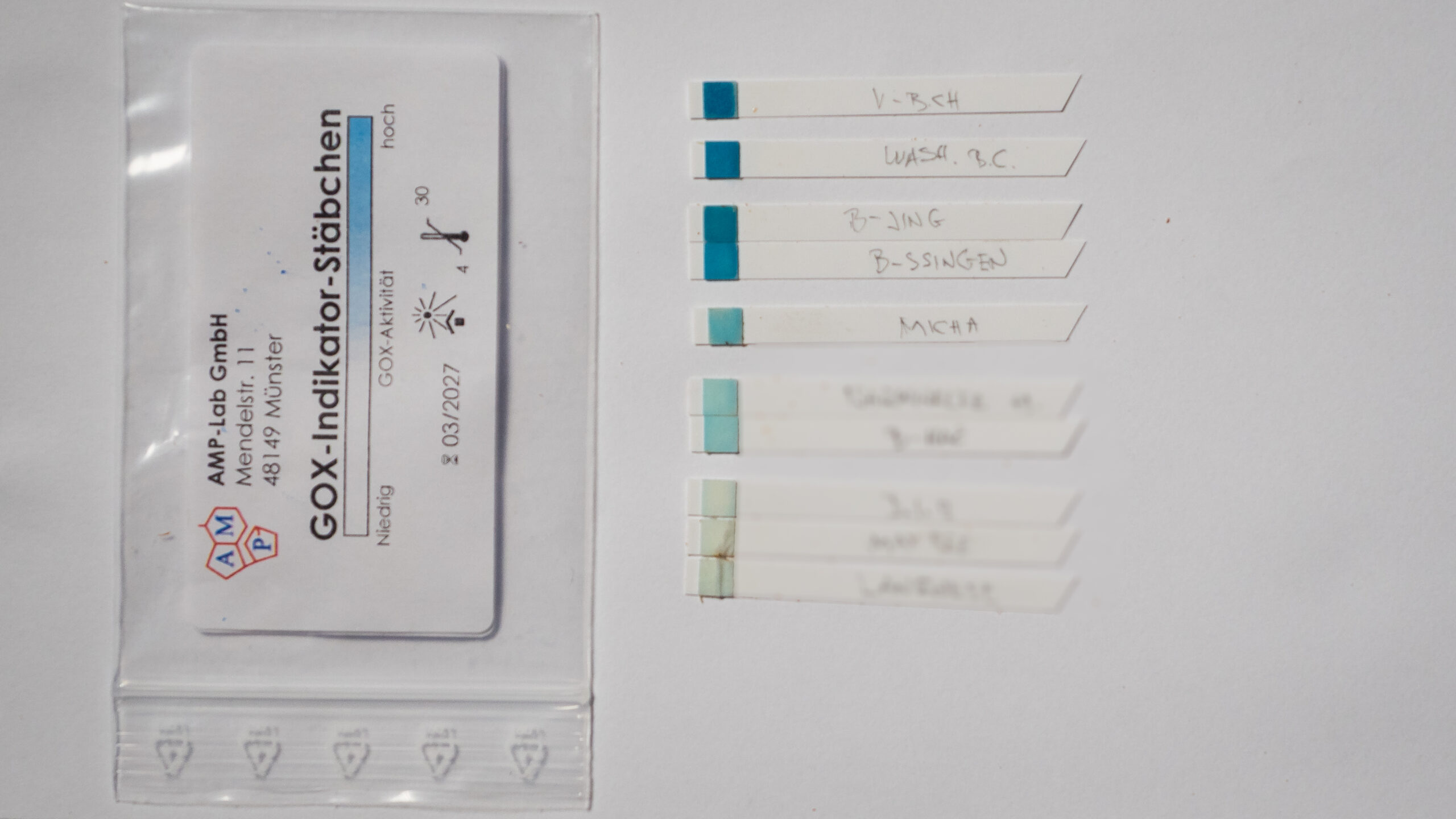
Result of the GOX test strips
The Varroa mite made an appearance again this year – what a surprise. I had to take action, particularly in my single-box hives, because the ladies didn’t swarm naturally this year. I wanted to act, but still didn’t want to resort to conventional formic acid treatment. Caging the queen didn’t go to plan, so it was too late for a trapping comb or another attempt at caging. I decided to try an alternative I had never used before: Calistrip® Biox – oxalic acid strips for long-term treatment.
At around €10 per colony, it isn’t exactly cheap, but the manufacturer’s claims made it worth the cost for me:
Sounds too good to be true. I’ll check the results later – but I’m hopeful and will report back in my next post.
The season is drawing to a close, but things aren’t quiet yet: our basket-weaving course in southern Germany starts again at the end of September – and I’m really looking forward to working together, sharing ideas and enjoying the scent of fresh rye straw.
If you’d still like to join us: there are still places available on my website. And of course, anyone who just wants to drop by is very welcome too.
See you soon,
Your Ante
YouTube: https://www.youtube.com/@AntesGoldenGirls
Instagram: https://www.instagram.com/antes.golden.girls/
TikTok: https://www.tiktok.com/@antes.golden.girls
Website: https://antes-golden-girls.com
Subscribe to our newsletter here so you don’t miss any new blog posts.
Beekeeping Calendar 2025 – May: Spring awakening in the hive: pollen, brood and the first challenges
Beekeeping Calendar 2025 – April: First inspection of the bees
Beekeeping Calendar 2025 – March: Too many bees? Too much honey?
Beekeeping Calendar 2025 – January: The end and the beginning
January – February: Looking back and planning for the new beekeeping season
March: Preparing for the new beekeeping season and ensuring an adequate food supply
July: Never treat for Varroa without first measuring the infestation
August: How do location and conditions affect the health of bee colonies in midsummer?
Text and photos by Ante Hamersmit Ante Hamersmit has a special way of keeping bees. A log hive resembles a tree trunk...
Text and photos by Ante HamersmitAnte Hamersmit has a special way of ...
Text and photos by Ante HamersmitAnte Hamersmit has a distinctive way...
Important information
Important information: The original texts are published in German. The French, Italian and English versions are translated automatically and checked where possible. Please report any errors to bee@freethebees.ch.