Wild honey bee colonies have become rare in Europe and, at the same time, remain surprisingly understudied. While millions of honey bees are kept in beekeeping, we know little about how many colonies still live in nature independently of humans today—and how well they survive there. There is also very little historical data on the development and decline of wild honey bees and their populations.
Research and monitoring are therefore essential foundations for effectively protecting the honey bee as a wild animal.
There are currently no known stable, self-sustaining populations of wild honey bees in Switzerland. Records of free-living honey bees concern individual free-living honey bee colonies. Without such a population, natural selection has no basis, and the species’ capacity to adapt to diseases, parasites and environmental changes is increasingly lost. Breeding selection takes the place of natural selection, with a focus on breeding criteria (honey yield, “gentleness”, reduced swarming) that can be detrimental to the honey bee’s survival in the wild.
Despite this situation, the honey bee as a wild animal has no legal protection. In autumn 2025, its status in the EU-27 was classified as “Endangered” following a reassessment of the International Union for Conservation of Nature (IUCN) Red List. At the same time, studies show that survival rates for free-living bee colonies are particularly low in Central Europe: in Switzerland and Germany, only around 10–13% of free-living bee colonies survive each year, while significantly higher survival rates, in some cases >30%, have been observed in other European countries.
Historically and culturally, the honey bee has been viewed almost exclusively as a farm animal, while its importance as a wild animal has largely been overlooked. As a result, the wild honey bee has almost disappeared from Central Europe—largely unnoticed and without sufficient knowledge of its ecological role in the forest ecosystem, its original habitat.
A key factor in this development is the loss of suitable nesting sites. In nature, honey bees nest predominantly in tree cavities (decay cavities). Intensive forest use over the past two centuries has greatly reduced the availability of these structures. This affects not only honey bees, but also numerous other animal species that specialise in tree cavities.
The honey bee is also affected by the increasing impoverishment of the landscape. Although it is considered a generalist among bees, it depends on abundant and continuous supplies of flowers throughout the entire growing season. The decline of structurally diverse habitats and environmental toxins threaten bees and the insect world as a whole. The environmental toxins most often cited are pesticides (fungicides, insecticides and herbicides), used mainly in agriculture. Many others, such as pharmaceutical residues in water, microplastics and the so-called forever chemicals PFAS, etc., have been little studied and remain poorly recognised by the public.
Data collected by FreeTheBees since 2021 confirm the presence of free-living bee colonies in Switzerland, in surprisingly high numbers. These colonies must undoubtedly be protected and supported if the species is to be preserved in the long term. FreeTheBees is establishing the necessary scientific foundations and, through large-scale projects, promoting natural habitat—for example, by creating tree cavities as key nesting sites and enhancing plant species diversity as a food source.
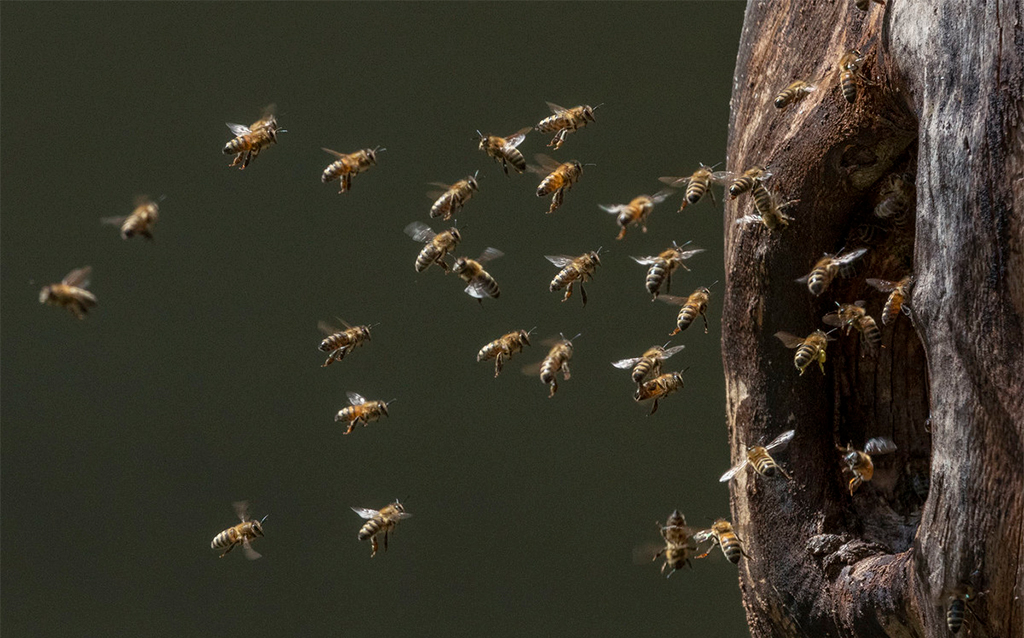
FreeTheBees’ tree cavity project supports the increasingly rare natural habitat of honey bees
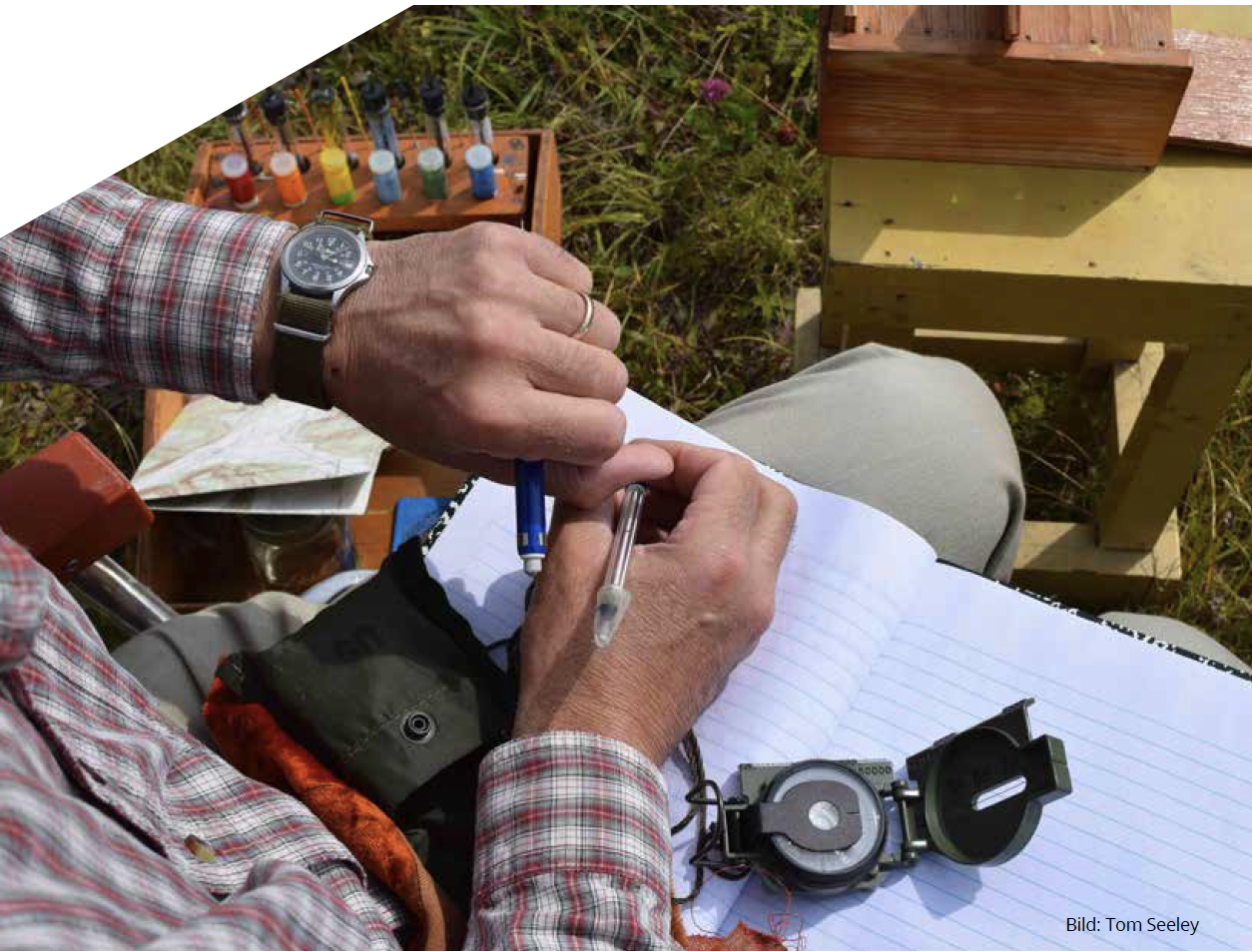
Scientific projects collect and analyse data on wild honey bees.
Awareness and knowledge are the basis for change. This applies to professionals in beekeeping, forestry,…

There is no such thing as THE science. FreeTheBees is therefore transparent about the scientific…
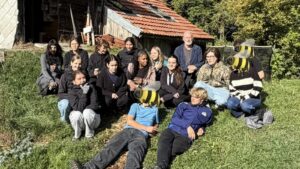
FTB Evidence DossierOn 9 October, a class from Collège du Sud came on a school trip to our site in Vaulruz, right among the bees. The stu...
In our conference series “Bees Without Borders”, renowned bee scientist and breeder Dr. Ralph Büchler showed on 28 Oc...
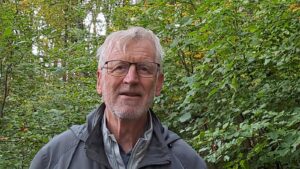
“I observe how nature works” For over 15 years, Heinz Weder has been observing free-living honey bee colonies. He has...
Important information
Important information: The original texts are published in German. The French, Italian and English versions are translated automatically and checked where possible. Please report any errors to bee@freethebees.ch.