Tree beekeeping is a centuries-old form of forest beekeeping—and at the same time one of the most original ways of keeping honey bees. In the Middle Ages, tree habitats were deliberately created for honey bees, long before modern beehives existed.
FreeTheBees revived this traditional craft in 2014 and brought it into the present—as a bridge between historical practice, nature conservation and bee-friendly beekeeping.
Tree beekeeping refers to keeping honey bees in artificially created cavities in living trees.
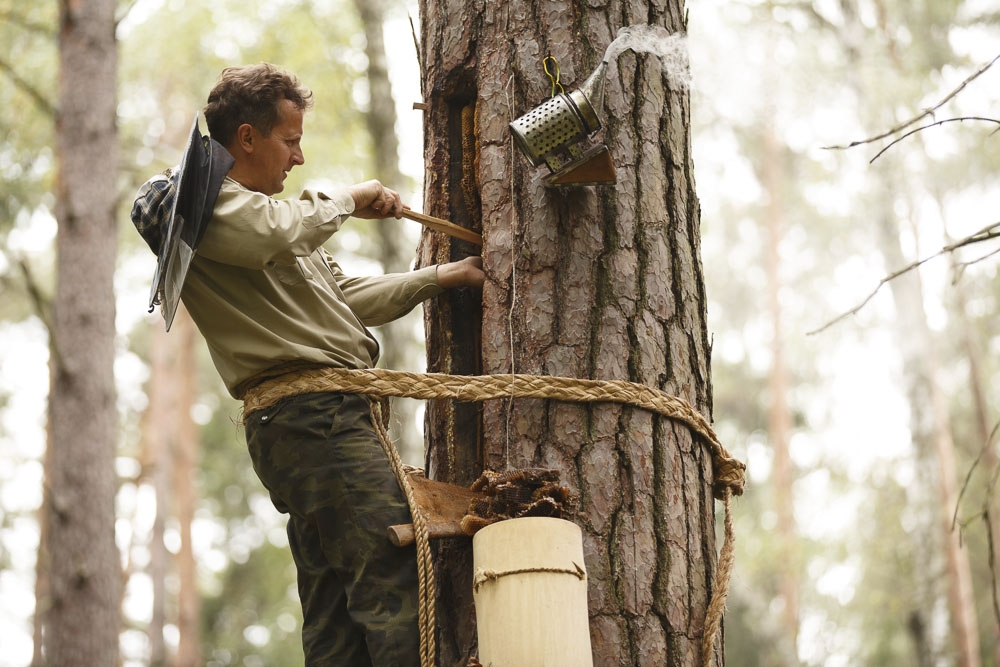
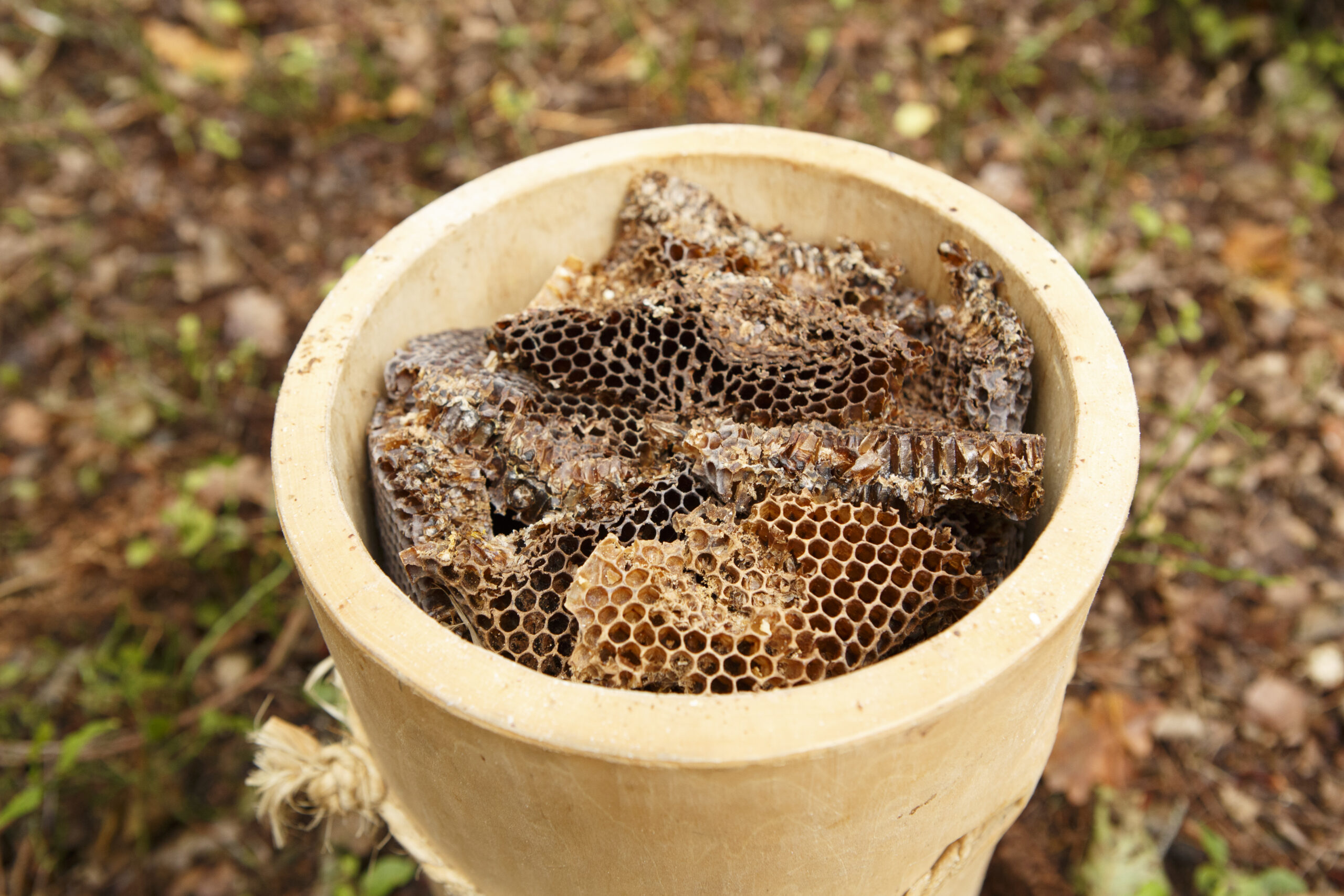
Master tree beekeeper Andrzej Pazura tends a honey bee colony in a Zeidler tree.
While people in the Stone Age—as well as Indigenous peoples today—collected honey from wild bees, tree beekeeping was a distinct occupation in the Middle Ages. The tree beekeeper (or Zeidler) collected honey from wild, semi-wild or partially domesticated bee colonies in the forest—not from wooden hives or woven baskets, as later beekeepers did.
Instead:
• old, strong trees were selected
• cavities were carved into the trunks at a height of about six metres
• a board was fitted over the entrance
• a flight hole was made
Whether such a “hive” was colonised depended entirely on the natural environment—and varied from year to year. The trees were often topped to prevent wind damage.
Traditional tree-bee trees were old, strong trees. In the Urals, pines are still used today, often when they are already 130 to 200 years old. The hive is carved only once the tree has reached a sufficient diameter. This shows how long-term the thinking behind tree beekeeping was: it brought together beekeeping, forest use and responsibility to future generations.
The word derives from the Latin excidere (“to cut out”) and developed from the Old German “zeideln”—“to cut honey”.
The word “cut” was used because the entire honeycomb was removed at harvest. Unlike today, the survival of the colony was not the main concern. Honey and wax could be processed straight away.
In the sugar-free and “dark” Middle Ages, honey and wax were of great economic importance. Honey was the most important sweetener. Wax was especially needed by churches and monasteries for candles, and was also widely used as sealing wax. With the discovery of America, the availability of cane sugar and, later, sugar beet, tree beekeeping gradually lost its economic importance.
Structurally diverse forests with old trees were essential for tree beekeeping. Mixed forests with clearings and wetlands were ideal. There, honey bees found suitable tree cavities and a rich supply throughout the year of flowering plants, shrubs and trees that provided nectar and pollen—the actual “tree beekeeper’s forage grounds”.
Important centres included:
• the Fichtelgebirge mountains
• the Nuremberg Imperial Forest
• the area around what is now Berlin (especially the then-forested Grunewald)
• In Bavaria, forest beekeeping is documented as early as 959 in the area around Grabenstätt.
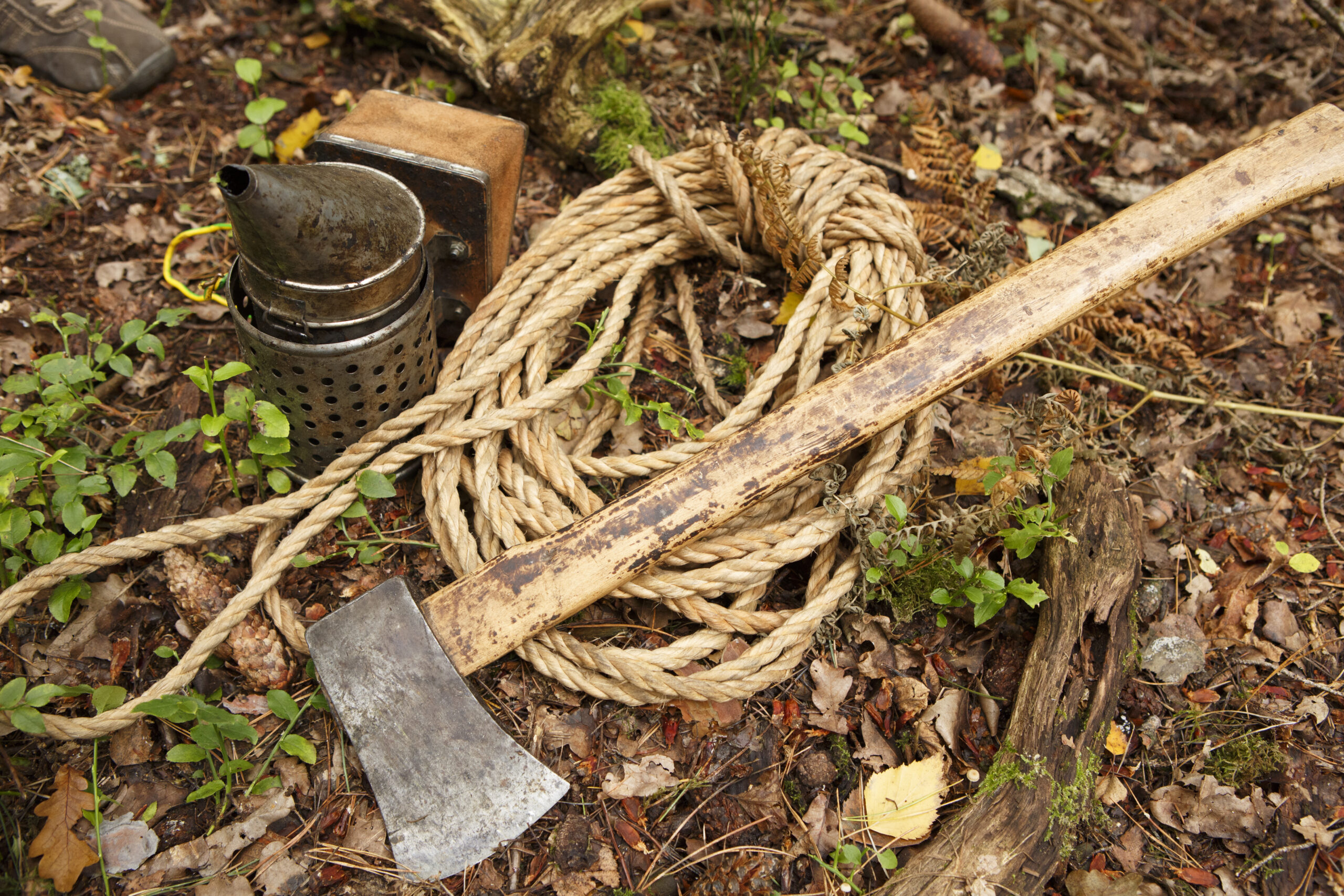
The tree beekeeper was closely connected not only to the bees but to the entire forest ecosystem. The lime tree played a special role: it was an important forage plant and also provided material for tools. Climbing ropes were woven from lime-tree bast; knives for cutting honeycomb and containers for the combs were made from lime wood.
The Nuremberg Imperial Forest was known as the “Bee Garden of the Holy Roman Empire”. The honey produced there was, among other things, the basis for the famous Nuremberg gingerbread. Buildings such as the Tree Beekeeper’s Castle in Feucht still bear witness to this tradition.
The decline began gradually, from west to east. One decisive factor was the import of cane sugar. Although it remained expensive and reserved for the wealthy until the 17th century, the cultivation of sugar beet in the 19th century fundamentally changed the economic situation.
In regions such as Lusatia, the Baltic states and Russia, forest beekeeping remained a significant economic activity until the 19th century. Today, it has no economic significance in Central Europe.
However, nature conservation initiatives are making occasional attempts to establish bee colonies in forests and revive tree beekeeping.
Interestingly, tree beekeeping has survived to this day in the Shulgan-Tash Nature Reserve in the southern Urals.
There, the Bashkirs passed the technique down from generation to generation, from the Middle Ages to the present day.
As part of a WWF project funded by the Swiss Agency for Development and Cooperation, Dr Hartmut Jungius and Dr Przemysław (Przemek) Nawrocki encountered this living tradition. They decided to bring the craft back to Poland. More than 150 tree-bee cavities in living trees, as well as numerous log hives, were subsequently created in central Poland.
Experience in Poland shows that today tree beekeeping is more than the preservation of customs. It creates artificial tree cavities, supports cavity-dwelling communities and makes it possible to experience the honey bee once again as a forest animal. In both Poland and the Urals, only some of the hives are occupied by honey bees; unoccupied cavities can be used by other species.
Polish national parks are now proud of this revival. Dr Przemysław Nawrocki—a member of the FreeTheBees Scientific Advisory Board—keeps records for some of the tree-bee cavities in use.
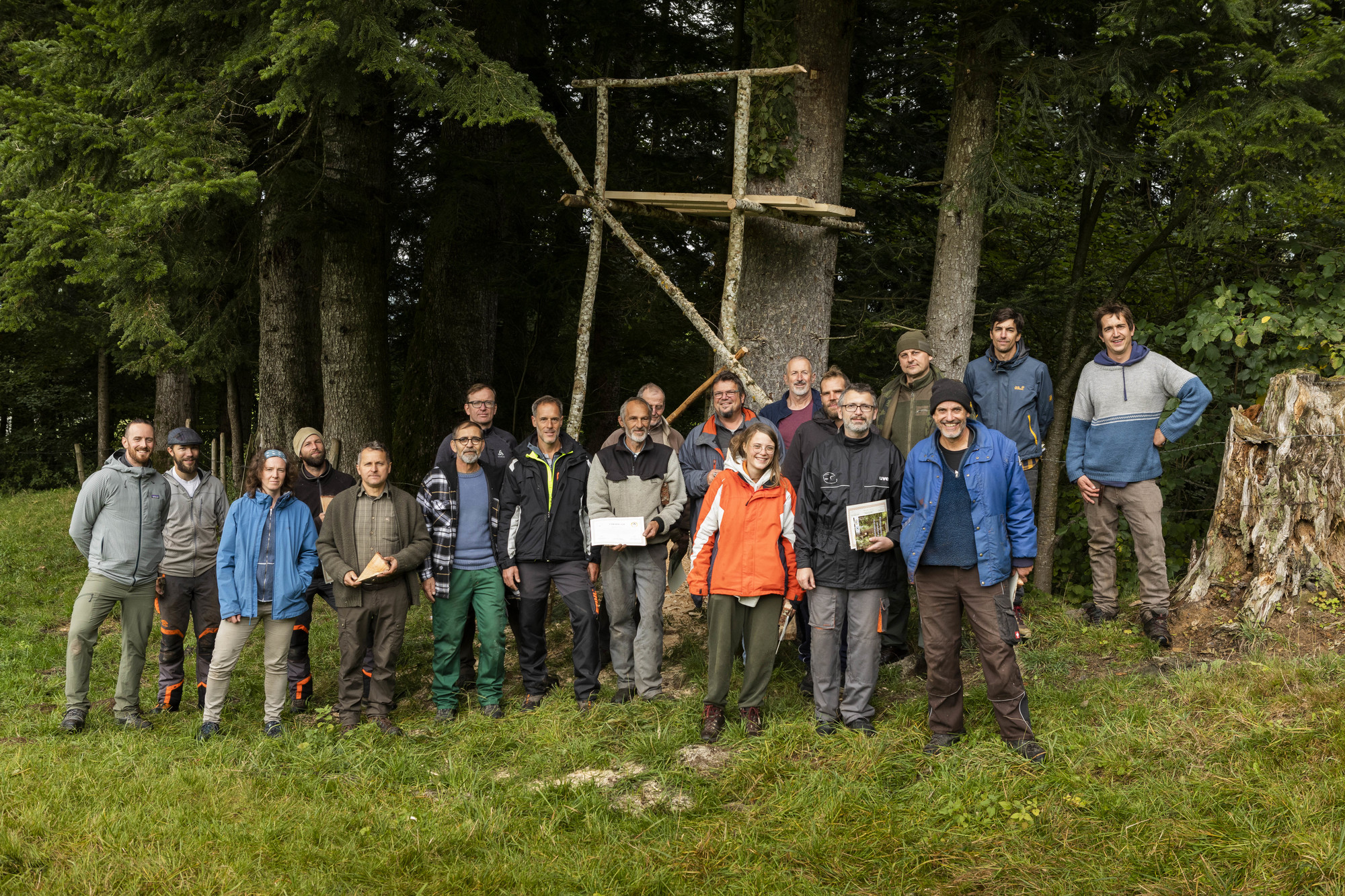
FreeTheBees began reintroducing tree beekeeping in Switzerland in 2014. During a tree beekeeping course attended by participants from around the world, the first tree-bee cavities were carved in Kriens (LU), and aspiring master tree beekeepers were trained.
Since then, numerous courses have been held in Switzerland, Germany, Belgium, England and other European countries.
The tree beekeeping movement continues to grow and inspires nature-minded beekeepers far beyond Europe—even as far as California.
FreeTheBees brought the tradition from Poland back to Switzerland and spread it from here. In doing so, we:
• preserve the tradition as faithfully as possible
• experiment with the methods
• develop them further
• adapt them to today’s conditions
Modern tree-bee cavities increasingly take natural tree cavities as their model. The aim is to create habitat not only for honey bees, but for entire communities of species.
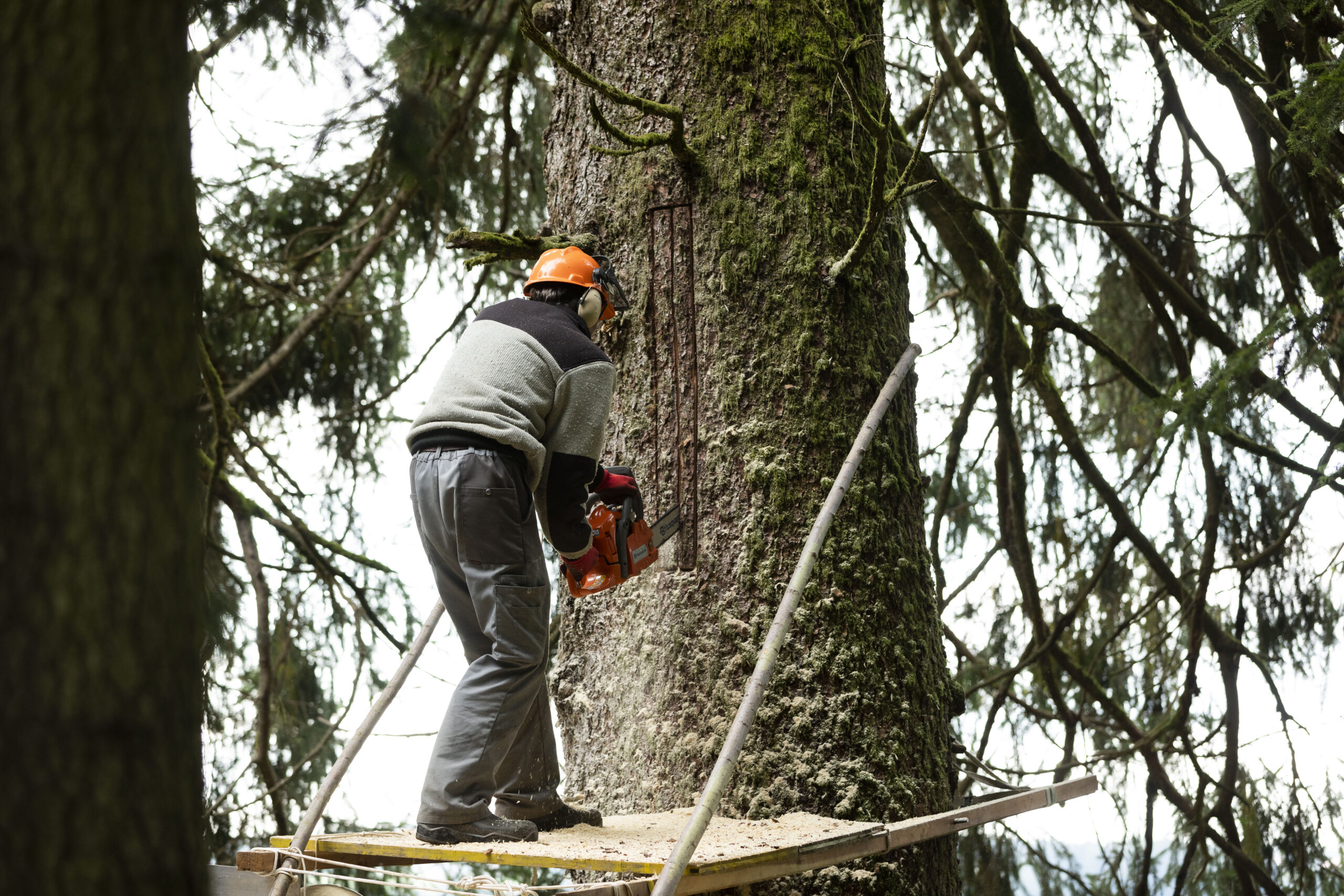
Tree care specialist Benedikt Arnold shows how FreeTheBees creates artificial tree cavities: vital refuges for wild honey bees and many other species, which are urgently needed in our Swiss forests.
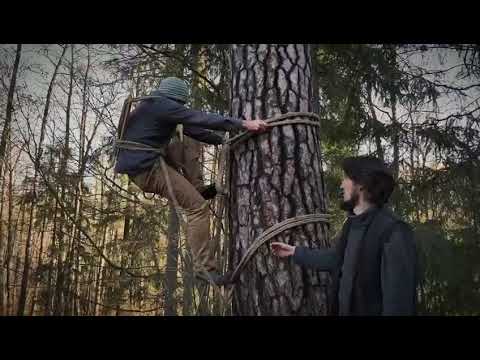
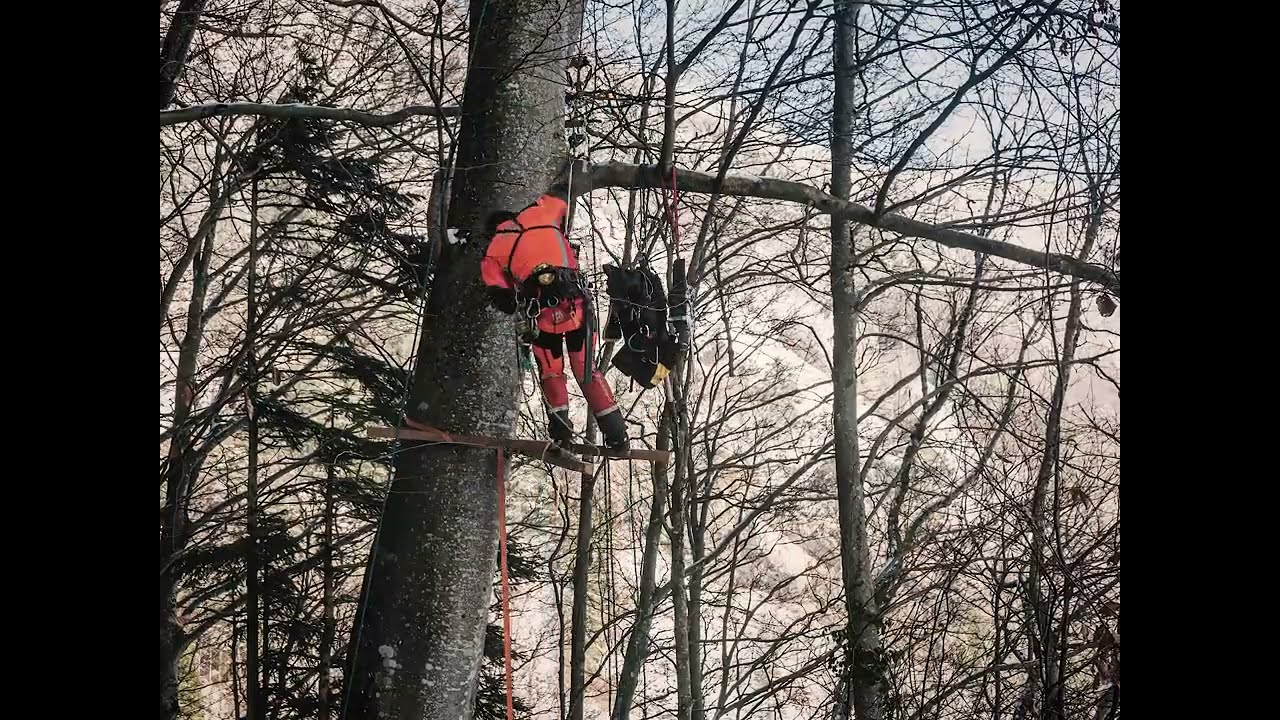
Benedikt Arnold practises the traditional Lezivo climbing technique on a pine tree-bee cavity in Poland. A medieval craft that FreeTheBees has been bringing back from Poland to Switzerland since 2014.
Tree beekeeping is the most natural form of beekeeping. It is more important than ever today.
Raising awareness
Tree beekeeping offers a mirror of our own beekeeping practices:
Creating urgently needed tree cavities
Tree cavities have become rare as a result of yield-oriented forestry. They provide important habitat for:
Benefits for the colony
A tree-bee cavity offers honey bees considerable advantages over a conventional beehive:
Interdisciplinary collaboration
Tree beekeeping enables cooperation with organisations working in:
It brings together nature conservation, cultural history and beekeeping.
Tree beekeeping is not a nostalgic hobby. It is:
• cultural heritage
• a field of research
• an educational tool
• a biodiversity project
• a catalyst for bee-friendly beekeeping
It brings honey bees back to their original habitat—the forest.
Join one of our tree beekeeping courses—the hands-on work in a living tree is fascinating, both intellectually and emotionally. The courses are open to everyone interested: beekeepers, nature lovers, foresters, woodland owners and gamekeepers.
Article by Dr Hartmut Jungius, Scientific Advisory Board member of FreeTheBees: Tree Beekeeping – Forest Bee Culture
Impressions from a FreeTheBees tree beekeeping course: UBS Helpetica supports FreeTheBees’ tree cavity project
Tree beekeeping recognised as UNESCO Intangible Cultural Heritage: https://ich.unesco.org/en/RL/tree-beekeeping-culture-01573
The forest beekeepers of the Urals: ARTE documentary, The Bee Whisperers: Forest Beekeepers of the Urals
Tree beekeeping activities in Poland
Eric Tourneret, Bee Photographer: Honey Bees of the Cold in Russia
Tree beekeeping activities initiated by FreeTheBees in Central Europe
On 9 October, a class from Collège du Sud came on a school trip to our site in Vaulruz, right among the bees. The stu...
In our conference series “Bees Without Borders”, renowned bee scientist and breeder Dr. Ralph Büchler showed on 28 Oc...
“I observe how nature works” For over 15 years, Heinz Weder has been observing free-living honey bee colonies. He has...
Important information
Important information: The original texts are published in German. The French, Italian and English versions are translated automatically and checked where possible. Please report any errors to bee@freethebees.ch.