The importance of forest ecology for bees is greatly underestimated, particularly by honey bee researchers. The honey bee is a wild animal and a forest-dwelling species. Its natural and optimal habitat is a tree cavity. In addition, the diversity of trees in the forest and the vegetation on the forest floor are key sources of forage.
The authors Bütler R., Lachat T., Krumm F., Kraus D. and Larrieu L. have created a wonderful overview of trees and their microhabitats, including the species that inhabit them, in the Field Guide to Tree-Related Microhabitats, published by the WSL, the Swiss Federal Institute for Forest, Snow and Landscape Research. Dr Frank Krumm is a co-author and scientific advisor to FreeTheBees. Dr Laurent Larrieu gave two valuable and detailed online talks, which can be watched on the FreeTheBees Switzerland YouTube channel.
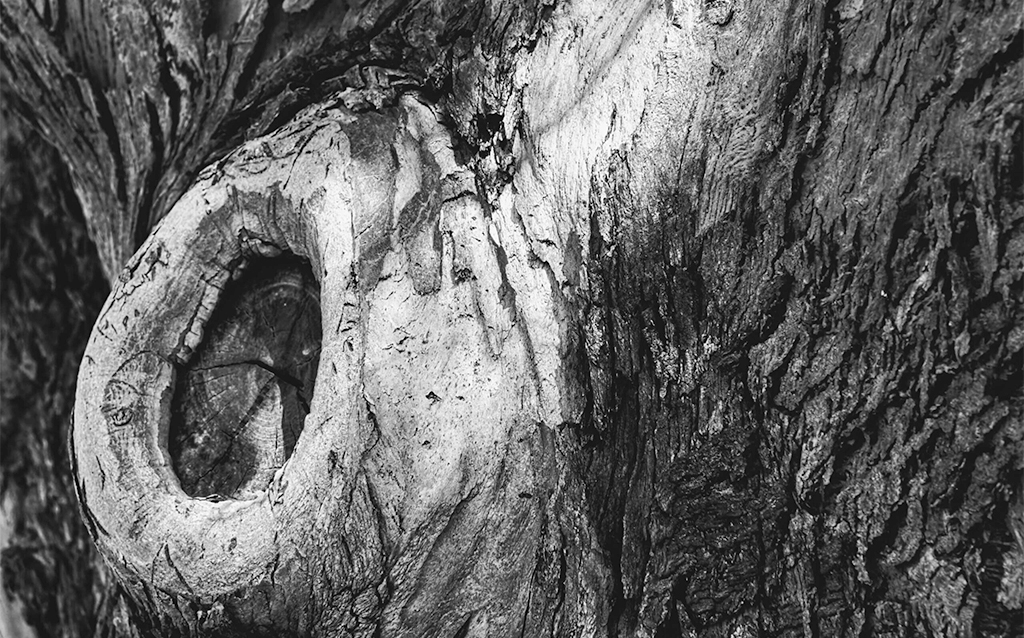
Tree cavity formed when a branch broke off.
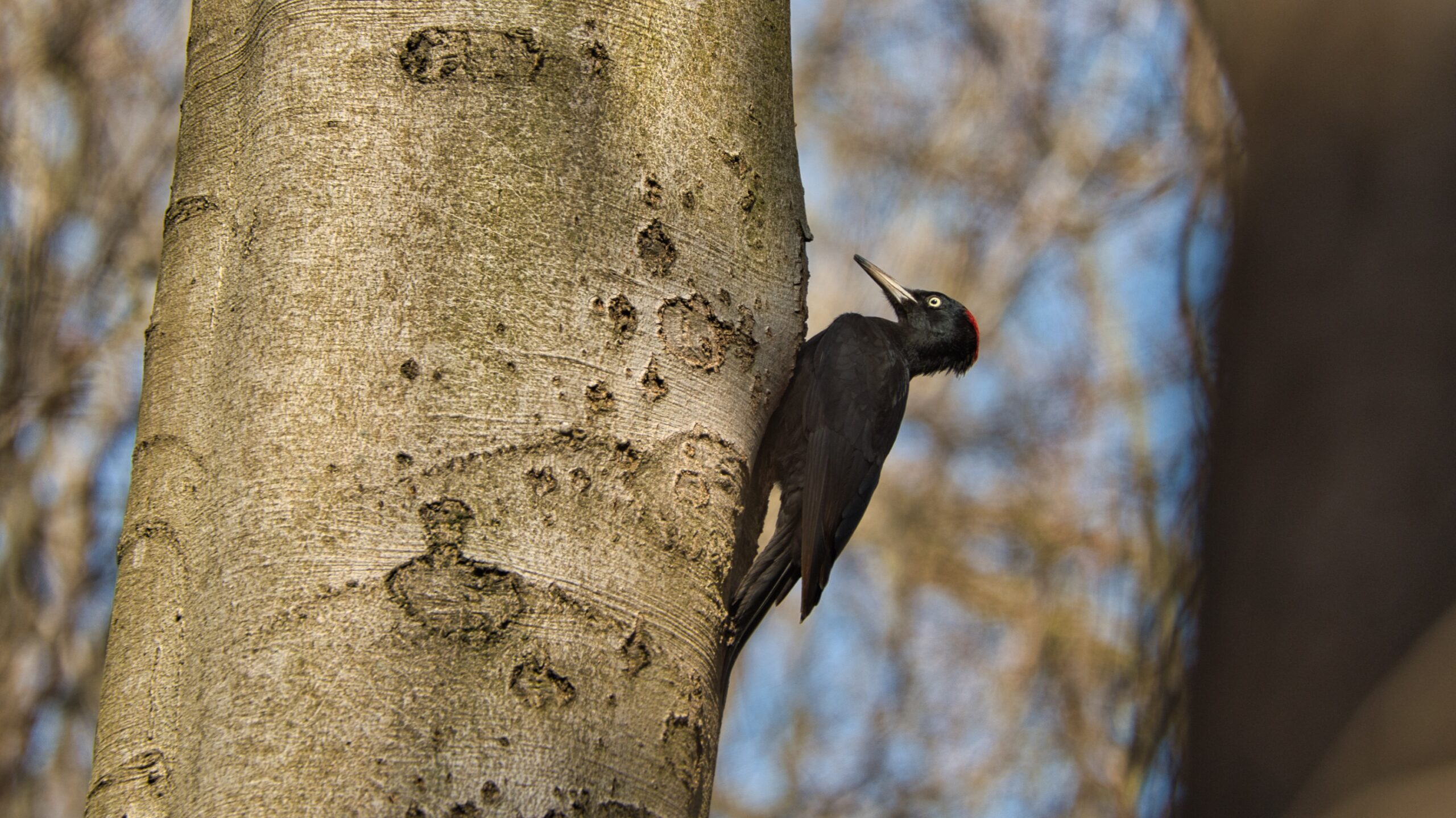
Large tree cavities are often prepared by the black woodpecker.
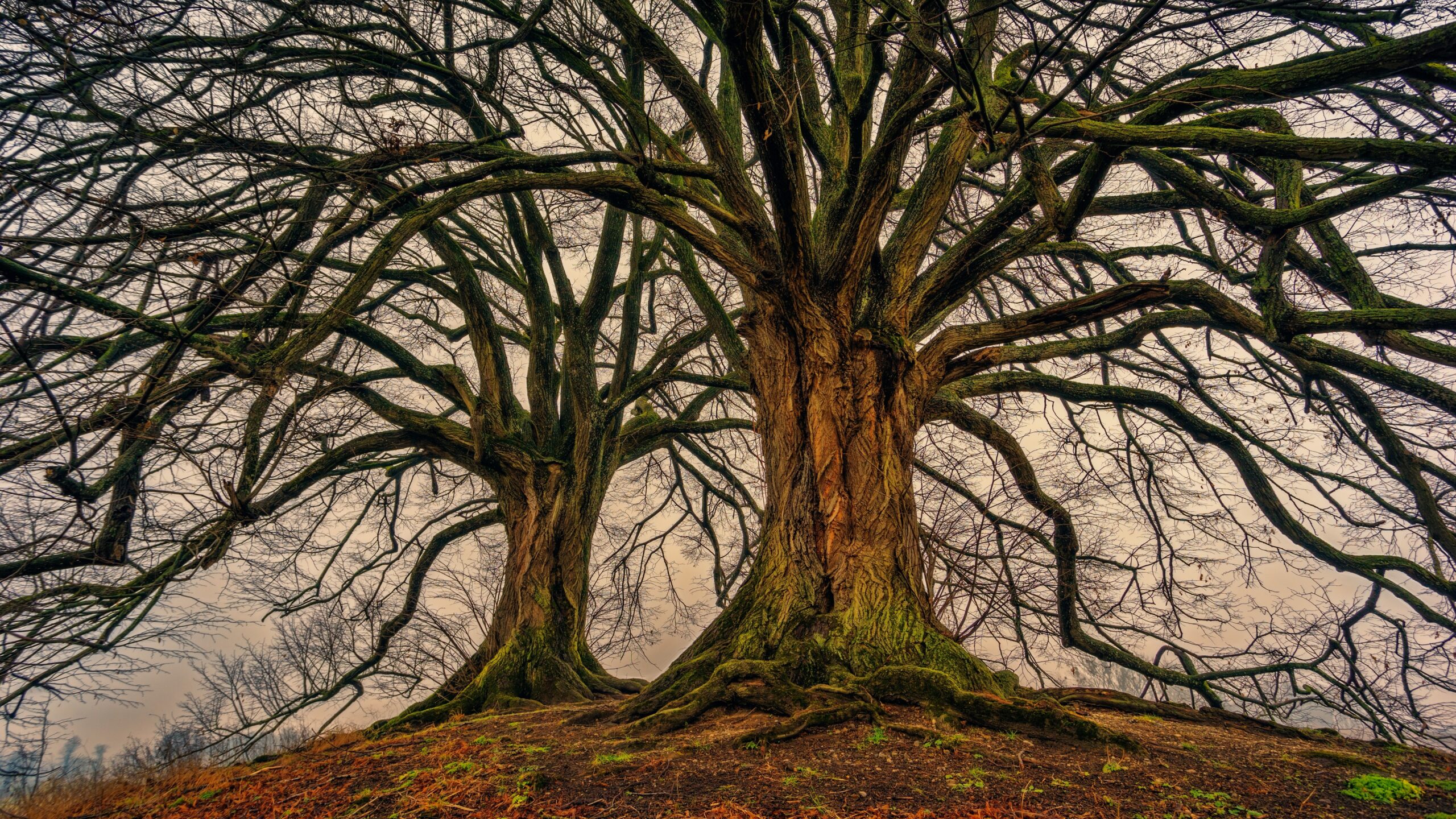
Old trees with countless dendrohabitats
Large tree cavities have become rare. They require old, thick trees. Due to forestry focused on yields, trees with a diameter of 80 cm are generally harvested and taken to the sawmill.
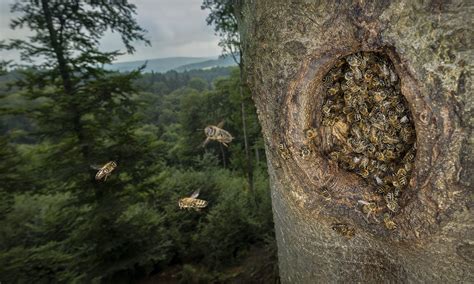
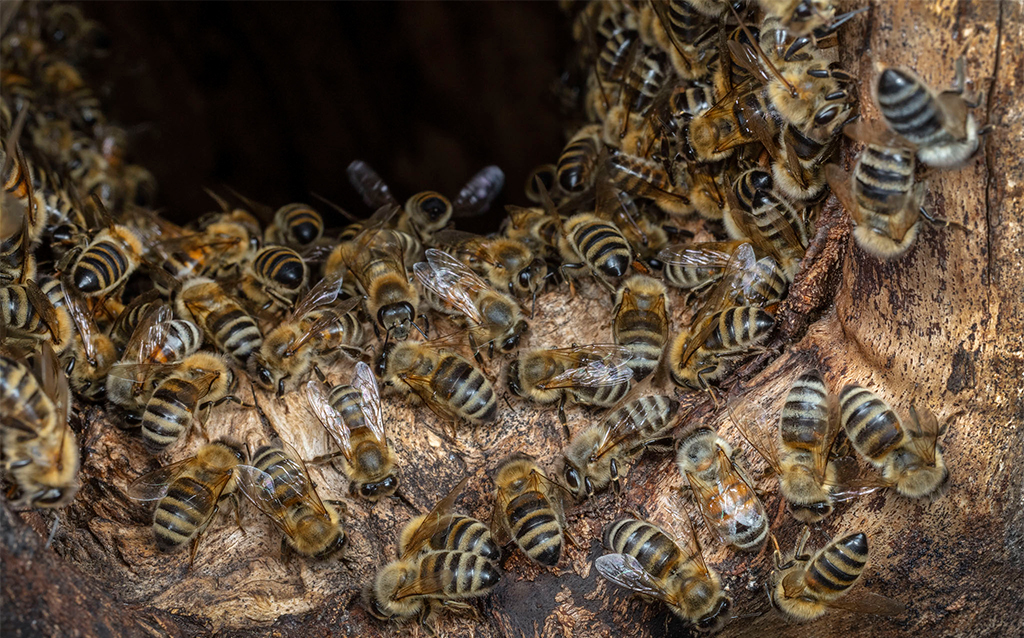
Honey bees in a tree cavity. Photo: Ingo Arndt
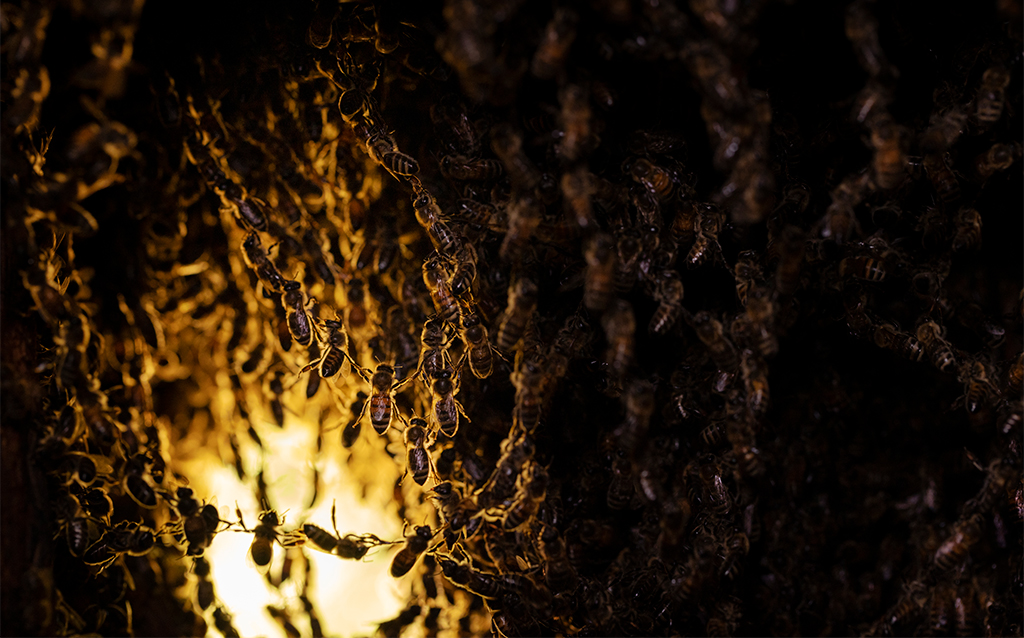
Wild-living honey bees in a tree cavity. Photo: Ingo Arndt
FreeTheBees has developed many years of theoretical and practical expertise in creating artificial tree cavities. These are intended to provide shelter and habitat not only for bee colonies, but also for all other cavity-dwelling species and communities.
In addition to trunk cavities in living trees, artificial nesting aids with qualities similar to tree cavities are made in a carpentry workshop and installed in suitable locations.
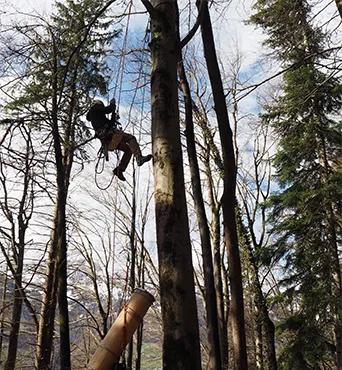
A FreeTheBees arborist installs a SwissTree in a tree
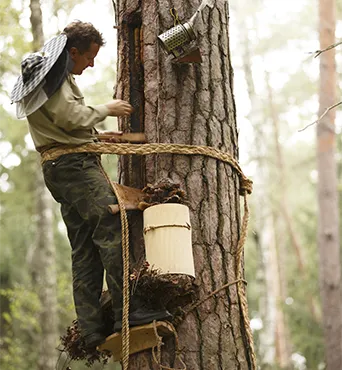
A Polish master beekeeper practising traditional tree beekeeping at his tree hive.
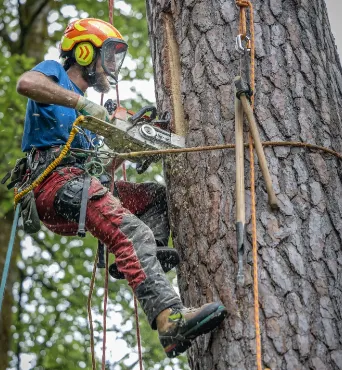
A modern arborist cuts a cavity into a living tree.
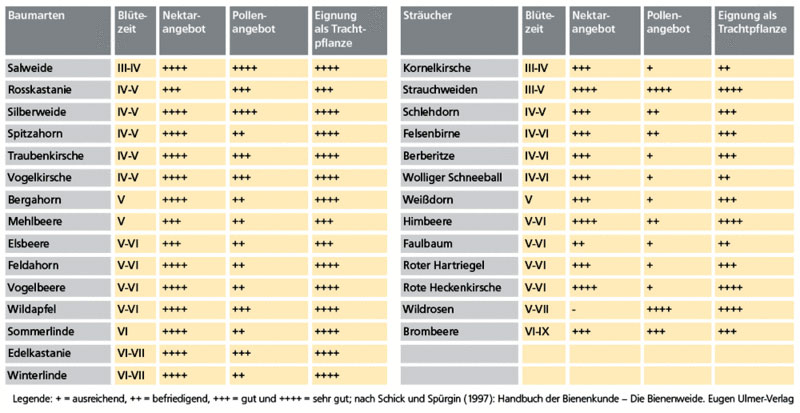
The diversity of trees can play a decisive role in whether bees can survive in forests at all. One important example is the lime tree, which flowers during the so-called forage gap—that is, after fruit trees and fields have finished flowering in spring.
Forest structure is also crucial, for example, open areas of forest and diverse vegetation on the forest floor.
The Bavarian State Institute of Forestry has created a useful overview of forage plants in forests.
On 9 October, a class from Collège du Sud came on a school trip to our site in Vaulruz, right among the bees. The stu...
In our conference series “Bees Without Borders”, renowned bee scientist and breeder Dr. Ralph Büchler showed on 28 Oc...
“I observe how nature works” For over 15 years, Heinz Weder has been observing free-living honey bee colonies. He has...
Important information
Important information: The original texts are published in German. The French, Italian and English versions are translated automatically and checked where possible. Please report any errors to bee@freethebees.ch.