
The honey bee is a wild bee native to our natural environment and part of the cave-dwelling fauna. FreeTheBees is committed to protecting it and researching its habitat, and takes concrete action to do so. Our goal: Self-sustaining honey bee colonies in Switzerland.
Latest news
For the first time, the western honey bee has been classified as «Endangered» in Europe. A study by the University of Hohenheim and Agroscope Zurich shows that wild colonies have declined by around 56 per cent per decade. The Swiss data used for this study comes from our monitoring programme.
In Switzerland, the honey bee is highly threatened as a wild species. Our scientific research over the past five years has proven that it exists in the wild. However, survival rates are currently too low to sustain independent, stable wild populations.
The honey bee as a wild species is at risk of disappearing entirely, which would also mean an interruption of natural selection. Honey bees would no longer be able to adapt to the constantly changing environment.
A resilient wild population is essential for genetic diversity and thus helps preserve the species and support sustainable beekeeping.
Habitat enhancement
The lack of suitable nesting cavities is a major reason why the honey bee is threatened. As a forest-dwelling insect, the honey bee nests in tree cavities. FreeTheBees creates natural-looking alternatives. These benefit not only bees, but also numerous other species that depend on tree cavities and are an important part of a healthy ecosystem.
Monitoring
FreeTheBees is the only organisation in Switzerland that records and monitors wild honey bee populations. Working with numerous citizen scientists, we collect data and build a unique resource for research. We record data not only on honey bees, but also on how other species use tree cavities.
Research
Sound knowledge of the lives and threats facing honey bees in Switzerland is the basis for effective conservation and support measures. Led by Dr Benjamin Rutschmann, FreeTheBees conducts and publishes research on the honey bee as a wild animal and on tree cavities.
To date, more than 180 biodiversity cavities have been installed, over 400 wild honey bee colonies have been documented with the support of more than 180 citizen scientists, and initial scientific studies have been conducted.
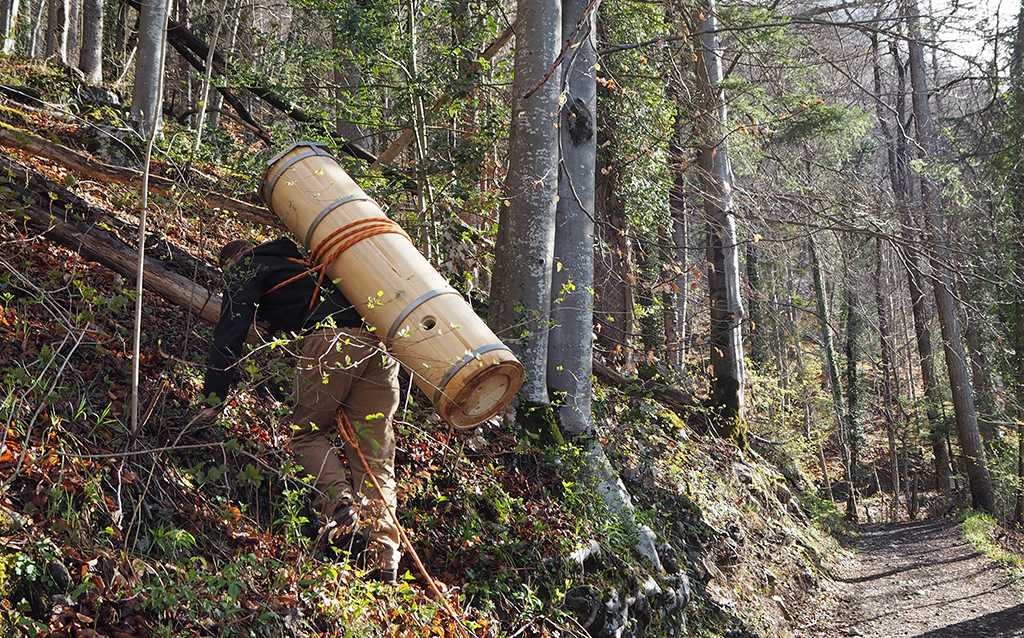
Each SwissTree cavity is carried into place by hardworking volunteers.
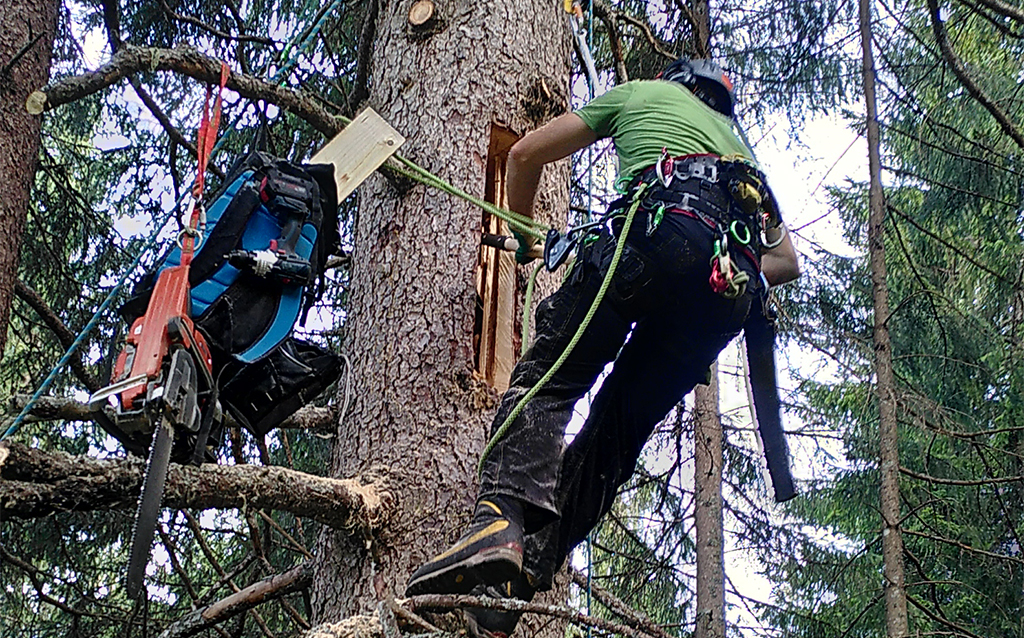
The forest beekeeper carves the cavity by hand into the living trunk.
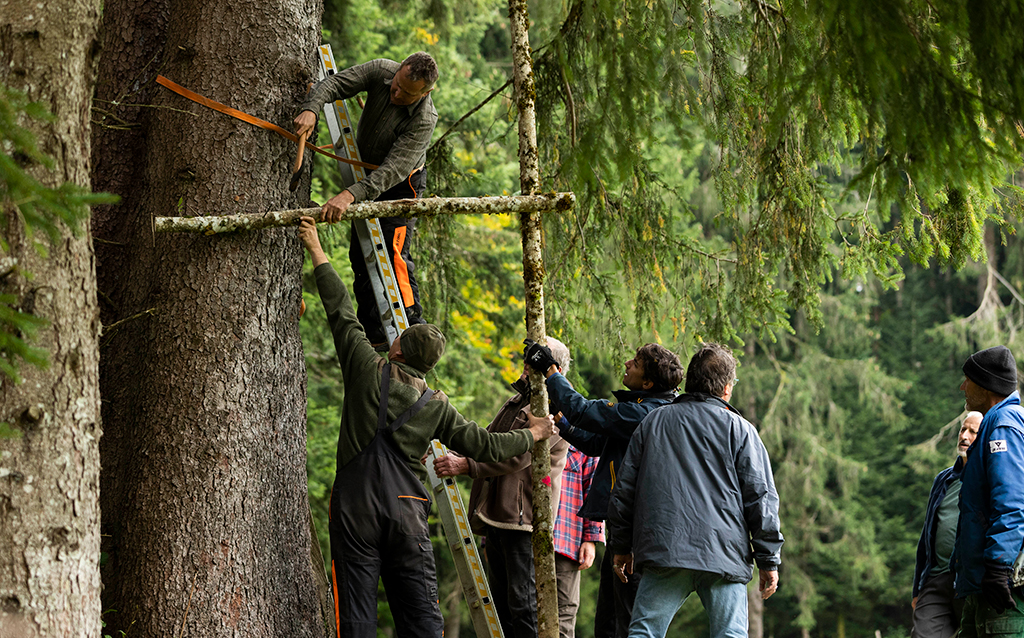
On the forest beekeeping course, participants learn how to make a cavity in a living trunk.
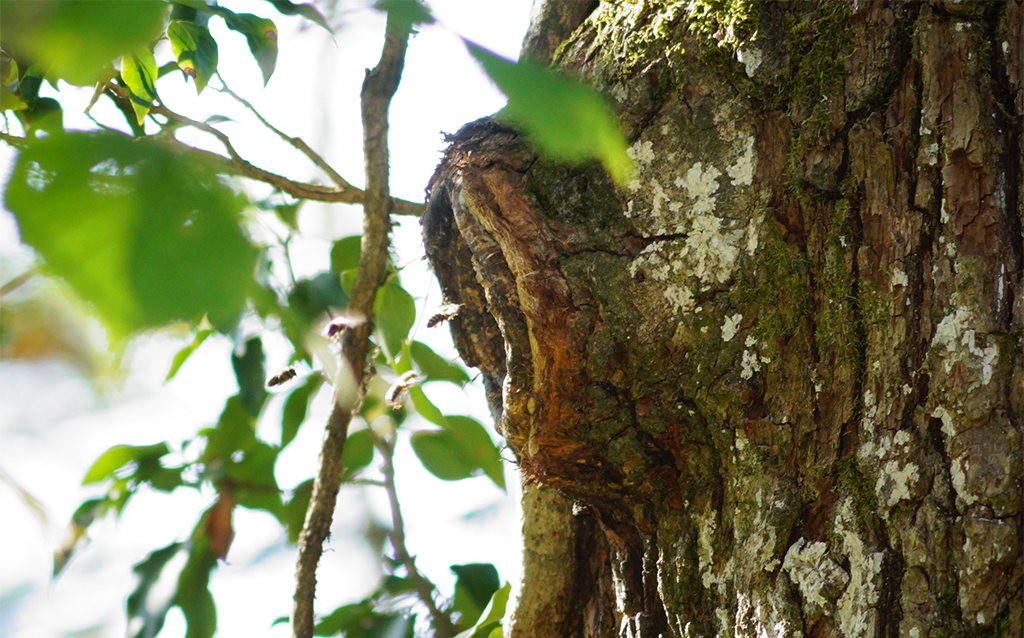
A natural tree cavity. Habitats like this are rare in Swiss forests.
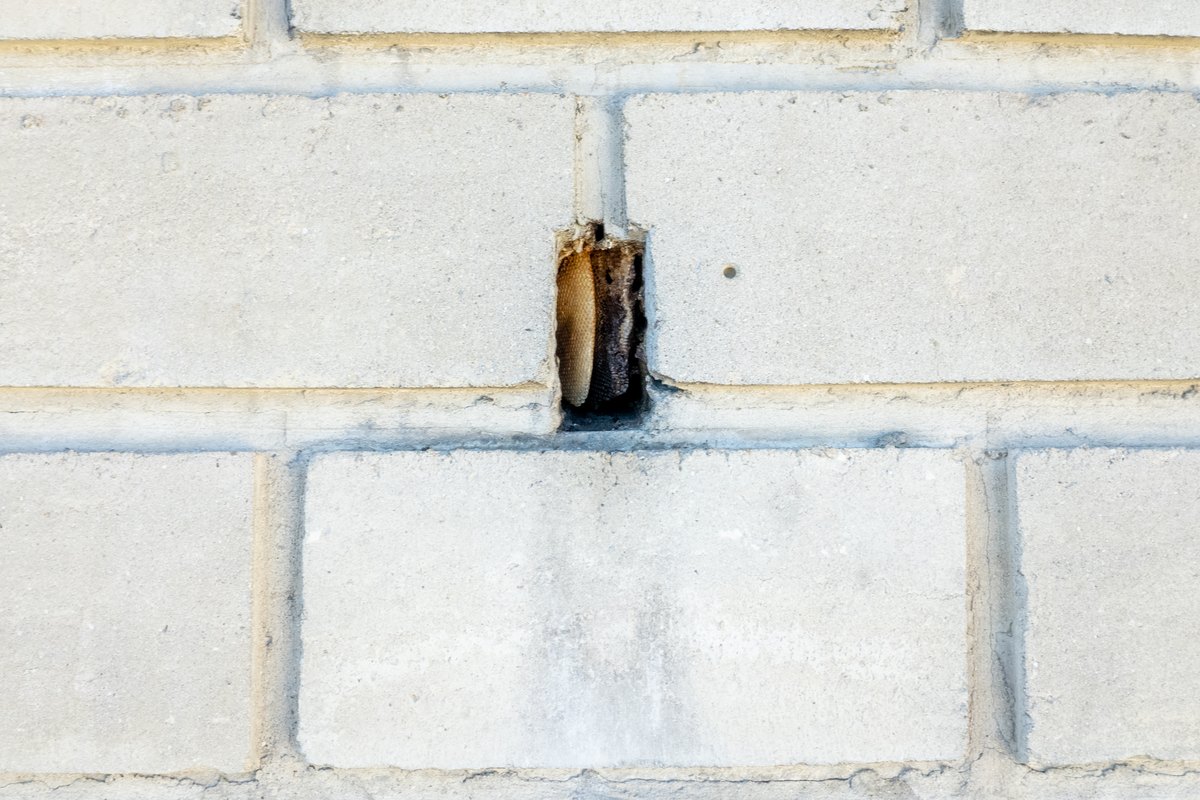
A wild colony in a crevice in a wall. Such locations are valuable for our monitoring.
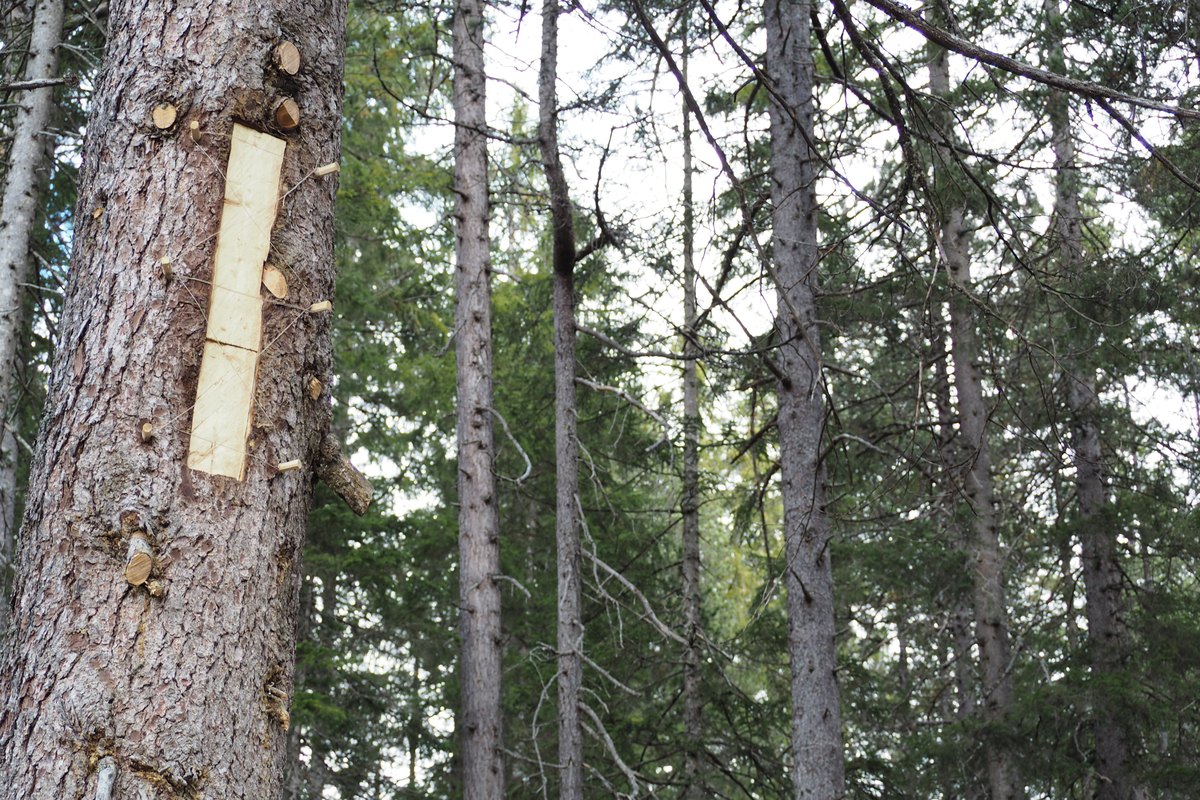
The completed forest beekeeper's cavity in the living trunk, closed with a board.
🐝 2026 prize draw
In Switzerland, honey bee colonies also live in the wild, without any beekeeper. They nest in natural tree cavities or in cavities in human-made structures, such as recesses in walls. From the outside, they look like any managed colony. A colony is recognisable as wild if no one looks after it.
Have you spotted a colony like this? Report it using the form on this page. Every report is added to our database of wild honey bees in Switzerland, currently the largest of its kind in Europe. More than 400 nesting sites have been documented to date.
Discoveries of honey bee colonies in natural tree cavities in forests are automatically entered into the draw for 3 × CHF 100.–.
Organiser: FreeTheBees.
Eligibility: Anyone who reports a wild honey bee colony in a natural tree cavity in a forest via the reporting form on the «Wild honey bee» project page between 1 March and 30 October 2026 is eligible to take part. The observation must have been made during this period.
Entries: Each valid and verifiable report counts as one entry. Reporting several genuine locations increases your chances of winning. Reports that are clearly fabricated or duplicates will be excluded. The report must include a photo of the cavity with bees.
Who can take part: People residing in Switzerland or Liechtenstein may take part. Minors need the consent of a parent or guardian. FreeTheBees employees and board members are excluded.
Prizes: 3 × CHF 100.– will be drawn. The random draw will take place in December 2026. Each person can win only once.
Notification: Winners will be notified by email. If a winner does not respond within 14 days, a new draw will be held.
Cost: Entry is free and is not conditional on a donation or fee.
Data protection: The information provided will be used solely for the prize draw and for monitoring wild honey bees, and will not be shared with third parties.
Legal recourse: No correspondence will be entered into regarding the prize draw. Recourse to the courts is excluded.
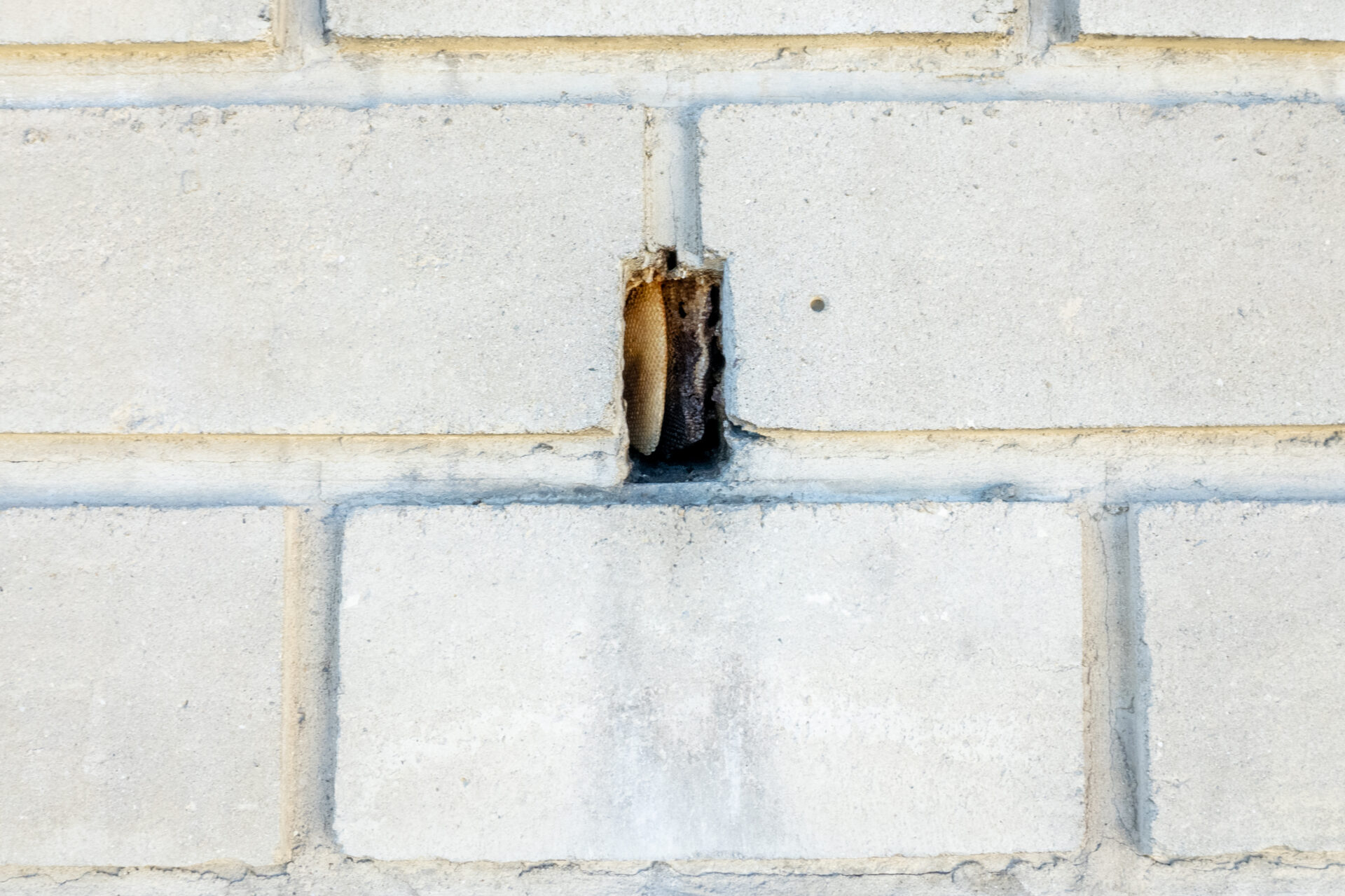
Do you know of a wild honey bee colony that is not being looked after…
REPORT A BEE COLONY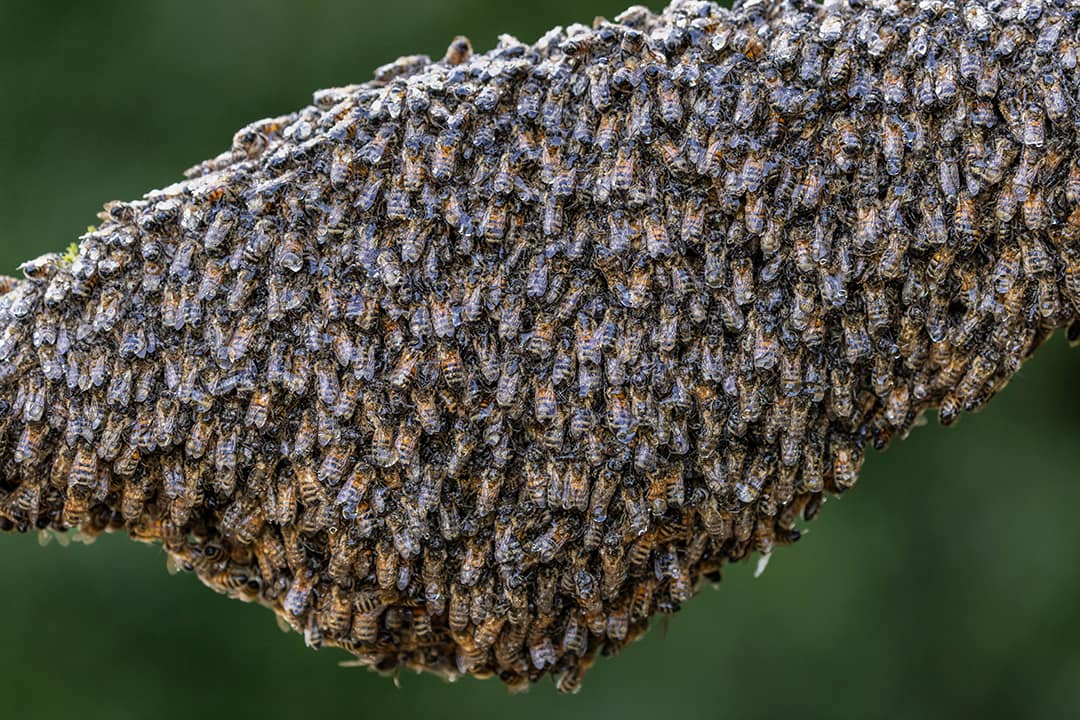
Have you seen a swarm on the move or one that has settled somewhere on…
REPORT A SWARM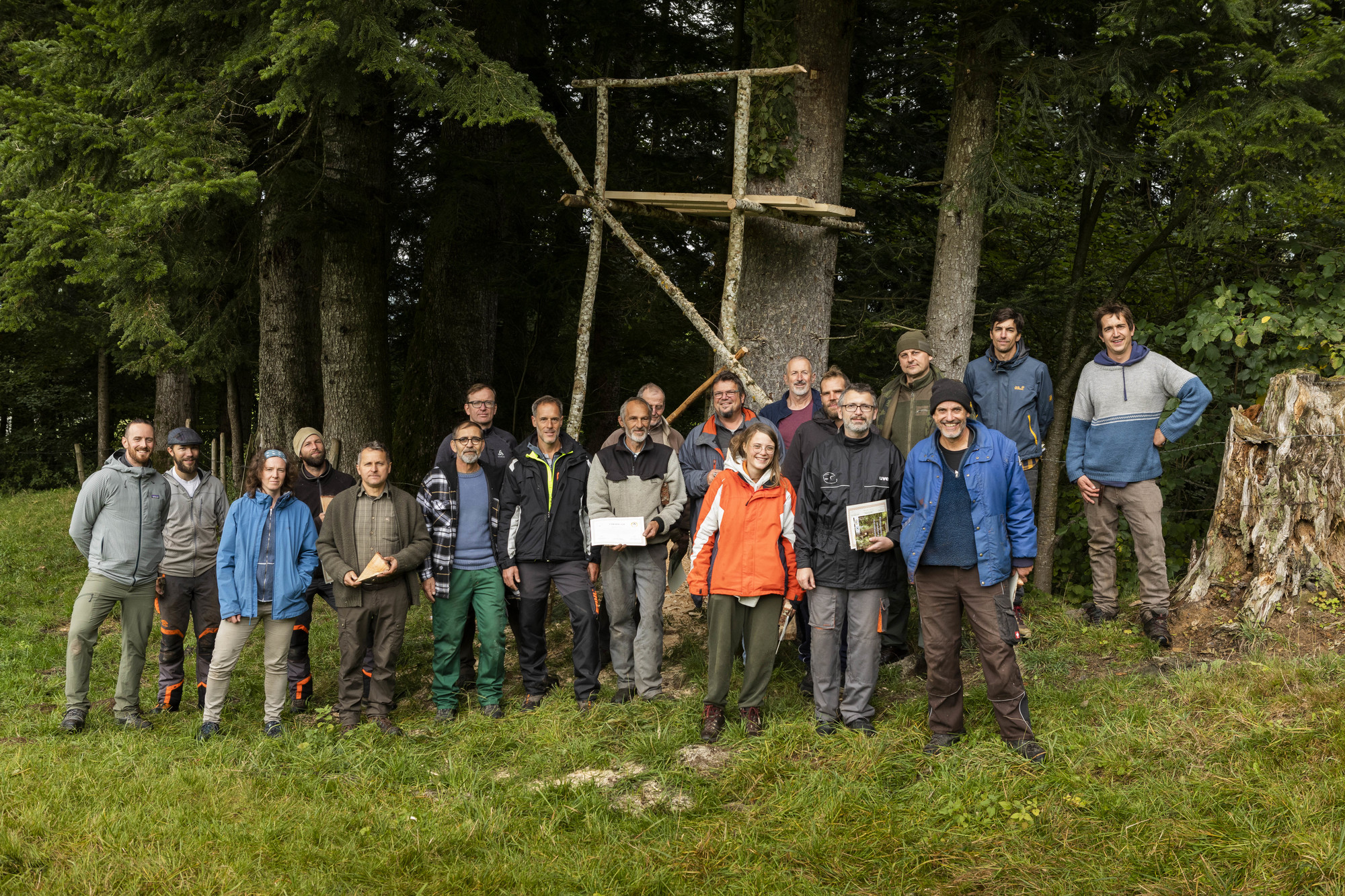
Would you like to regularly observe a nesting site near you and provide us with…
Become an observerHoney bees depend on tree cavities in their natural habitat. There are far too few tree cavities available today. That is why we are looking for forest owners, municipalities and forestry businesses willing to provide trees so we can create tree cavities for biodiversity.
Depending on the tree and location, there are two options:
Both options have the same goal: to give wild honey bees a place to settle and remain for years.
We never disclose the exact location of a tree or cavity. Lists, reports and maps show no more than the municipality. This protects your tree and the bees from visitors.
Many of our tree sponsors are forest districts and forestry businesses that provide several trees. If you wish, we can feature you and your logo on our sponsors page.
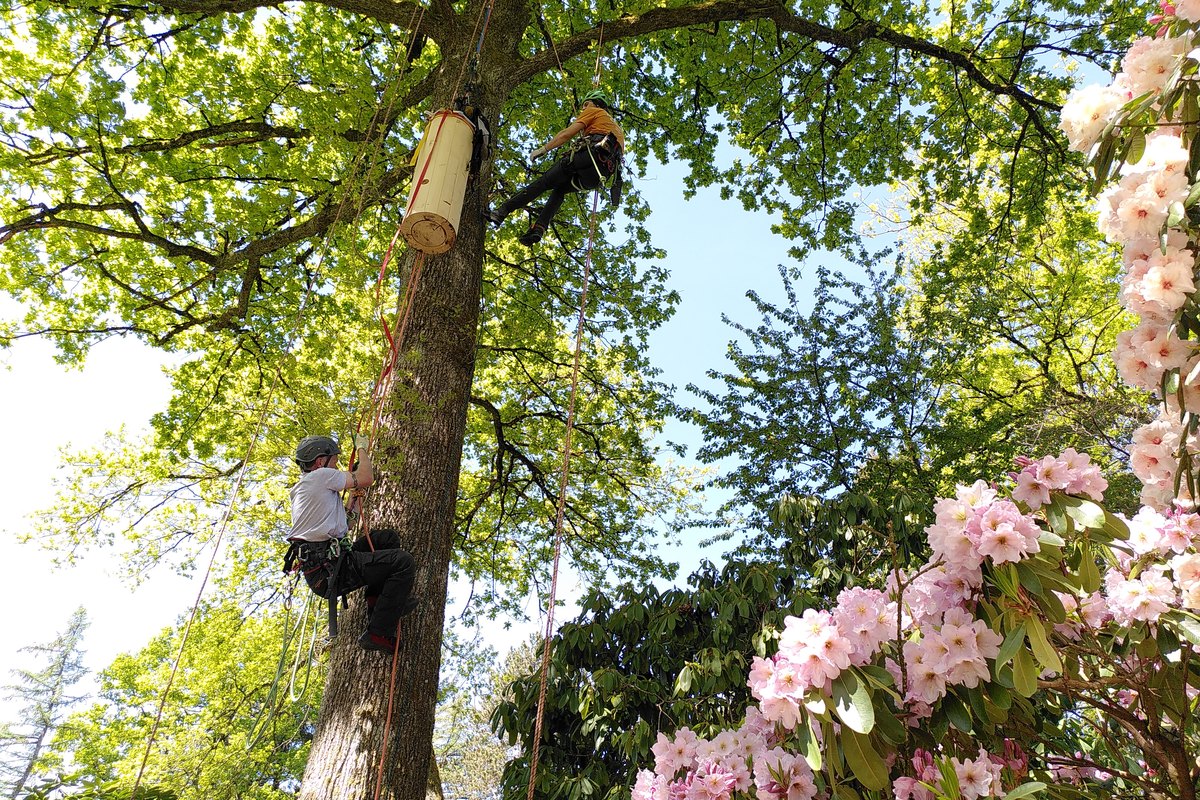
Two tree climbers hoist an artificial nesting cavity into the crown.
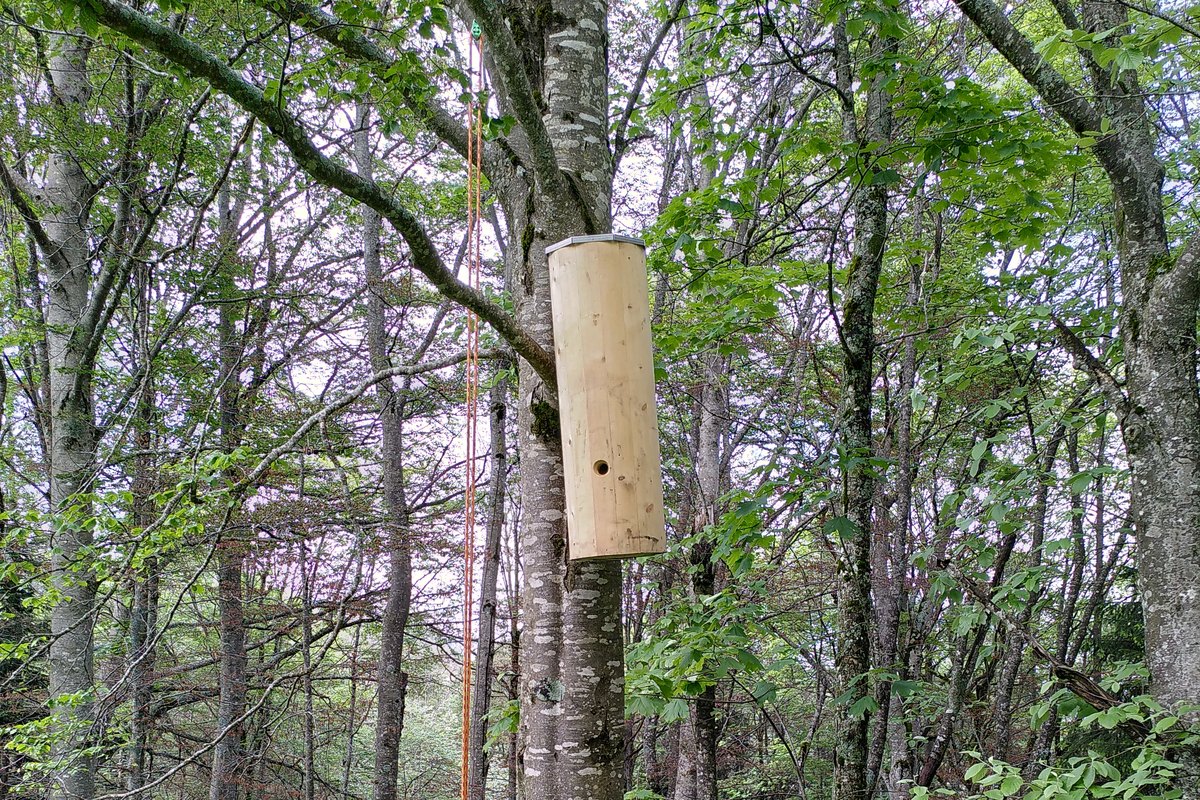
Installed on a beech tree. The entrance faces southeast.
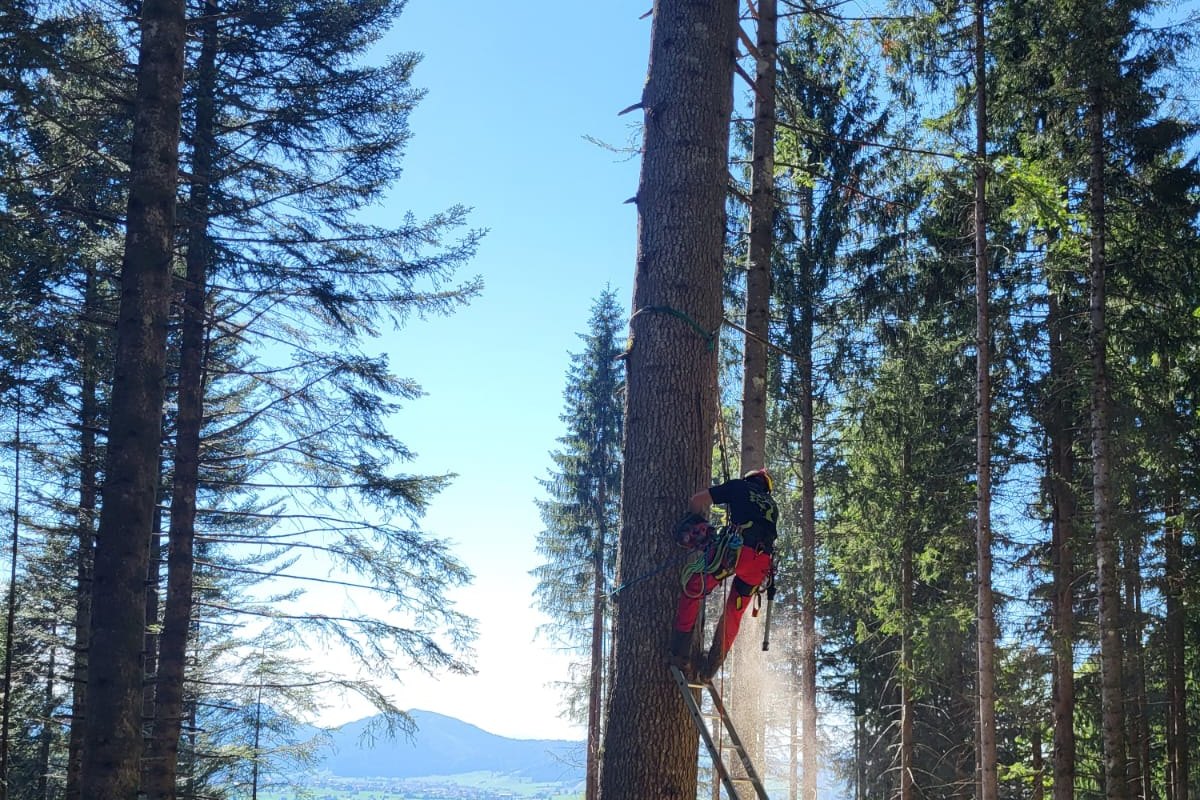
A forest beekeeper's cavity takes shape: the hollow is cut directly into the living trunk.
Our approach is making a difference: Numerous tree cavities have already been colonised by honey bees and other species; our data feed into the IUCN’s threat assessment and currently form one of the largest datasets on this topic in Europe; foundations, forest owners and research institutions support the project. With your support, we can achieve even more.
The funding required for the project in 2026 is CHF 242,000.–
Support our research and conservation project for wild honey bees with a donation, a project sponsorship or as part of your corporate social responsibility. Together, we can make possible a future in which bees not only survive, but thrive once again.
Important information
Important information: The original texts are published in German. The French, Italian and English versions are translated automatically and checked where possible. Please report any errors to bee@freethebees.ch.