Pseudoscorpion and predatory mite as part of a healthy honey bee nest ecosystem
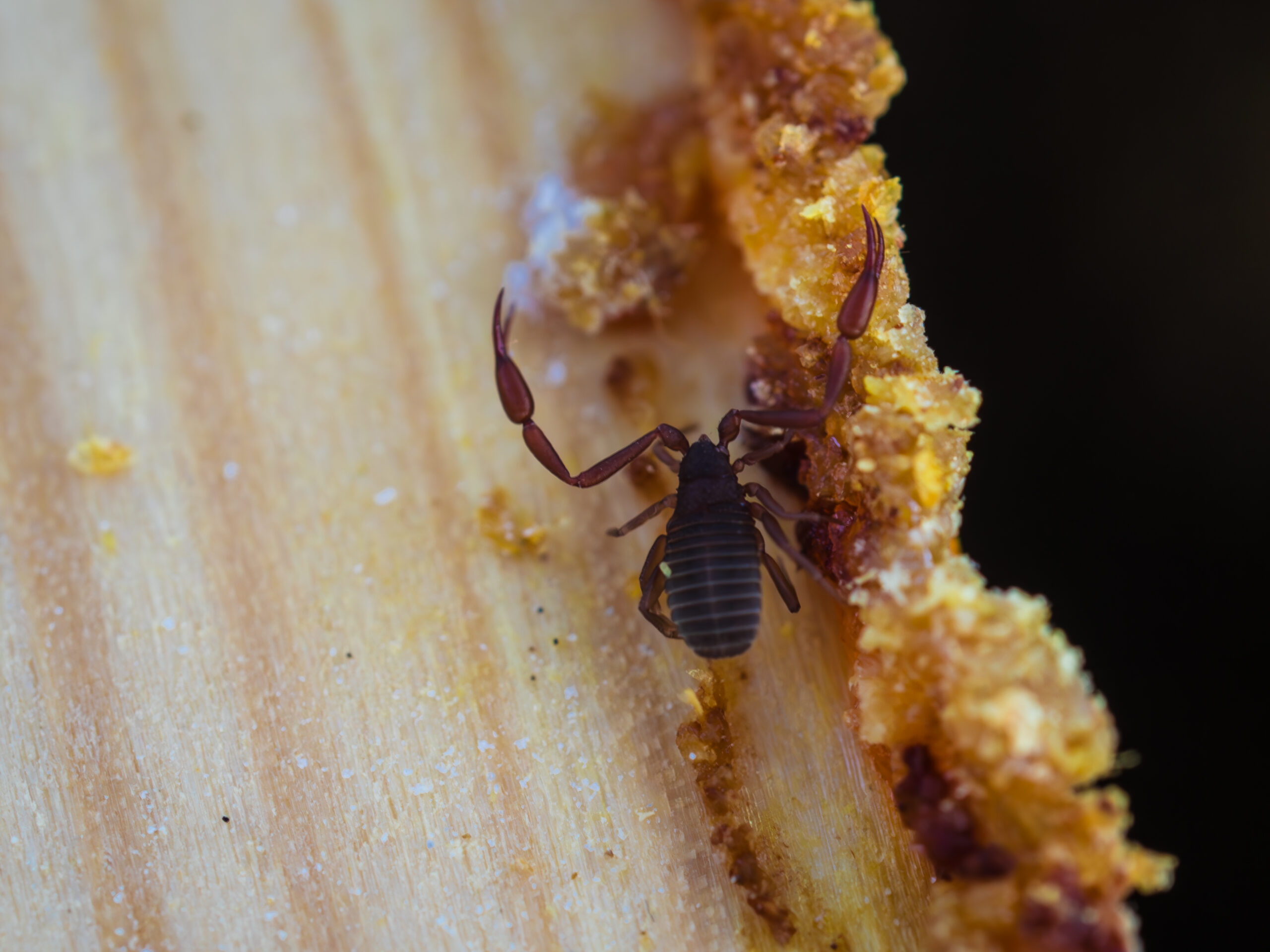
Pseudoscorpion in a single-chamber beehive
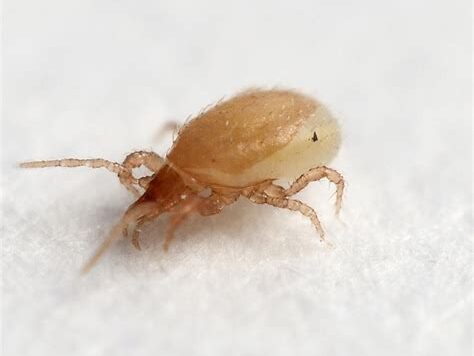
Stratiolaelaps-scimitus
Honey bees do not live in isolation in nature. A wild honey bee colony shares its tree cavity with a wide variety of other organisms. Numerous insect species, mites, fungi, bacteria and other microorganisms live in and around a natural bee nest. Many of these species interact with the colony, affect its health or perform important ecological functions.
While modern beekeeping often focuses on individual pathogens or parasites, it is worth looking at the entire ecosystem. Disease does not arise from the presence of individual organisms. Health, however, does indeed arise from the presence of many species and their interactions within a stable balance.
Pseudoscorpions and the predatory mite Stratiolaelaps scimitus are among the best-known natural companions of honey bee colonies. Both have been discussed for years as potential natural enemies of the Varroa mite. However, they are not the solution to the Varroa problem, but part of a much larger ecological context.
A nearly forgotten inhabitant of the tree cavity
The pseudoscorpion, also known as the book scorpion (Chelifer cancroides), is a tiny arachnid that at first glance resembles a scorpion. Unlike its larger relatives, however, it has no sting and is completely harmless to people and animals.
Pseudoscorpions have lived for millions of years in natural tree cavities, under tree bark, in crevices in wood and in other sheltered habitats. Their presence in beehives was described as early as the late 19th century. In 1891, Alois Alfonsus wrote about the “enemy of the bee louse” and observed book scorpions preying on small pests in bee hives.
Later observations and studies also confirmed that pseudoscorpions hunt mites and other small arthropods. These include wax moth larvae, lice and presumably Varroa mites.
A hunter in hiding
Pseudoscorpions are active predators. They seize their prey with their pincer-like pedipalps and paralyse it with a venomous secretion. They then suck out the body fluids of their victims.
Their natural habitat provides ideal conditions: crevices, cracks, rotten wood and a stable microclimate offer protection and places to hide. Many modern hive systems largely lack these structures. Smooth surfaces, frequent interventions and treatments make it harder for them to establish themselves permanently.
Potential and limitations
The pseudoscorpion’s ability to prey on Varroa mites makes it interesting to beekeepers and researchers. Nevertheless, it would be wrong to present it as a miracle cure for Varroa.
Rather, the knowledge available so far shows that pseudoscorpions can be part of a functioning ecosystem. Their effects are seen where natural living conditions are present and stable populations can develop.
Buy book scorpions
If you do not have time to look for book scorpions yourself, you are very welcome to order them through our shop.
Your order benefits not FreeTheBees, but a family-run business with seven members of staff—our highly valued scorpion hunters.
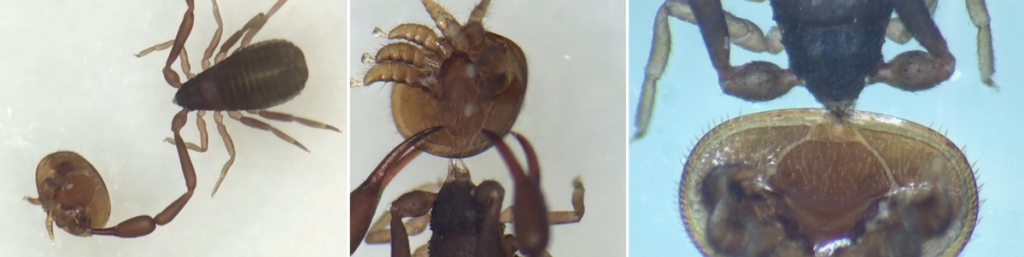
Book scorpion catches a Varroa mite and sucks it dry. https://bienenbau.info/der-buecherskorpion-als-nuetzling-fuer-bienen-und-imker/
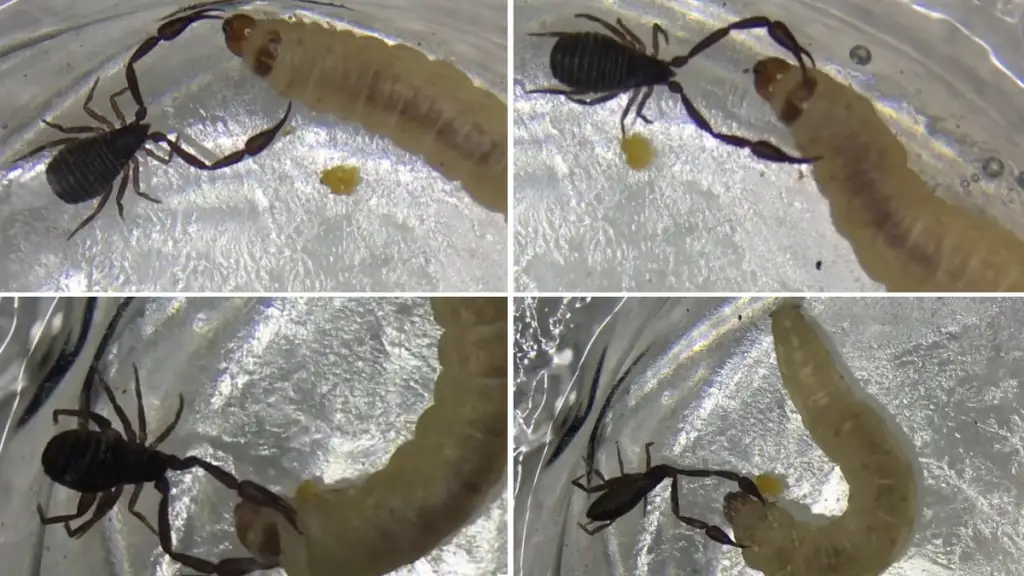
The wax moth larva puts up a fierce fight and tosses the book scorpion around. Source: https://bienenbau.info/der-buecherskorpion-als-nuetzling-fuer-bienen-und-imker/
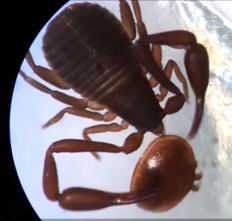
Varroa under control – Beenature Project: https://www.youtube.com/watch?v=qkdrRuWmbm4
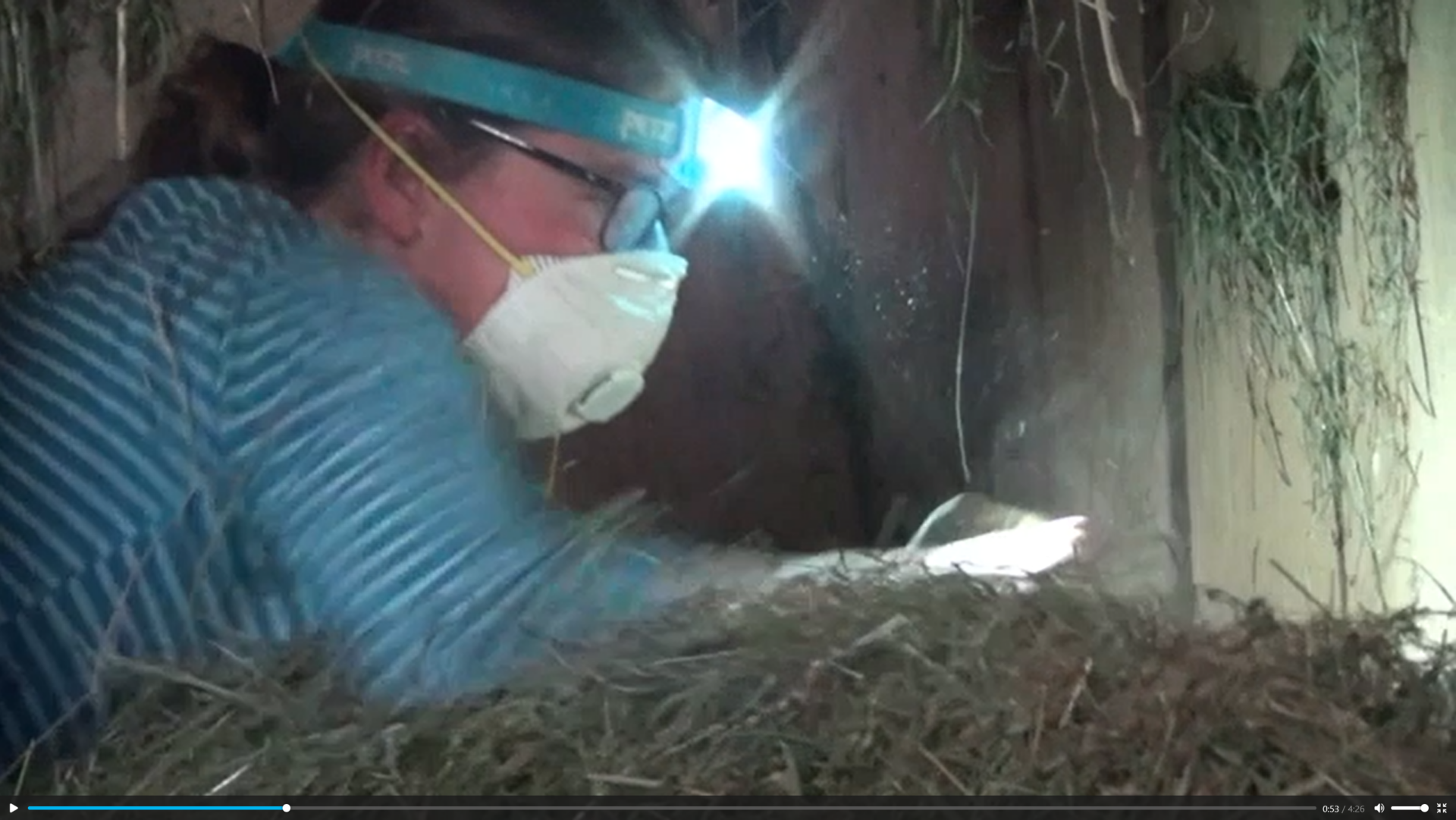
Book scorpions scurry around in an empty beehive.
A natural predator in the soil
Stratiolaelaps scimitus is a small soil-dwelling predatory mite originally found in many regions of the Northern Hemisphere. It lives in the upper layers of the soil and feeds on various small invertebrates, including springtails, nematodes, larvae and other mites.
For many years, it has been used successfully in biological plant protection. In greenhouses, it helps control various pests and is now also used in other areas of biological pest control.
Can the predatory mite control Varroa?
This question has occupied beekeepers and researchers for several years. Scientific studies show that Stratiolaelaps scimitus can prey on free-running Varroa mites. It is particularly effective at hunting mites that have fallen off the bees and are on the floor of the hive.
At the same time, the same studies show that the predatory mite does not attack Varroa mites on the bees themselves. Since most of the Varroa population is either on adult bees or protected in capped brood cells, its direct effect is limited. The scientific conclusion is therefore that Stratiolaelaps scimitus can contribute to natural regulation, but is not a stand-alone solution to the Varroa problem.
Habitat rather than one-off treatment
Practical approaches that create suitable habitats for the predatory mite under bee colonies on a permanent basis are of particular interest. Some beekeepers use humus-rich substrates, compost areas or naturalistic ground habitats beneath their hives. Stable populations of Stratiolaelaps scimitus can develop and persist there over the long term. This approach is not intended to introduce a single species in order to solve a problem. Rather, the aim is to create an ecological environment in which natural regulatory mechanisms can function again.
Stratiolaelaps-scimitus
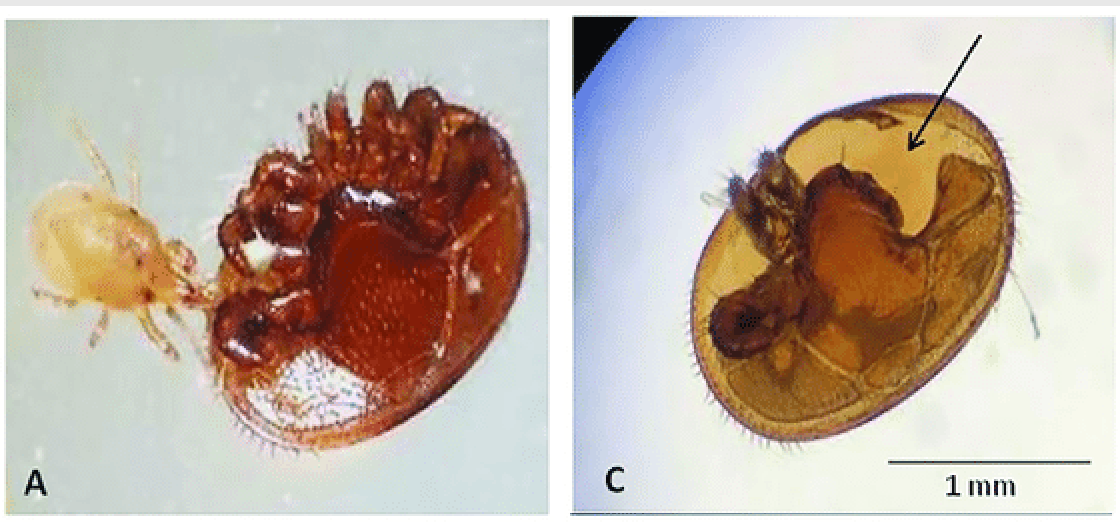
Stratiolaelaps scimitus & Varroa mite
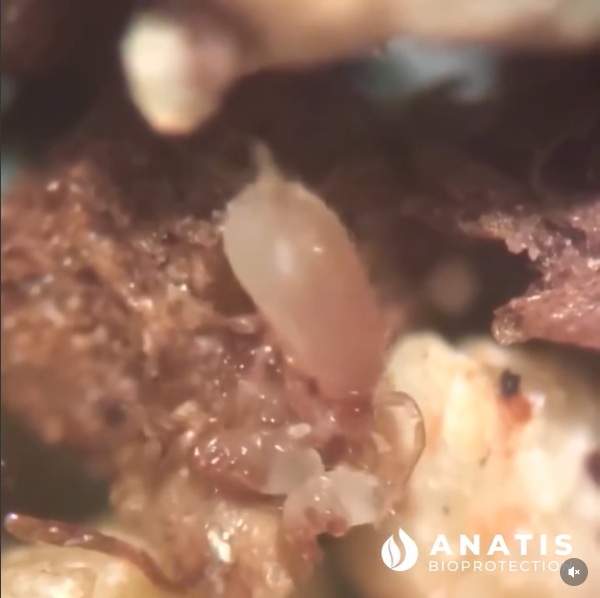
anatisprotection: https://www.instagram.com/reel/DGvc96Hhgia/?hl=en
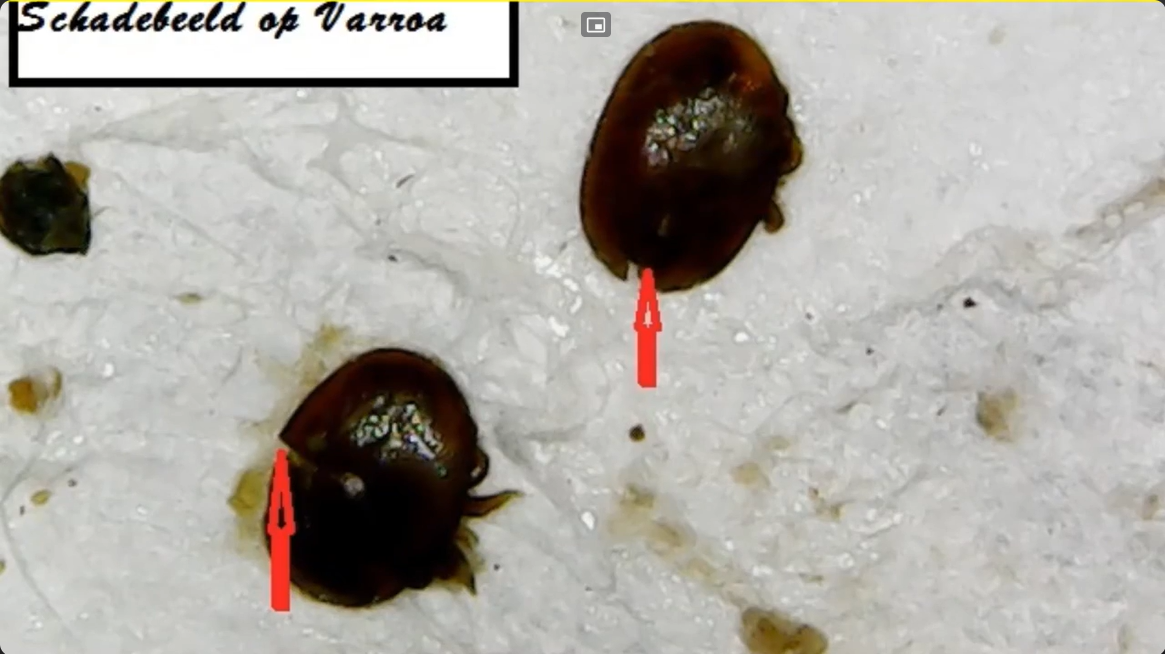
Varroa control using Stratiolaelaps scimitus in the Warré hive: https://www.youtube.com/watch?v=5RJGYImfmfg
The discussion of pseudoscorpions, predatory mites and Varroa raises a more fundamental question: Which organisms naturally live alongside a honey bee colony?
Studies of natural tree cavities have shown that a honey bee colony is accompanied by a large number of other species. In addition to various insect species, numerous mites, fungi, bacteria and other microorganisms live in the immediate surroundings of the colony.
We know surprisingly little about many of these organisms. While the Varroa mite is studied intensively around the world, the ecological functions of numerous other companion species are barely known.
The same is true of microorganisms. Attention is often focused on a few pathogens and viruses. At the same time, we often lack basic knowledge about which beneficial microorganisms originally belong to the natural microbiome of a bee nest and what the loss of these organisms might mean.
FreeTheBees does not regard pseudoscorpions and predatory mites as miracle cures for the Varroa mite. Rather, they are visible examples of how a honey bee colony is part of a complex ecosystem. When natural habitats are lost, not only individual species disappear, but entire ecological networks. That is why we do not focus on finding a single solution to the Varroa mite. Our goal is to restore living conditions for honey bees that are as close to natural as possible. These include, in particular:
The closer we come to the conditions in which the honey bee evolved over millions of years, the greater the chance that the many ecological interactions will once again have their natural effect.
Pseudoscorpions and predatory mites are therefore not the goal of our efforts. Rather, they are ambassadors for a much broader insight: a healthy honey bee colony does not result from tackling individual problems, but from restoring a functioning ecosystem.
On 9 October, a class from Collège du Sud came on a school trip to our site in Vaulruz, right among the bees. The stu...
In our conference series “Bees Without Borders”, renowned bee scientist and breeder Dr. Ralph Büchler showed on 28 Oc...
“I observe how nature works” For over 15 years, Heinz Weder has been observing free-living honey bee colonies. He has...
Important information
Important information: The original texts are published in German. The French, Italian and English versions are translated automatically and checked where possible. Please report any errors to bee@freethebees.ch.