Text and photos by Ante Hamersmit
It is mid-May. This should be swarming season. I should be happy to receive every message with the subject line “I have a swarm.” Should. But this year is different.
While other beekeepers are emptying their swarm traps or collecting swarms from garden sheds and gazebos on social media, there is a contemplative silence at my apiary. Just the usual activity at the entrance. It almost seems as if my bees have collectively decided to forgo offspring at lofty heights this year. It is no different for beekeepers I know in the area. Is it the weather? The unusually cold nights at the beginning of May? The few days of stable high pressure? Or a secret collective decision by the colonies?
I don’t know. But I’ve noticed that this year is actually quite normal, because every year is different, which is probably normal. Perhaps I’ll get used to that one day.
I’m looking on the bright side: if the bees don’t give me any swarms, I’ll have more time for other challenges. And there were plenty of those in May.
I had agreed well in advance to take part in an event hosted by STIHL on the topic of garden diversity. I spent two full days researching, developing a clear narrative, preparing visual materials, examples and anecdotes – all for a talk entitled: “Where Gardens Meet Bees – Taking Responsibility, Preserving Diversity”.
I was prepared—or so I thought. Then came the setback on the day of the event: I was supposed to speak first, while a chainsaw demonstration was taking place outside. My inner compass sounded the alarm—and rightly so. There were four people in the audience. Four. I take a deep breath, straighten my metaphorical veil and begin, because perhaps these are exactly the four right people sitting in front of me. I talk about statistics, flower patches and garden design. About gardens as oases, as alternatives to gravel deserts. A few people gradually join us. In the end, ten people are sitting there—and they applaud. Honestly. You can get a little glimpse in this YouTube video.

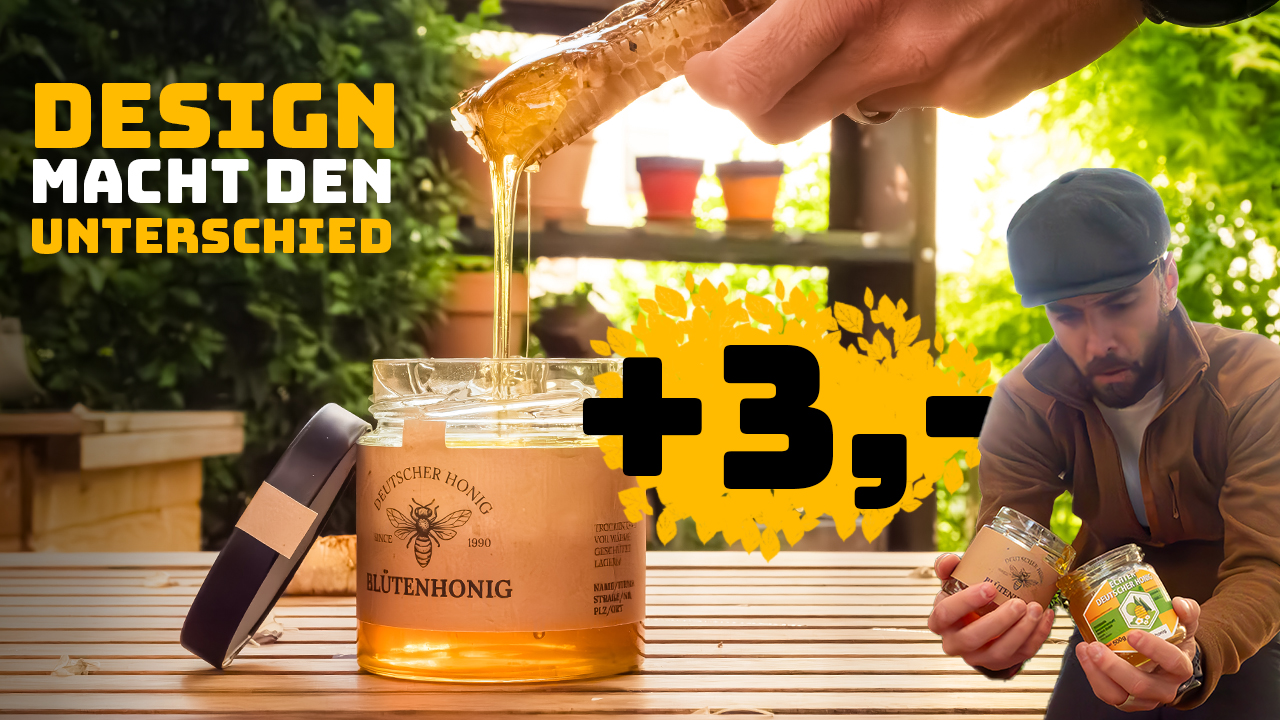
I spend the rest of the day as an exhibitor, or rather as a curious questioner. I want to know how people buy their honey. What matters to them. The most common answer doesn’t surprise me—but it makes me happy: local origin. And yet many people are misled by the design. A natural-looking jar is rated more highly than the traditional jar of the German Beekeepers’ Association. My conclusion: design matters. And with good quality, it can help reach a broad market at around €10 for a 500 g jar. There is, however, one downside: a Bavarian producer who wants to charge almost €15 for his honey because he completely avoids acid treatments would not get bought by most people. The full video of the survey is here: YouTube video.
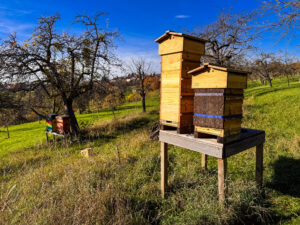
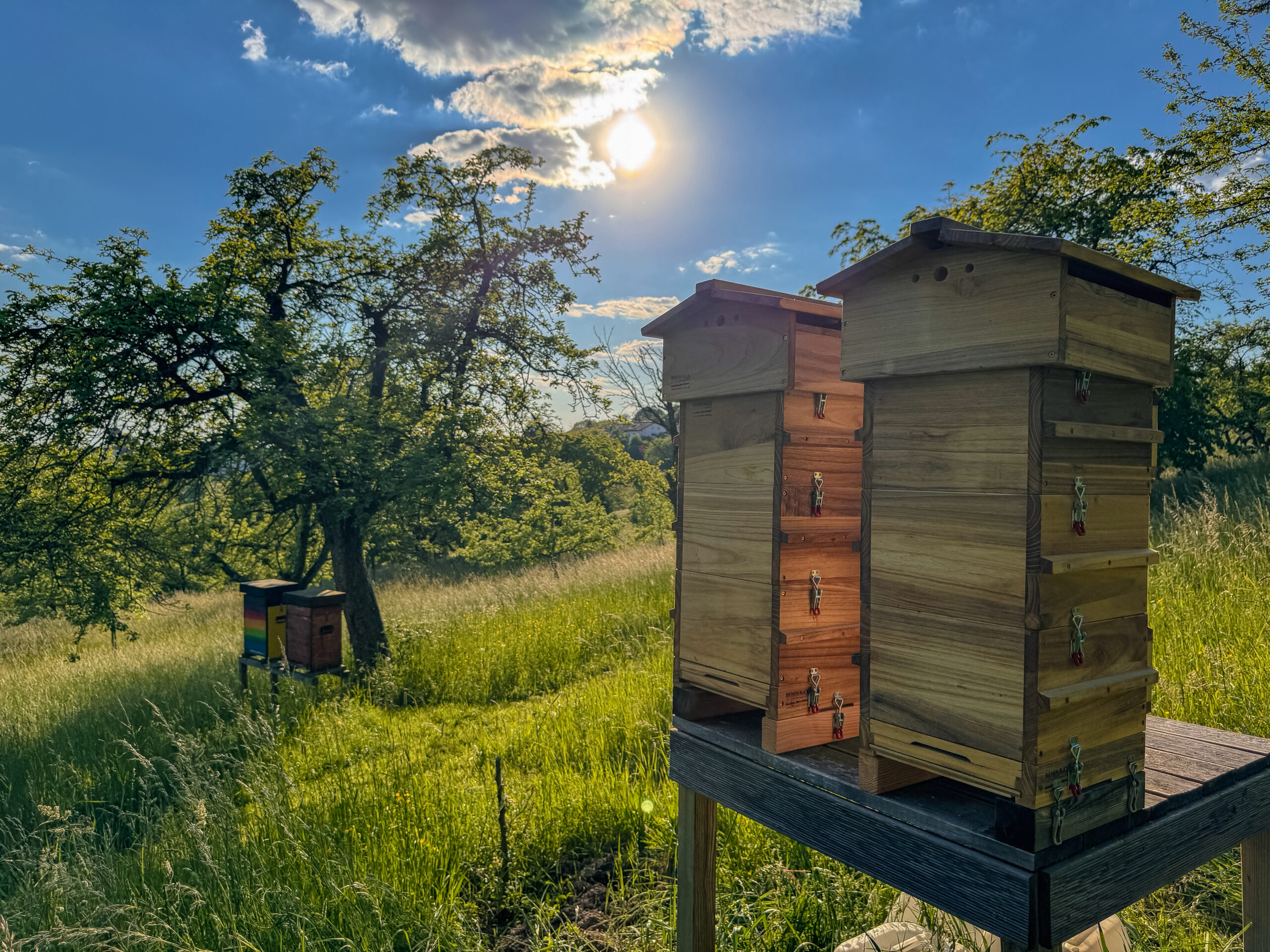
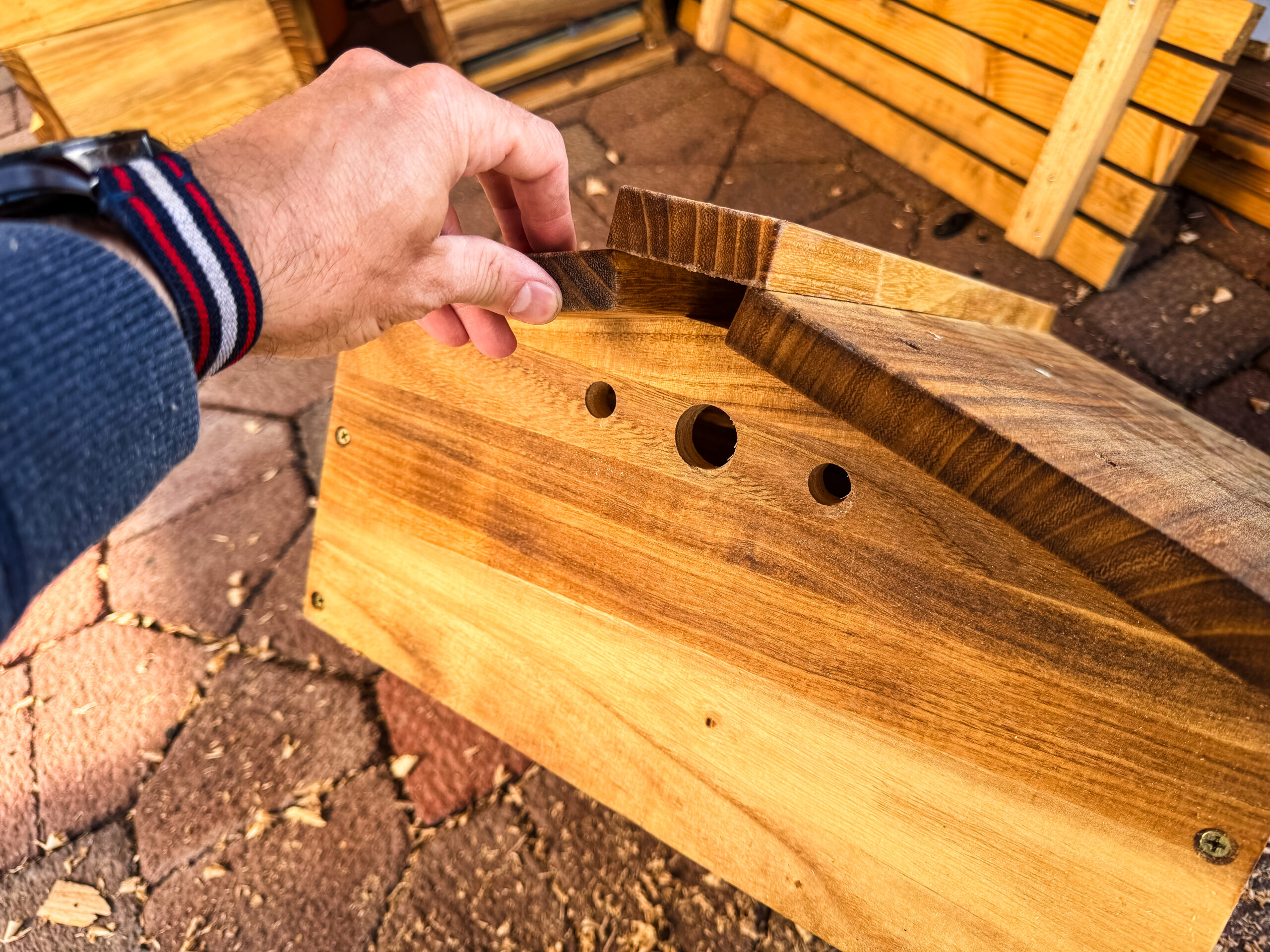
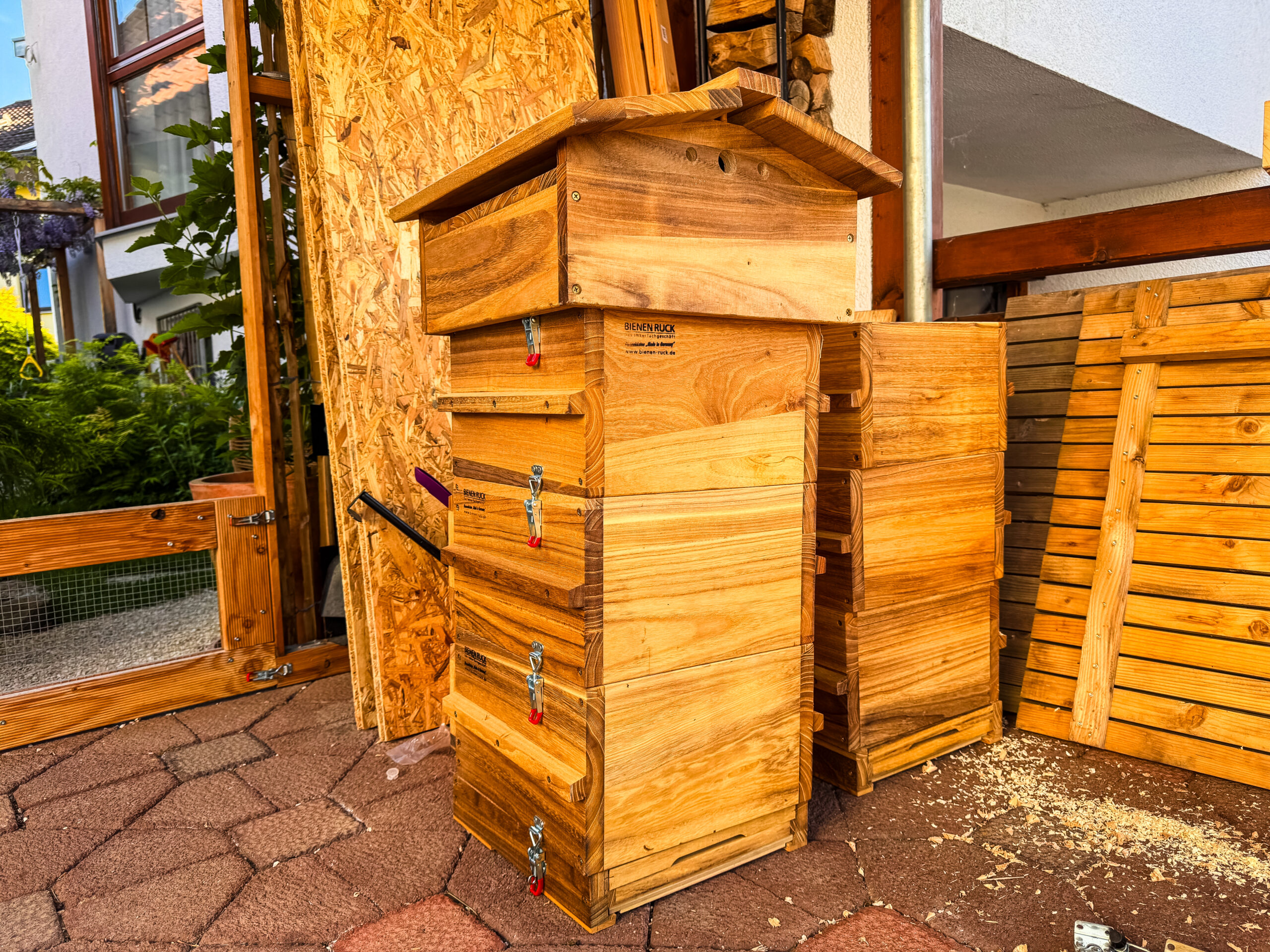
My Warré hives were also on my to-do list this month. I decided to give them an update—or, rather, a downgrade. Out with the modern plastic, in with tried-and-tested natural materials.
I removed the plastic windows and replaced them with wax cloth. Checking the hive through plastic is common practice, but somehow it feels wrong to me when the bees build on it.
I also reworked the cushion: improved ventilation, refilled with straw and wood shavings, and separated off with sturdy linen. Everything is just as I think it should be for a wonderful beehive. The renovation took longer than expected, but it was worth it. Proudly, and contrary to my original plan, I’m putting them not in my new apiary but replacing the Mellifera single-chamber hive. I can now wait for my swarms with a good feeling and hopefully tell you more about them next time.
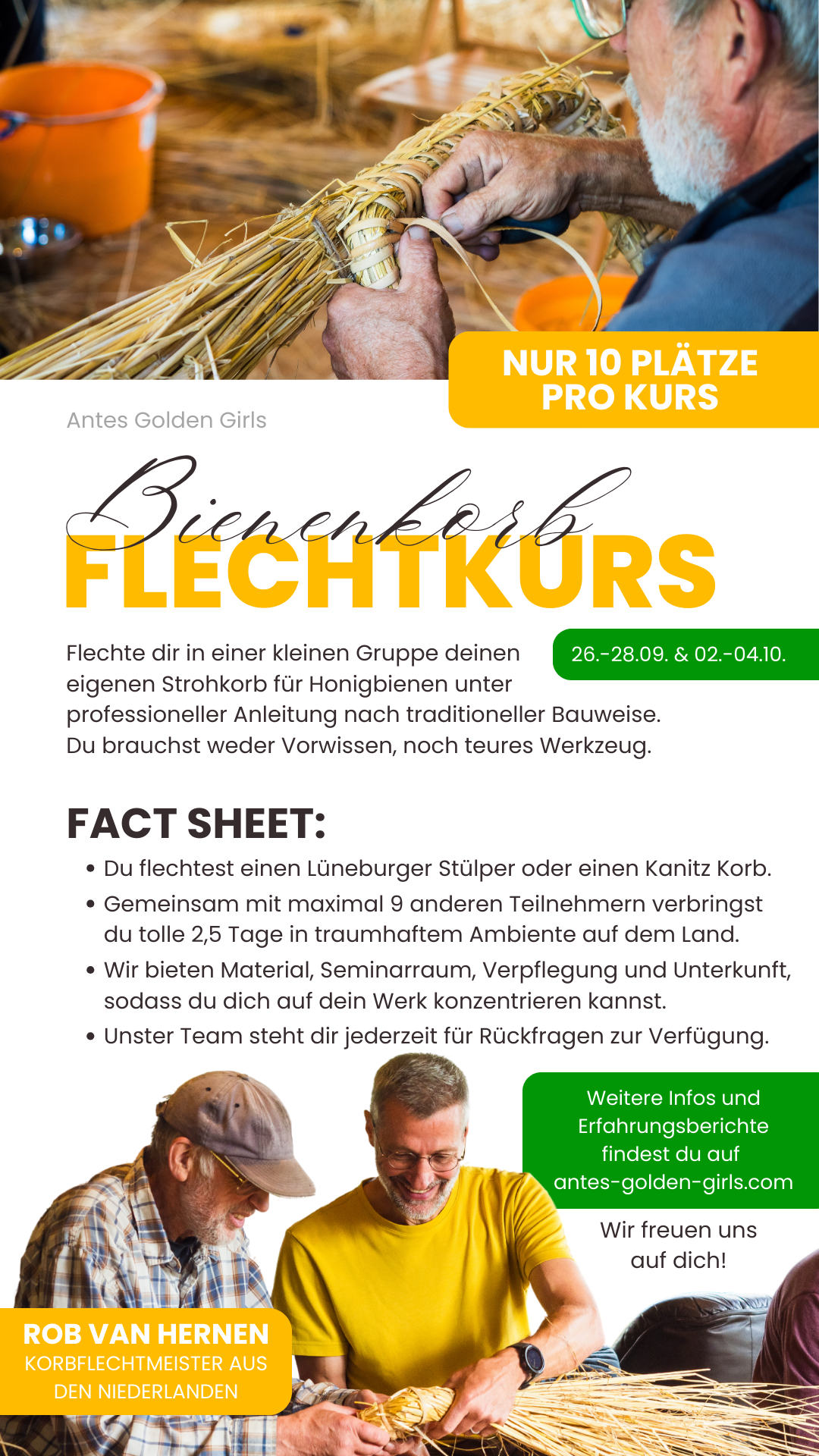
P.S. My apiary is now going to belong entirely to the baskets. At the end of September and beginning of October, traditional bee skeps will once again be woven in a wonderful setting with an experienced master basket weaver. If you’d like to join in… Here you can find more information (Germany). There is also a course in Switzerland on 17 July, in German and French, organized by FreeTheBees, here is the link.
Best wishes,
Ante
YouTube: https://www.youtube.com/@AntesGoldenGirls
Instagram: https://www.instagram.com/antes.golden.girls/
TikTok: https://www.tiktok.com/@antes.golden.girls
Website: https://antes-golden-girls.com
Subscribe to our newsletter here so you don’t miss a new blog post.
Beekeeping Calendar 2025 – May: Spring Awakening in the Hive: Pollen, Brood and First Challenges
Beekeeping Calendar 2025 – April: First Inspection of the Bees
Beekeeping Calendar 2025 – March: Too Many Bees? Too Much Honey?
Beekeeping Calendar 2025 – January: The End and the Beginning
January – February: Looking Back and Planning the New Beekeeping Season
March: Preparing for the New Beekeeping Season and Ensuring Adequate Feed
July: No Treatment for Bees Without First Measuring the Infestation
August: How Do Location and Conditions Affect the Health of Bee Colonies in Midsummer?
Text and photos by Ante Hamersmit Ante Hamersmit has a special way of keeping bees. A log hive resembles a tree trunk...
Text and photos by Ante HamersmitAnte Hamersmit has a special way of ...
Text and photos by Ante HamersmitAnte Hamersmit has a distinctive way...
Important information
Important information: The original texts are published in German. The French, Italian and English versions are translated automatically and checked where possible. Please report any errors to bee@freethebees.ch.