Text and photos by Ante Hamersmit
I had come to terms with the idea: no swarming year. Not for me, nor for fellow beekeepers in the area. Not a single colony felt the urge to set off.
But as with plans, the bees had other ideas. Or rather, I did. The desire to populate some of my hives with new colonies this year was simply too strong. And when things finally began to buzz and hum after all – quite differently from what I had expected – everything took off. Three new projects, three new stories, three new bee homes.
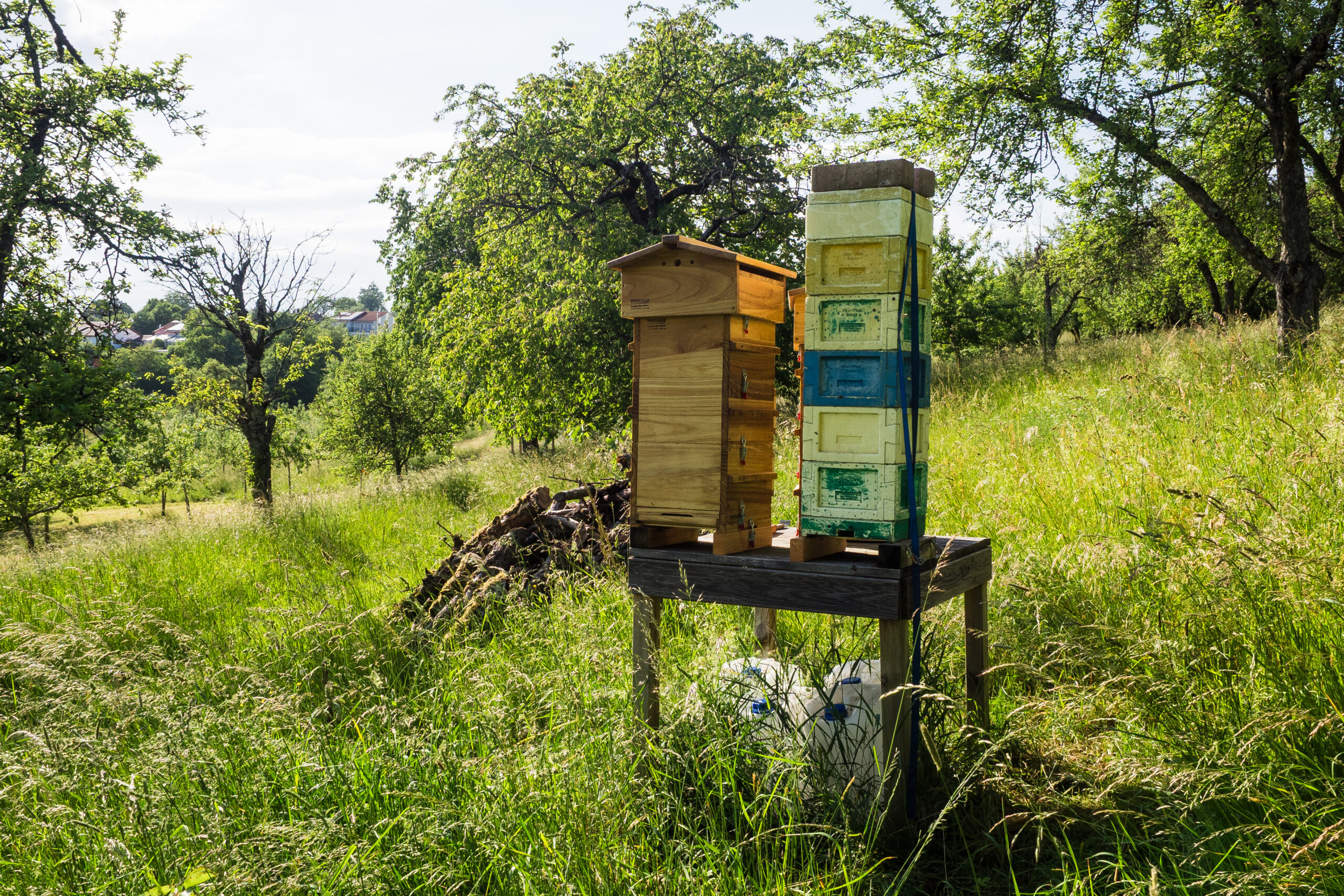
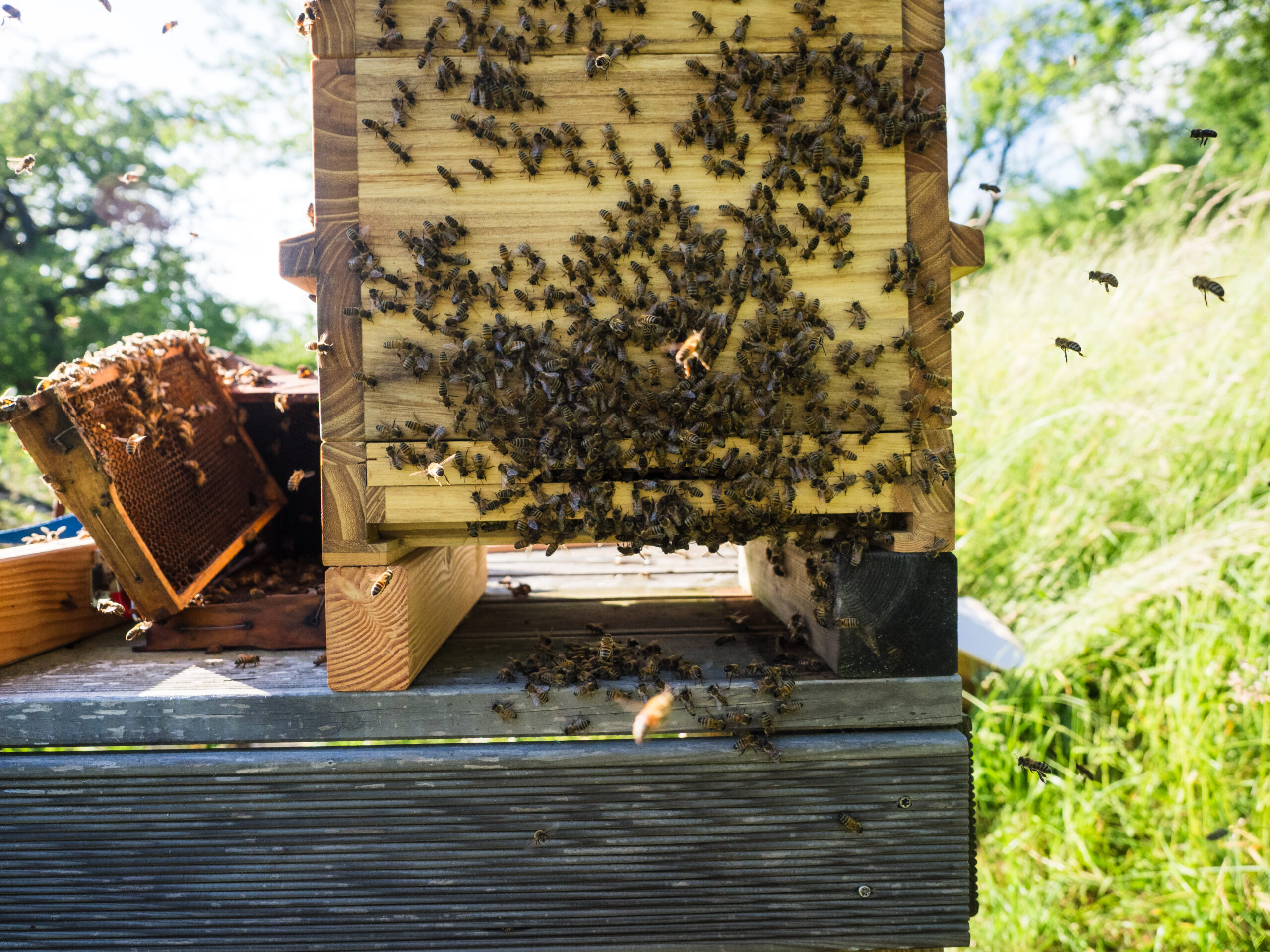
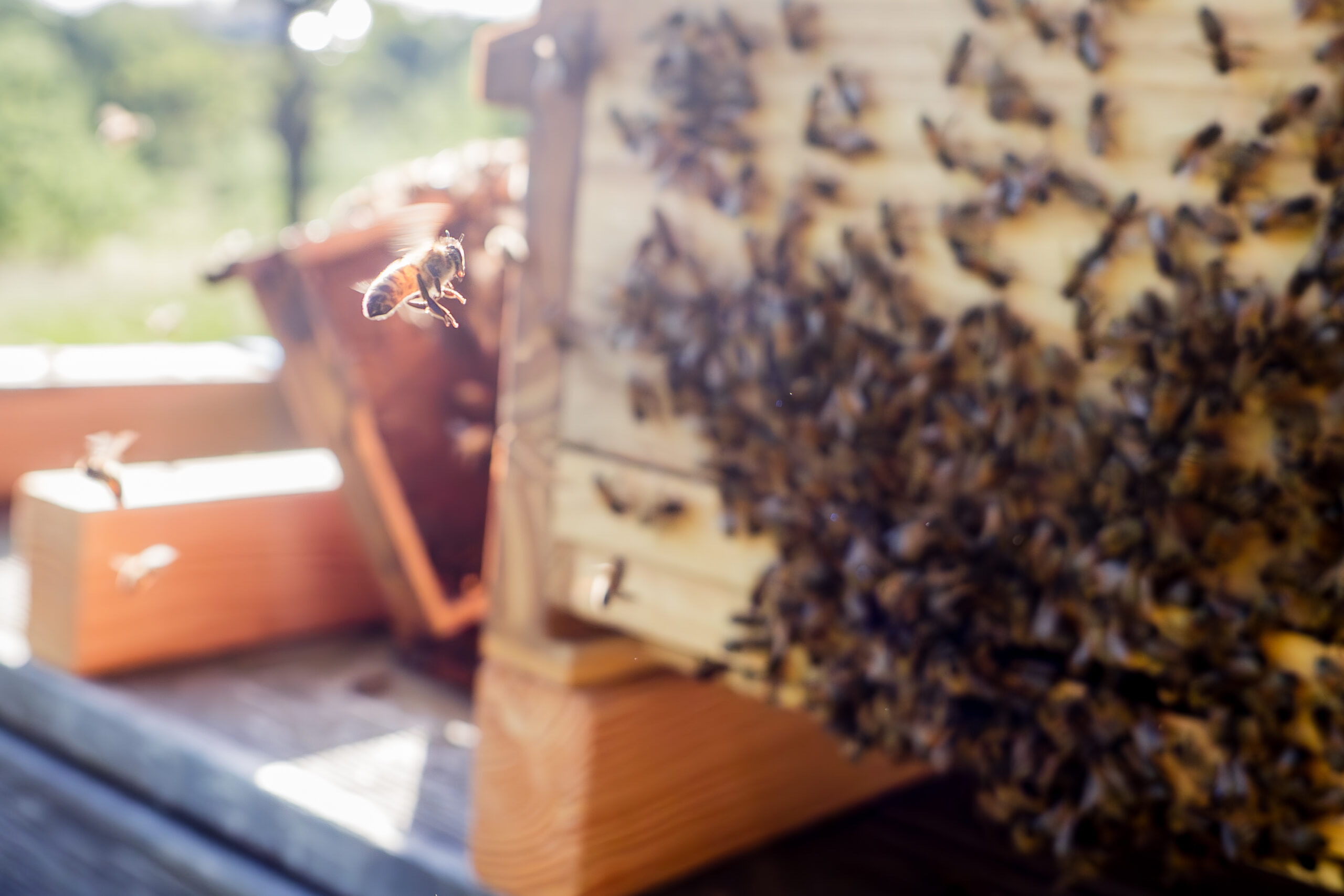
It was already the middle of the night when my phone vibrated. A fellow beekeeper was standing at my door. In his hands: a swarm. It had been caught in a Mini-Plus plastic hive – a “plastic monstrosity”, as I called it to myself. Tall, compact and full of bees. My hastily devised plan was to shake the swarm straight into one of my skeps. But it soon became clear that this wasn’t going to work. The bees had gathered not only inside the hive, but were also sitting all over the outside. There was no question of keeping them confined in a cool, dark place. So off to the apiary we went, where it became clear that the usual method of shaking them in wasn’t an option, because the hive was also full of frames.
So I decided on the spur of the moment to use my Warré hive. Once set up at the site, the colony could settle down first. This bought me some time to observe, think, and then transfer them in an orderly way.
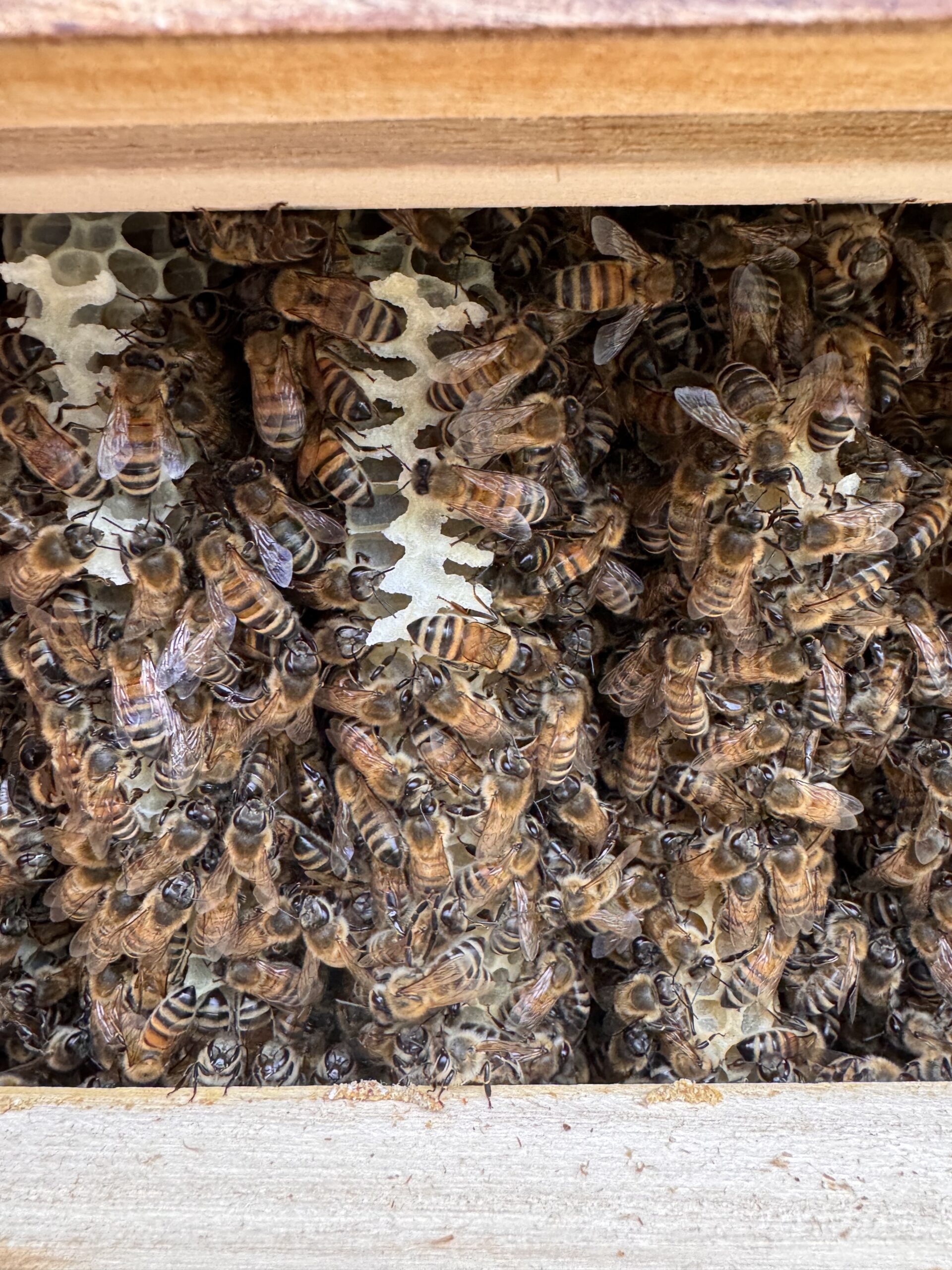
Two days later, I began removing the frames one by one and transferring the bees to their new home. It was calm, focused work – almost meditative. Within a week, the upper brood box had been completely built out. The bees had accepted the offer, and I’m looking forward to seeing how this colony develops.
The full video of the conversion and move-in is, as always, on my YouTube channel.
2. The skep and new acquaintances
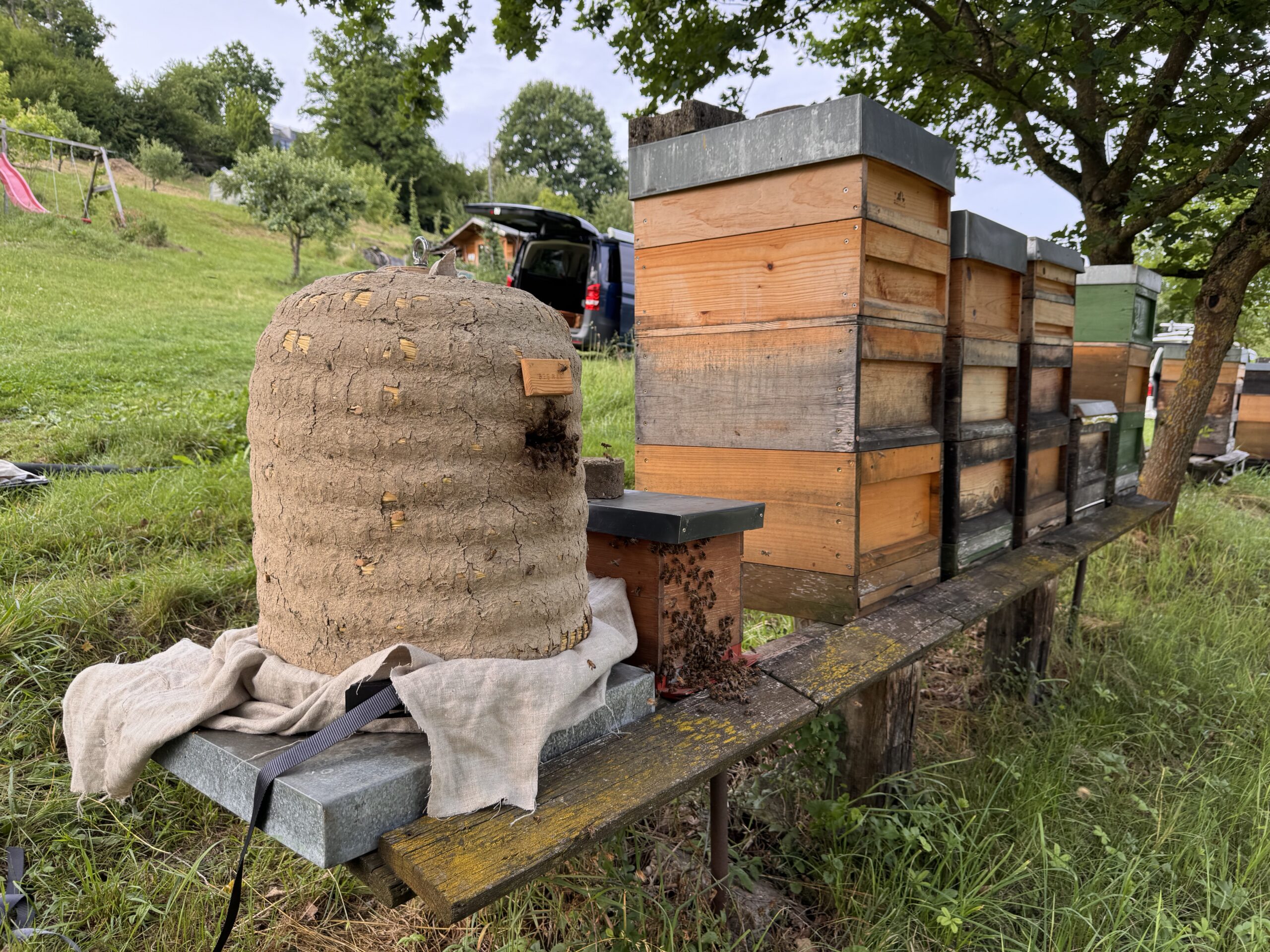
It’s not always existing contacts that lead to the best encounters – sometimes all it takes is an online ad. That’s how I got in touch with a beekeeper who had caught a swarm about two weeks earlier. The colony had already developed well, the queen had begun laying eggs, and the first patches of brood were present. He couldn’t keep the colony because he already had too many, and when we talked about skep beekeeping, he became curious.
Together, we shook the swarm into a prepared skep. The moment the bees gathered in the warm straw form was magical, as always. No rushing, no commotion – just the gentle settling in, the buzzing, and finally the first orientation flights.
Soon they began building comb. I added a little feed – after all, it wasn’t a fresh swarm but a colony with brood already underway, and they had already used up quite a bit of energy.
They seem content. So am I.
For anyone else who’d like to explore skep beekeeping: in autumn (late September and early October), I’m once again running skep-weaving courses, together with an experienced master basket weaver, in beautiful surroundings in Germany. There are still places available. As always, you can find all the information on my website. FreeTheBees is also organising a Weissenseifener hanging basket course with Jennifer Rident in Switzerland (Canton of Fribourg); the information is here.
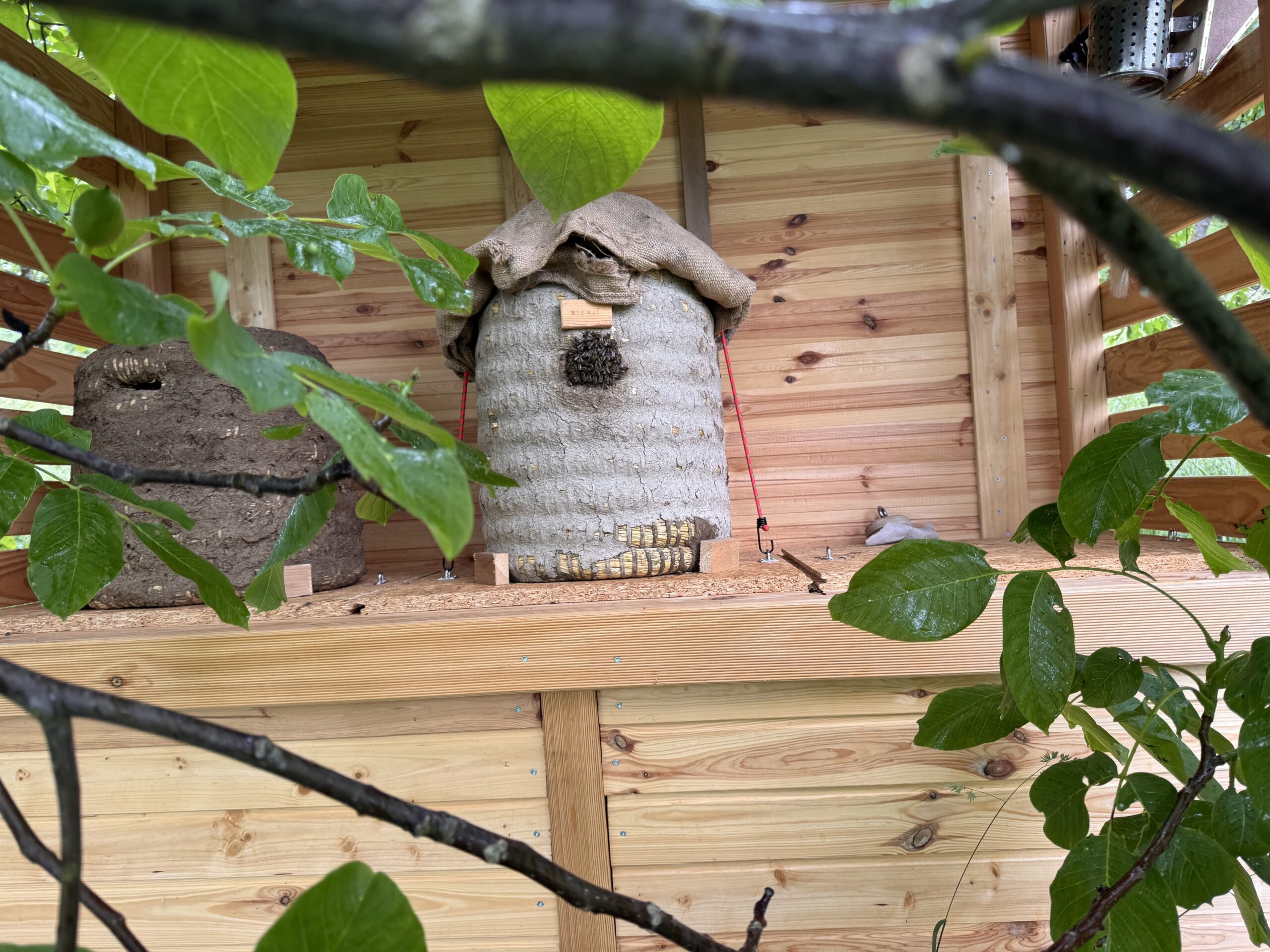
I originally tested the HIIVE hive with a mixture of curiosity and scepticism. It is a modern, scientifically developed hive designed around the bees’ natural needs – with a rounded interior, breathable materials and excellent thermal insulation. The idea: modern technology meets a traditional understanding of bees.
Unfortunately, my first HIIVE project failed last year – despite the best conditions, the colony succumbed to Varroa. It was a wrong decision on my part, and it stayed with me. But this year, a new opportunity came along.
For over a year, I’ve been caring for a colony that has proved to be exceptionally vigorous and Varroa-resistant. No chemical treatment, but close monitoring with natural mite-drop counts.
The colony shows active grooming, a steady brood rhythm and good adaptation to changing weather. So I made my decision: I would split the colony. The proven queen was able to move into the new HIIVE in a prime location with some of the worker bees. I’m curious to see whether it works this time.
If you’d like to learn more about the HIIVE hive, you can form your own opinion at the following link. And everyone can get 10% off with “ANTE10”. I’m curious to hear what you think.
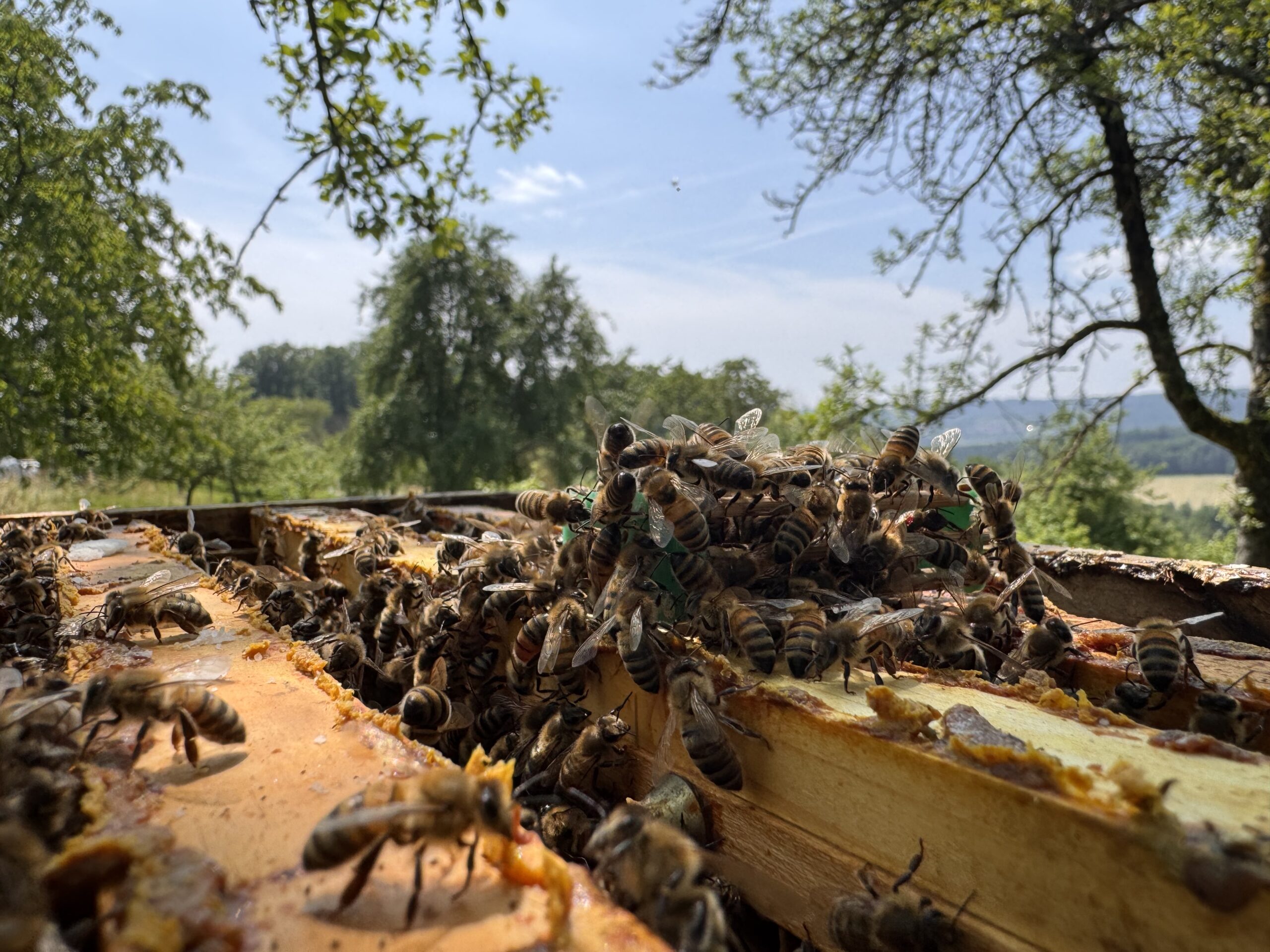
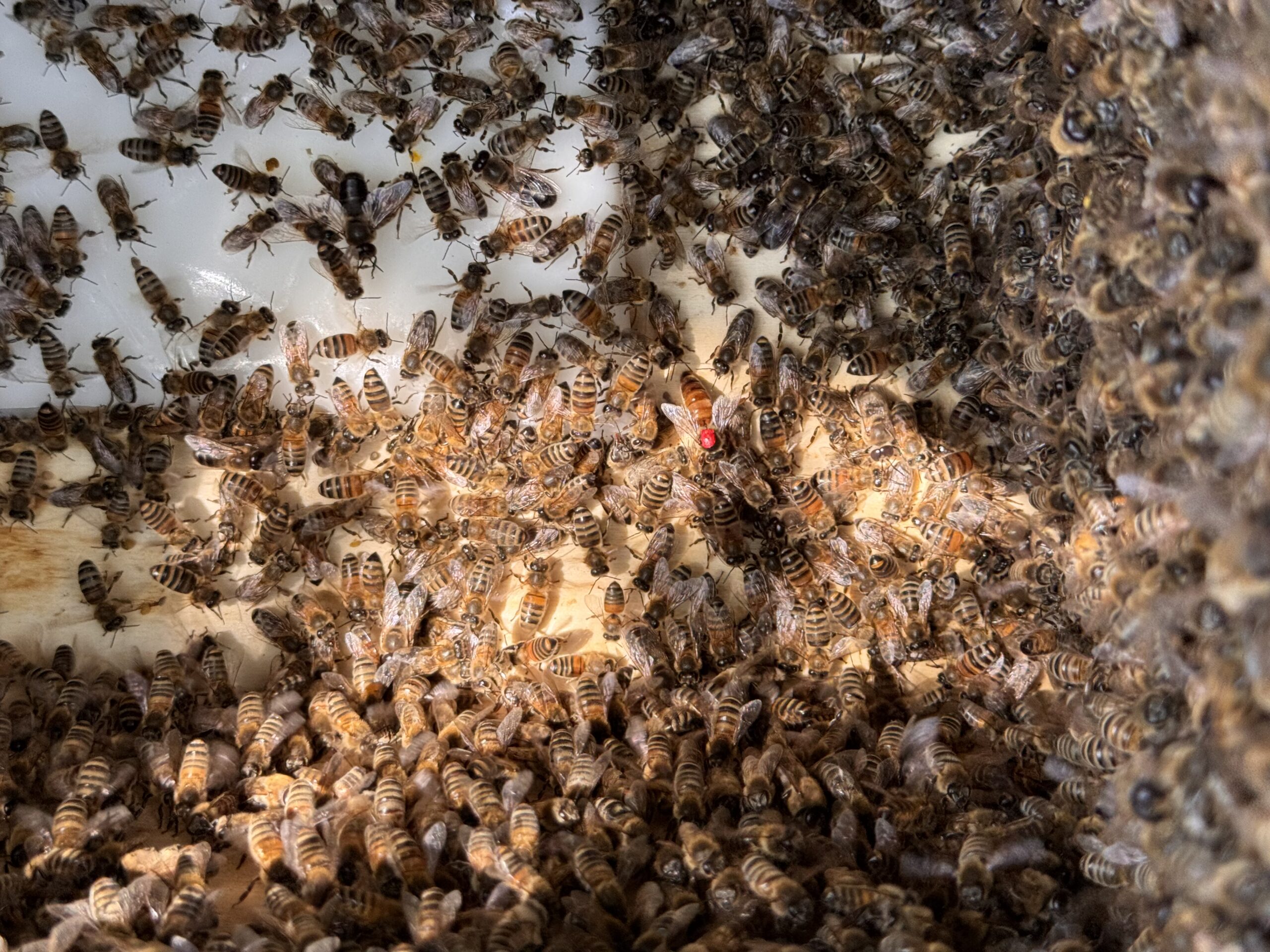
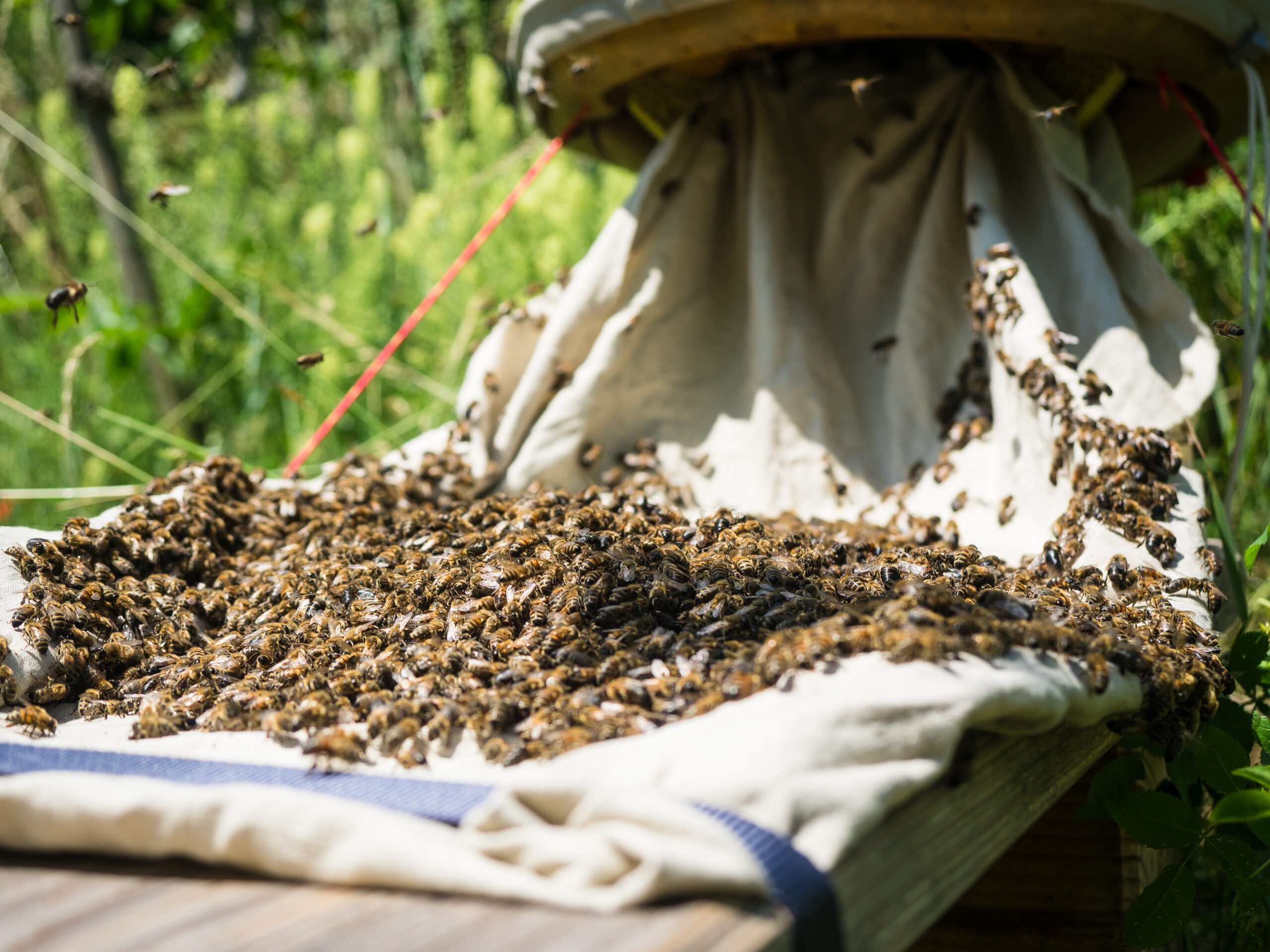
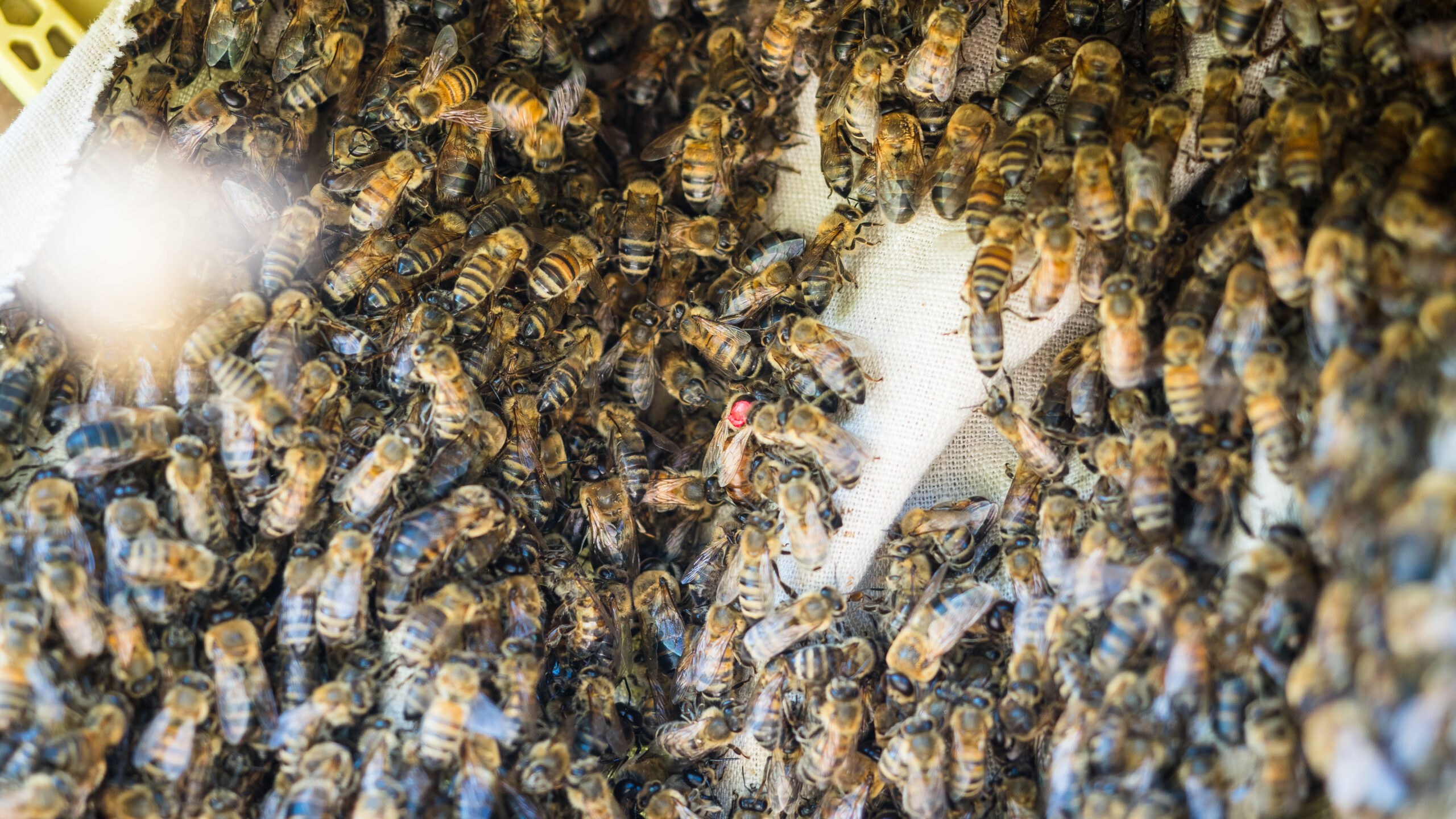
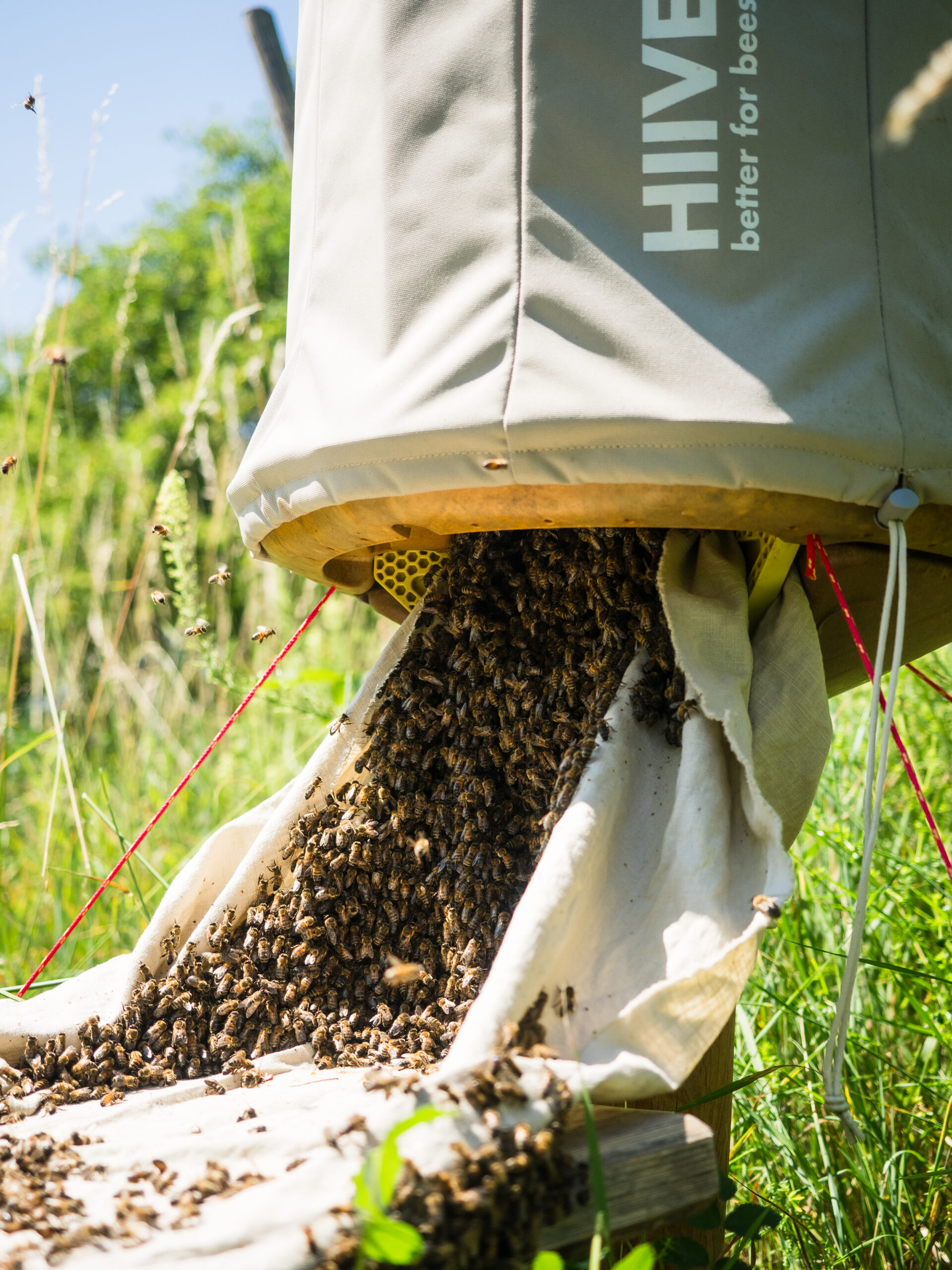
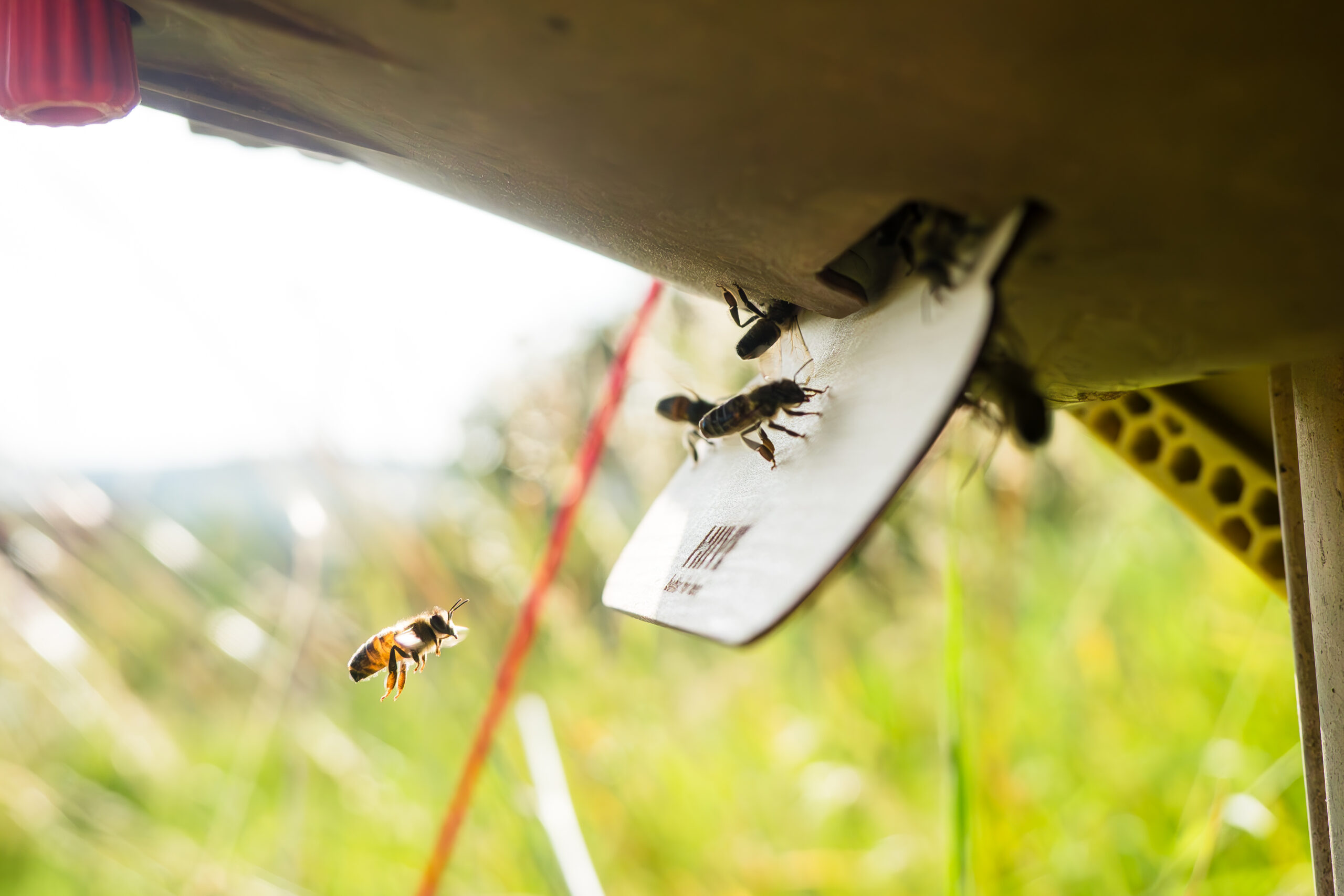
The coming weeks will be crucial. I want to help the new colonies get through the summer in good shape, strengthen them, regularly check Varroa mite drop counts and provide targeted support.
My second skep needs special attention – it’s still waiting for new residents. Perhaps the next swarm is already on its way…
Until then: stay curious, be kind to bees, and feel free to drop by again.
Best wishes,
Ante
YouTube: https://www.youtube.com/@AntesGoldenGirls
Instagram: https://www.instagram.com/antes.golden.girls/
TikTok: https://www.tiktok.com/@antes.golden.girls
Website: https://antes-golden-girls.com
Subscribe to our newsletter here so you don’t miss a new blog post.
Beekeeper’s Calendar 2025 – April: First inspection of the bees
Beekeeper’s Calendar 2025 – March: Too many bees? Too much honey?
Beekeeper’s Calendar 2025 – January: The end and the beginning
January – February: Looking back and planning for the new beekeeping season
March: Preparing for the new beekeeping season and ensuring an adequate food supply
July: No treatment for bees without first measuring infestation levels
August: How do location and conditions affect the health of bee colonies in midsummer?
Text and photos by Ante Hamersmit Ante Hamersmit has a special way of keeping bees. A log hive resembles a tree trunk...
Text and photos by Ante HamersmitAnte Hamersmit has a special way of ...
Text and photos by Ante HamersmitAnte Hamersmit has a distinctive way...
Important information
Important information: The original texts are published in German. The French, Italian and English versions are translated automatically and checked where possible. Please report any errors to bee@freethebees.ch.