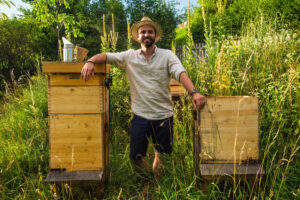
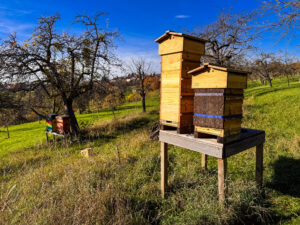
Text and photos by Ante Hamersmit
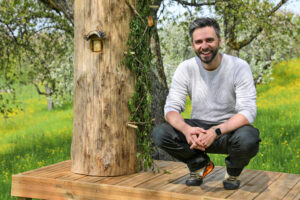
July was hot and full of little surprises – some well planned, others completely unexpected. As the nectar flow gradually declines and the days grow shorter again, my enthusiasm for bees only seems to grow: various projects and the bees’ swarming keep me busy.
Three things particularly occupied me this month: sweat, Varroa and a little happy ending in my cherished basket.
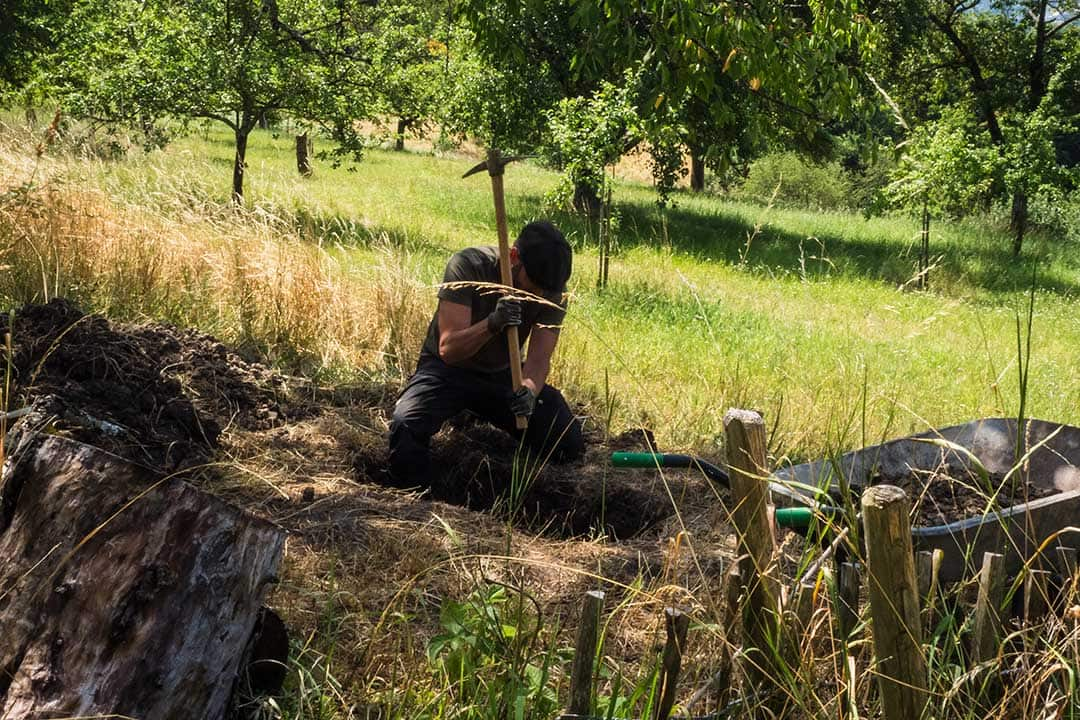
Many people don’t know what a sandarium is. For me, though, it’s a long-planned project close to my heart. It was meant to be my small contribution to biodiversity: a place for wild bees, especially ground-nesting species such as silk bees and furrow bees. A small corner of my orchard meadow, free of vegetation, with loose substrate and an ideal aspect. Simple in theory – hard in practice.
I quickly found the spot: sunny, sheltered – ideal. But the soil proved stubborn. Clay soil. Dry. Hard. The effects of global warming are clear. I stood there armed with a spade, pickaxe and plenty of motivation. The latter deserted me after about two hours – the hole was only 20 cm deep, and my smartwatch was warning me of a risk of overheating. Frustrated, I had to abandon the project for the time being, until the long-awaited rain finally came. At last, I was able to dig through the still-heavy clay soil, always keeping my goal in sight. After sweating through a few T-shirts, I got the result I’d been hoping for: a 60-centimetre-deep hole, ready to be filled with a drainage layer and sand.
It’s no architectural masterpiece, but I hope it will serve its purpose. Now I’m keeping a curious eye out to see whether the first residents move in. Sometimes a small patch is all it takes to make a home.
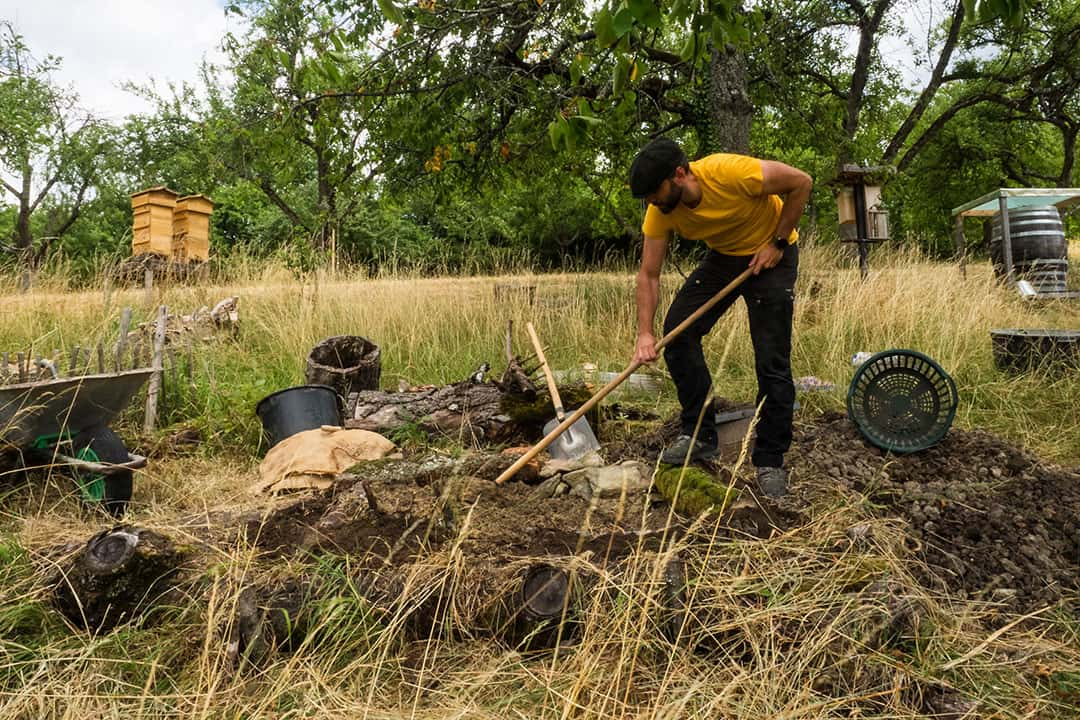
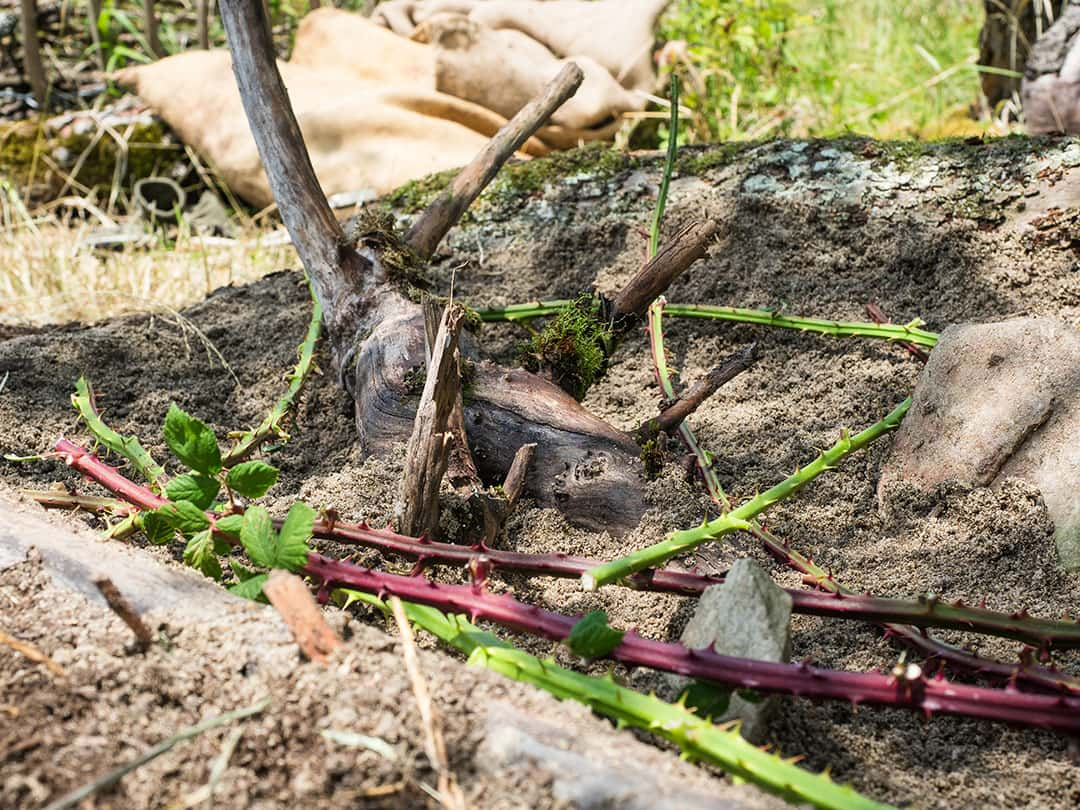
The sandarium is finished and protected from cats with thorny plants
While I felt that the wild bees were taken care of for the time being, another familiar issue was keeping me busy in one of my single-comb hives: the Varroa mite. While many beekeepers turn to formic acid, I want to continue using alternative methods. My approach: caging the queen, combined with an oxalic acid treatment that is better tolerated by the bees. I had already used this method successfully last year, with satisfactory results. So the plan was clear: the queen goes into captivity, brood rearing is interrupted, and the Varroa mites are exposed. Done and dusted. The only problem was that my bees hadn’t been let in on the plan.
Two weeks later, I checked:
I paused, unable to make sense of it. The caged queen was still alive, sitting peacefully in her cage and being cared for – but outside, someone else was already on the move. Active. Busy. Accepted. And apparently already laying eggs. As it turned out, the colony had simply raised itself a new queen. She was probably about to emerge when I locked up the reigning queen, unknowingly preventing the colony from swarming.
My lovely queen, still going strong, remained in the cage – and I was left wondering: What should I do?
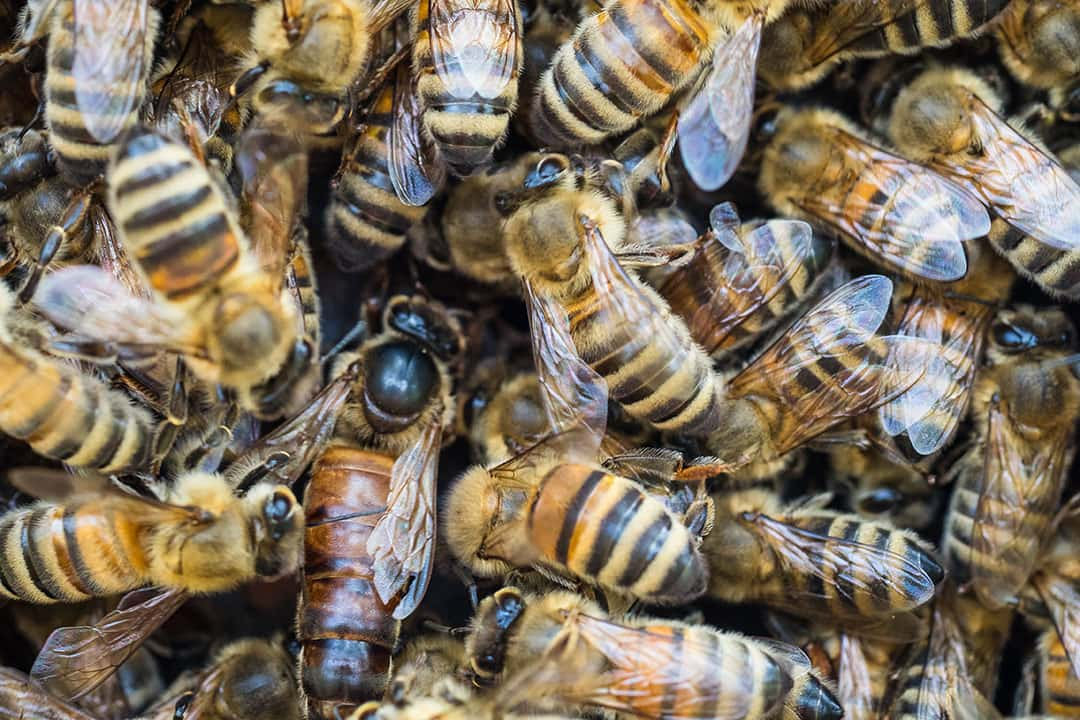
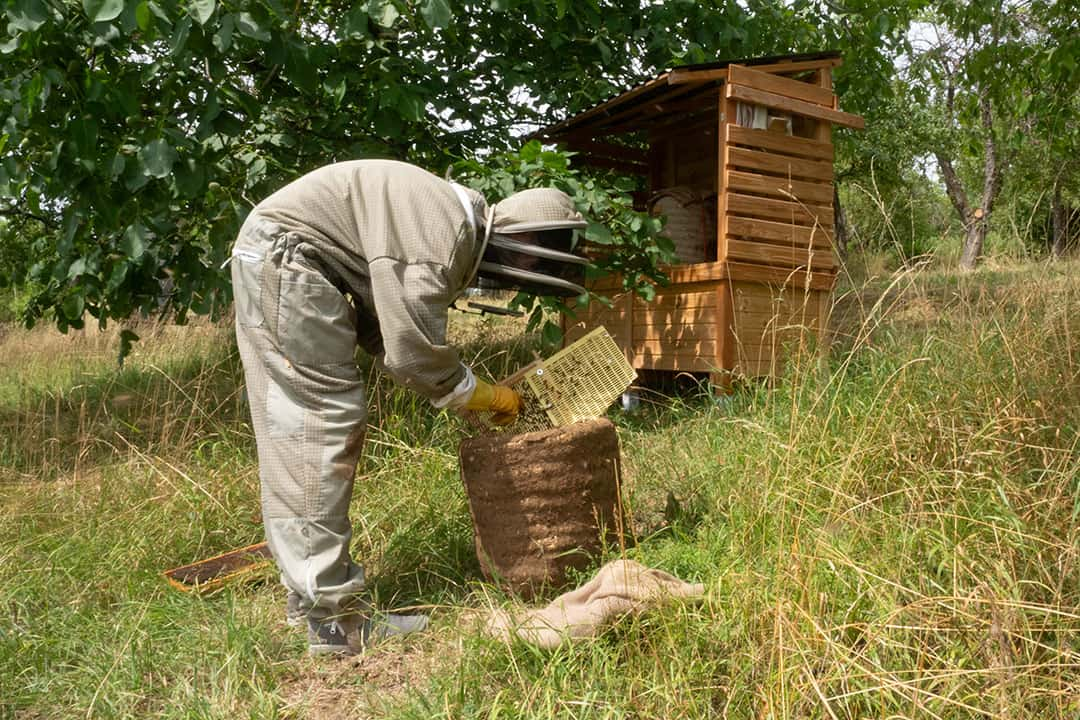
Spontaneity is often the key to beautiful moments. So I decided to give the caged queen a new home – quite literally. My straw skep, lovingly prepared, had been standing empty for weeks. I kept hoping to populate it with a swarm, but 2025 simply wasn’t a swarming year. So I opened it, gathered some attendant bees from the colony and put them in together.
What hadn’t been planned suddenly felt exactly right. I hadn’t expected to bring life to my cherished basket this year, and then it was this very queen who came to mean so much to me. My takeaway: You can plan all you like, but when nature has other plans, you have to go with the flow instead of fighting it.
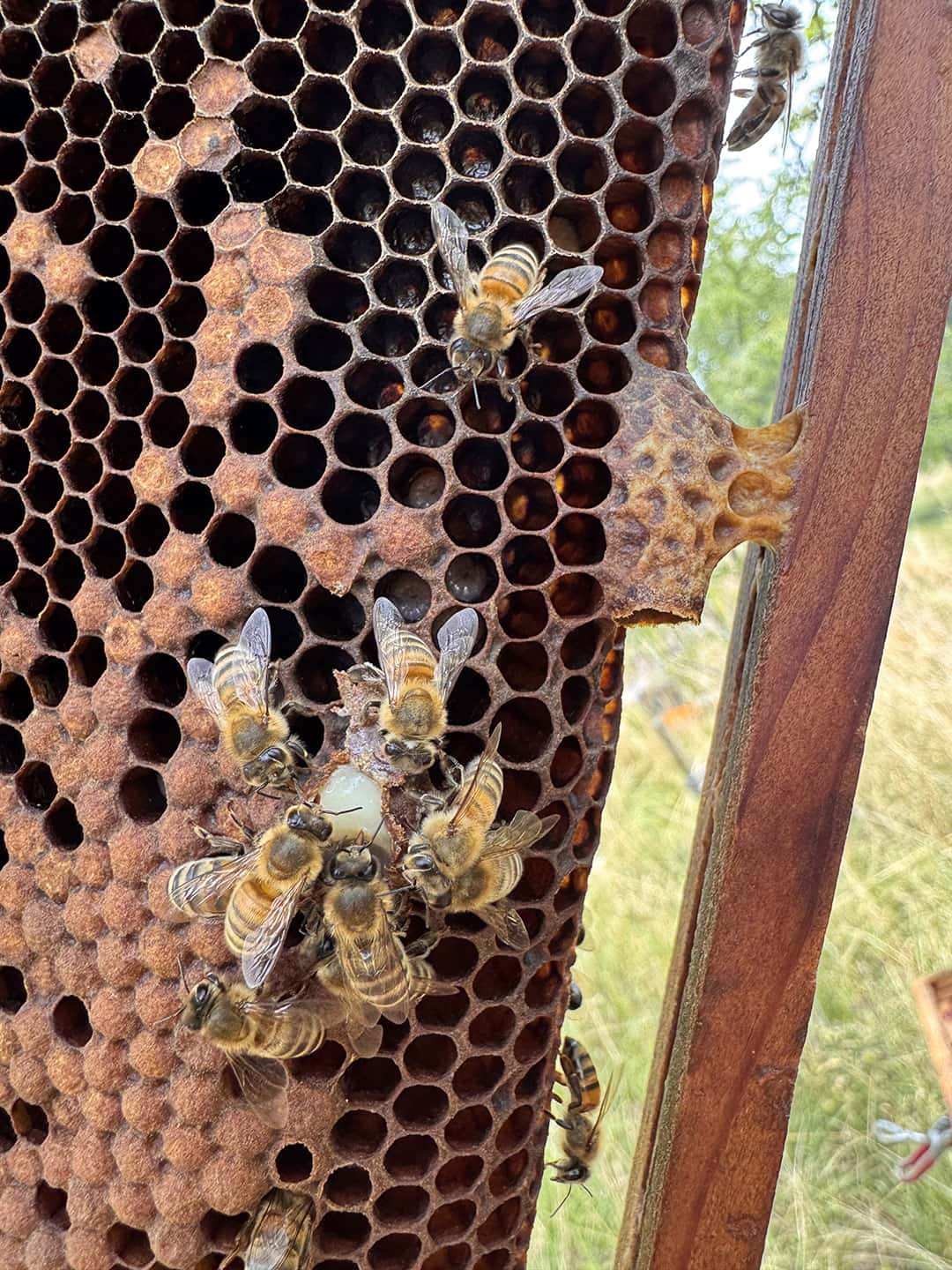
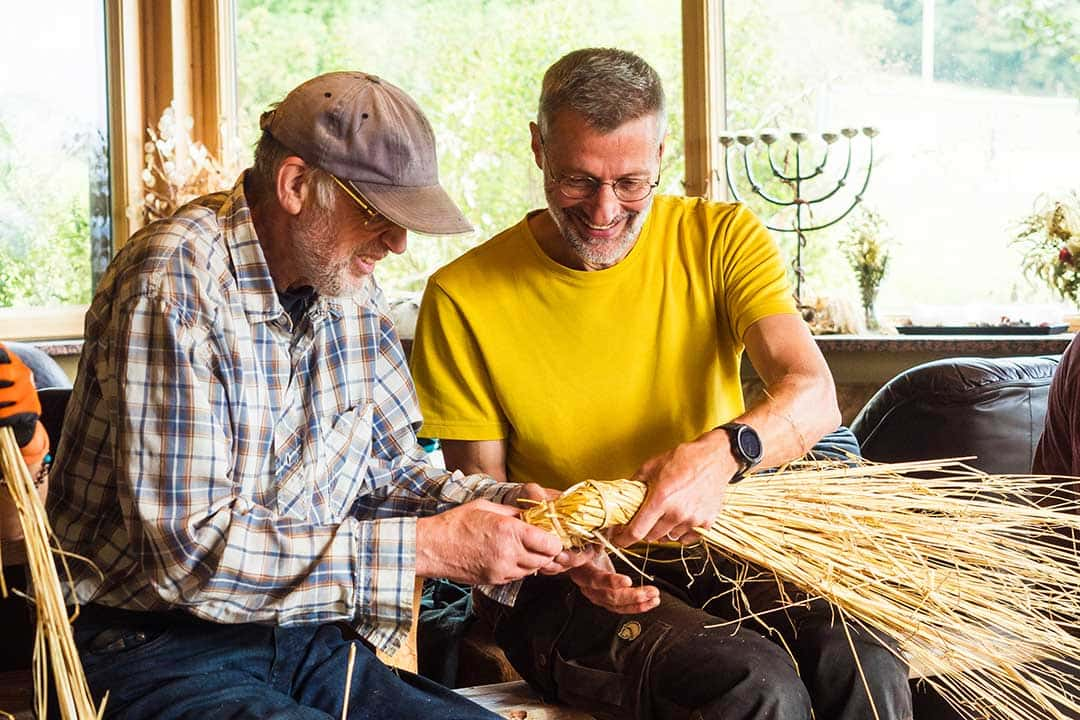
After this intense month, I’m looking forward to late summer – a holiday back home in Croatia. Feeling the sea and the sun. But the projects carry on: just because things didn’t work out with the bees, I can’t use being unprepared as an excuse. The participants in my basket-weaving course starting at the end of September deserve a thoroughly well-organised course. I owe them that, because alongside the monetary compensation, they’re investing their most valuable asset: their time.
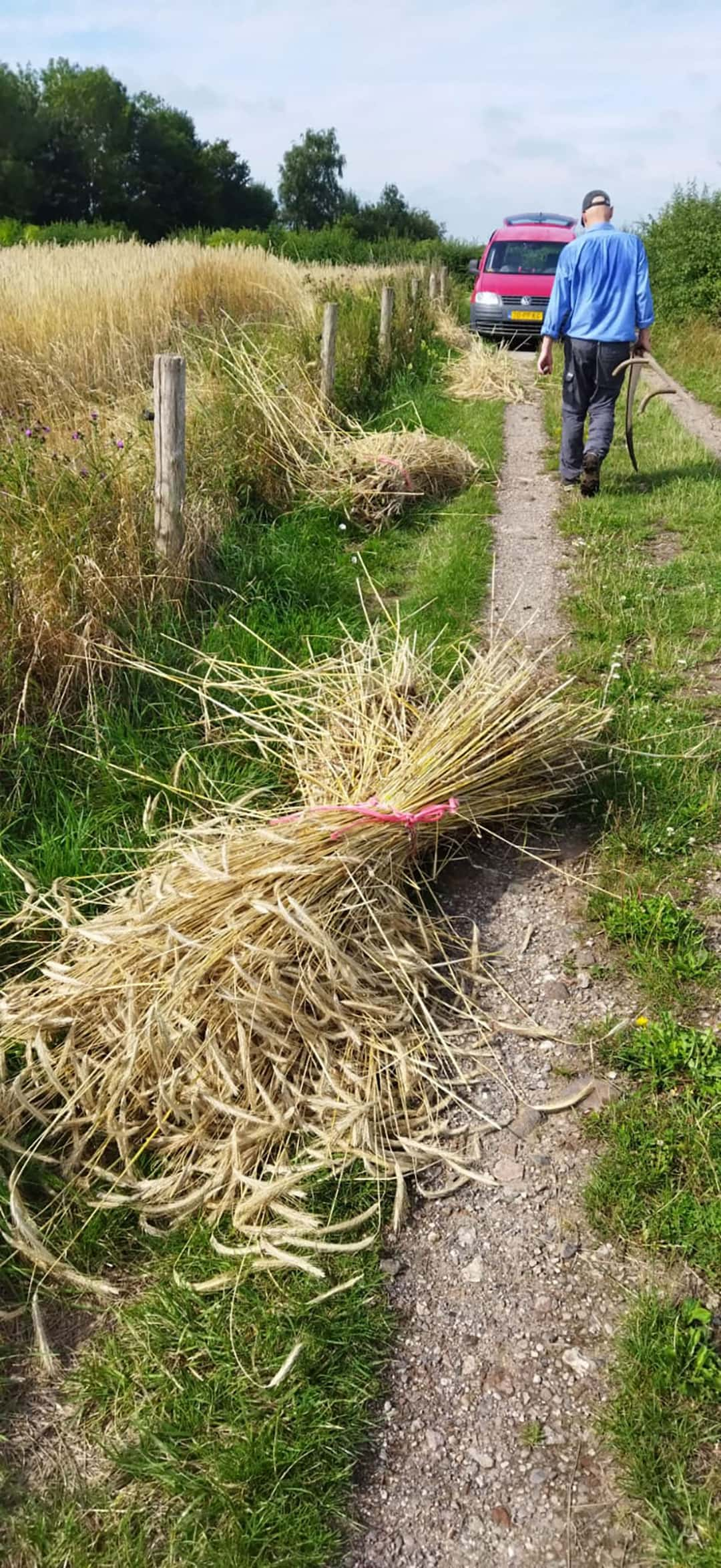
Preparations are under way, the venue is set and the straw has been organised. There are still places available, and you’re very welcome to join us. More information about the basket-weaving course.
Best wishes
Ante
YouTube: https://www.youtube.com/@AntesGoldenGirls
Instagram: https://www.instagram.com/antes.golden.girls/
TikTok: https://www.tiktok.com/@antes.golden.girls
Website: https://antes-golden-girls.com
Subscribe to our newsletter here so you don’t miss any new blog posts.
Beekeepers’ Calendar 2025 – May: Spring awakens in the hive: pollen, brood and the first challenges
Beekeepers’ Calendar 2025 – April: First inspection of the bees
Beekeepers’ Calendar 2025 – March: Too many bees? Too much honey?
Beekeepers’ Calendar 2025 – January: The end and the beginning
January – February: A look back and planning for the new beekeeping season
March: Preparing for the new beekeeping season and ensuring an adequate food supply
July: Never treat bees without first measuring the level of infestation
August: How do location and conditions affect the health of bee colonies in midsummer?
Text and photos by Ante Hamersmit Ante Hamersmit has a special way of keeping bees. A log hive resembles a tree trunk...
Text and photos by Ante HamersmitAnte Hamersmit has a special way of ...
Text and photos by Ante HamersmitAnte Hamersmit has a distinctive way...
Important information
Important information: The original texts are published in German. The French, Italian and English versions are translated automatically and checked where possible. Please report any errors to bee@freethebees.ch.