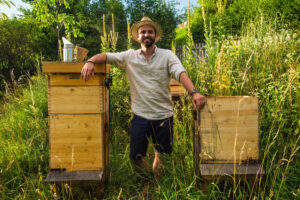
Text and photos by Ante Hamersmit
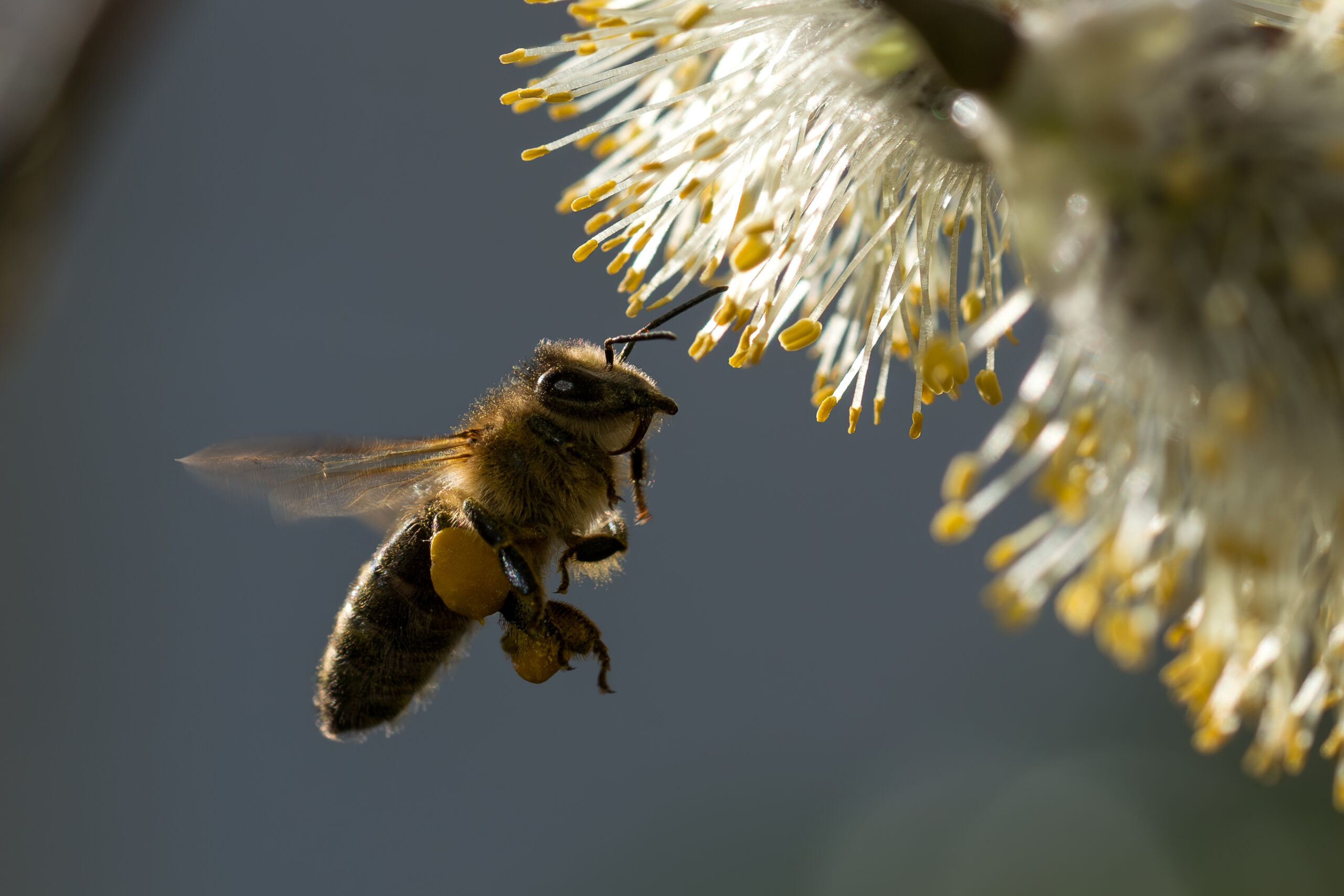
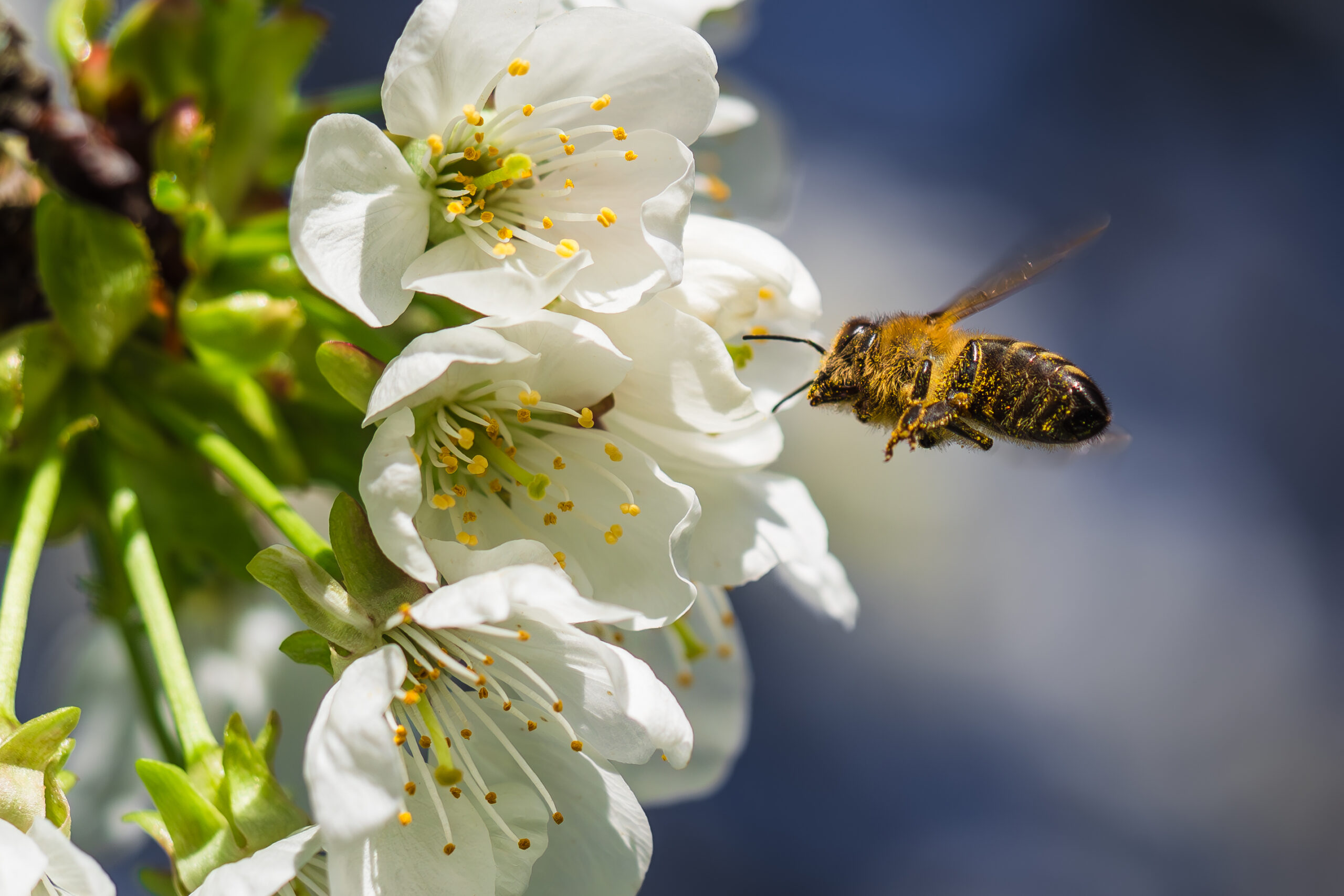
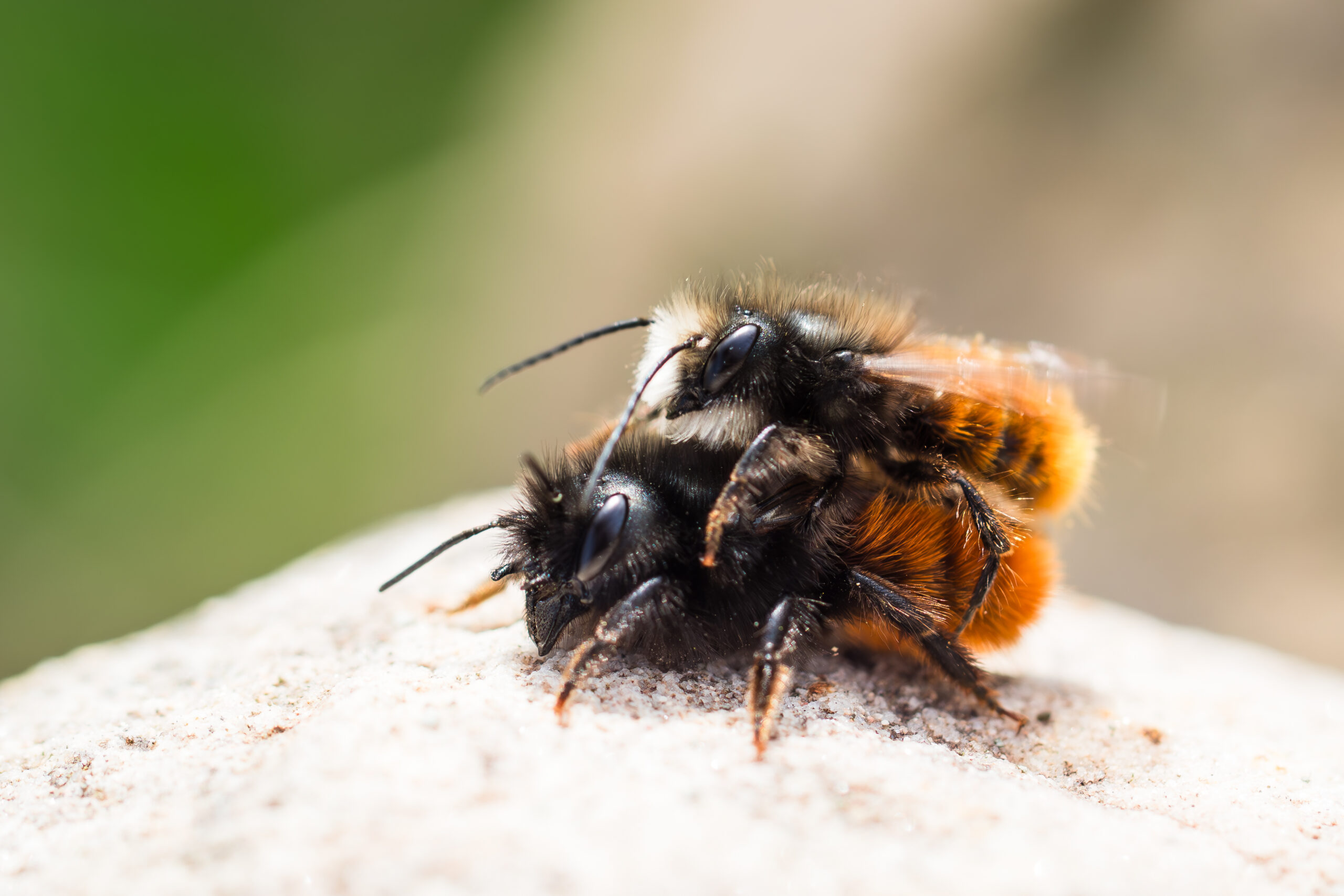
Spring has finally arrived in full. The bees have already collected the pollen from the goat willow, and the cherry trees are in full bloom. In our cultivated landscape of southern German orchards, cherry and apple trees are the visually dominant tree species. This sea of blossoms not only energises me, but the bees too. The pretty mason bees bustle around the insect hotels and get on with what is probably the most beautiful pastime in the world. Or almost – first, the males engage in a wild scramble to win over the females, who emerge a little later. If you take some time to watch this spectacle, you will see that all sorts of dramas with different outcomes are playing out. You can watch a short video of it on YouTube. YouTube link
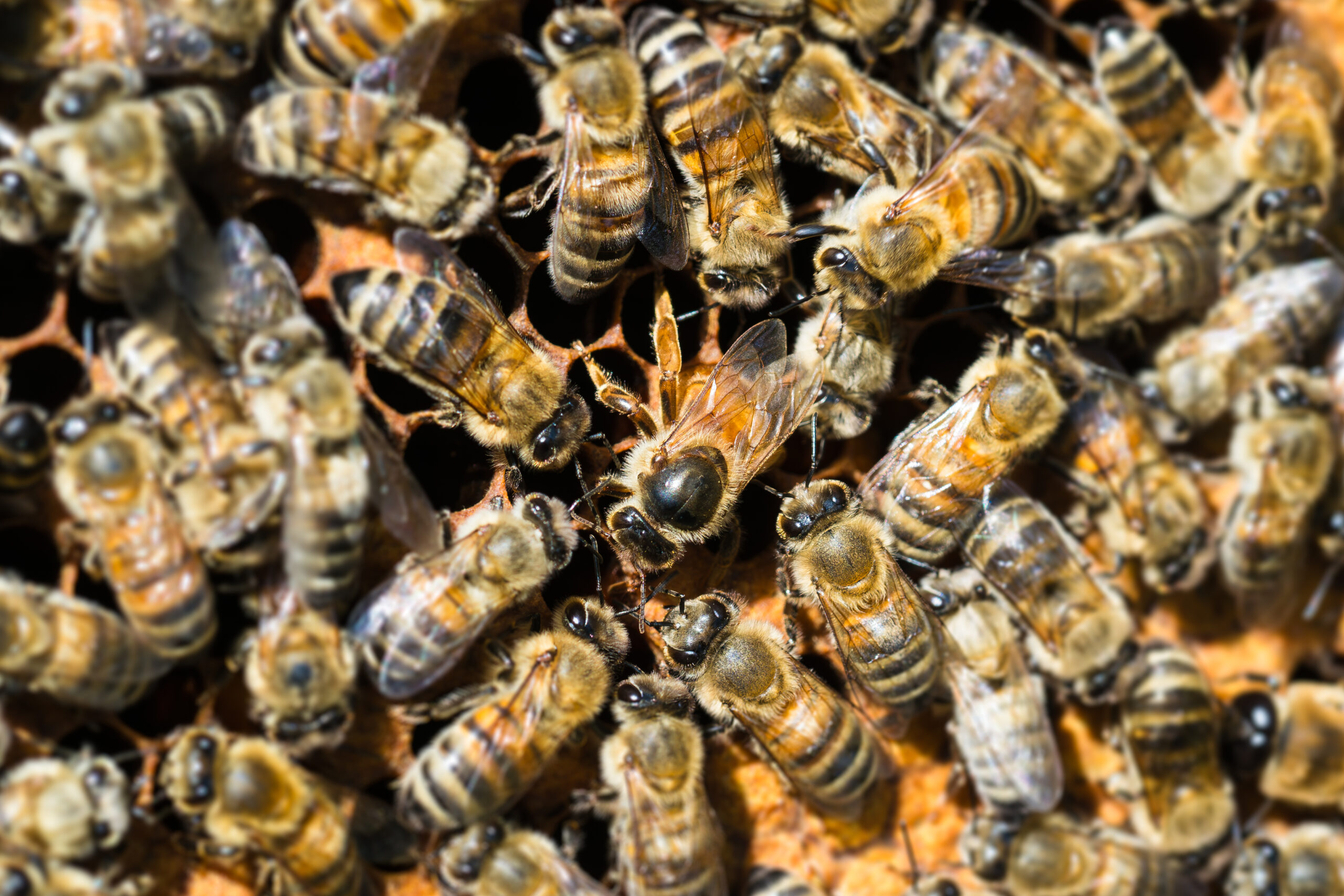
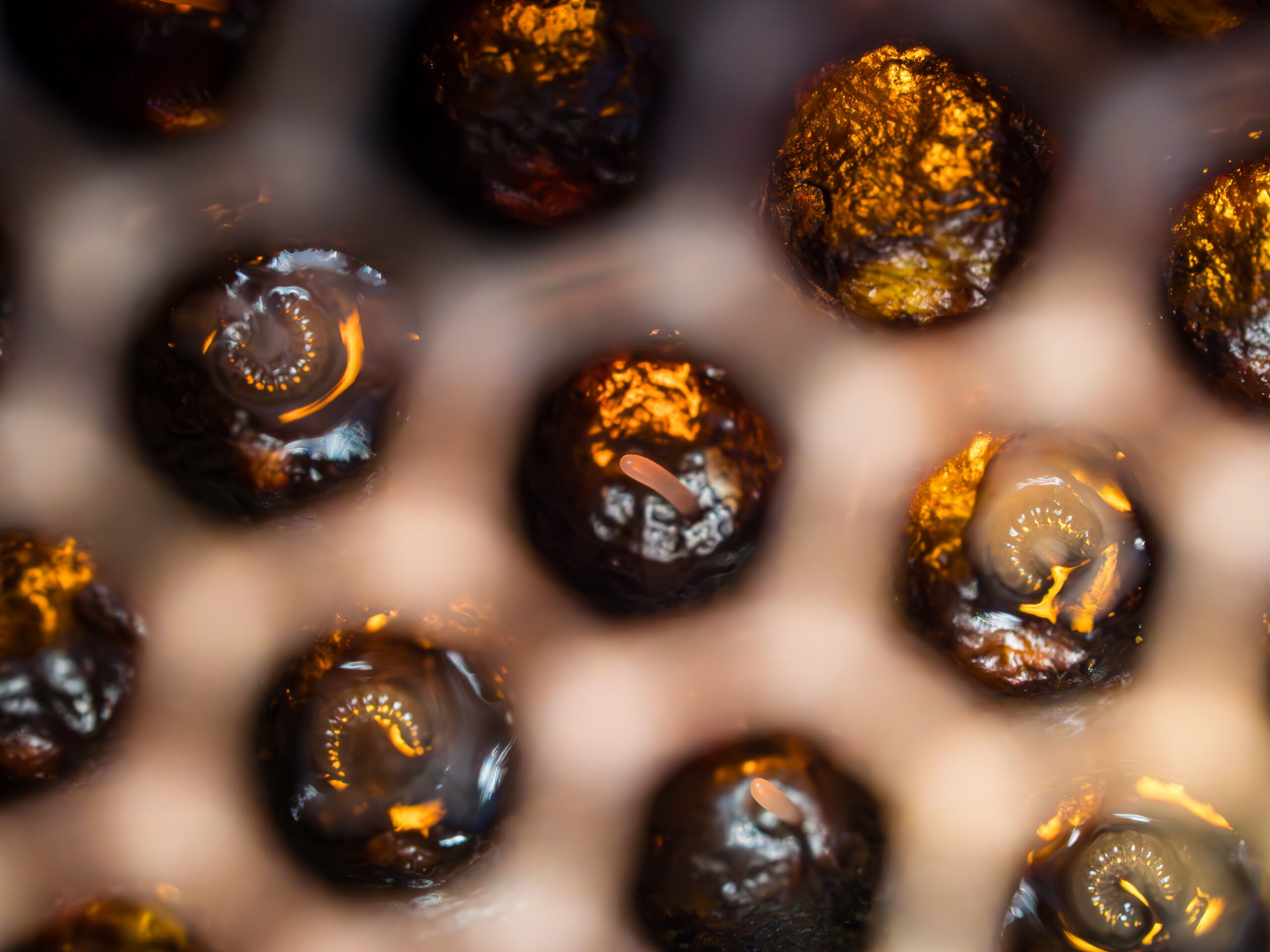
There is plenty of activity among the honey bees too, usually well hidden inside the hive. The colonies are raising plenty of brood, and the first drones are already hatching. The queens are now at their peak. The literature says that a single queen can lay up to 2,000 eggs a day. I have to admit, I have never counted them, but seeing the little white eggs in the combs, which have now grown darker is a satisfying feeling. My heart would be doing cartwheels if it weren’t for my problem child…
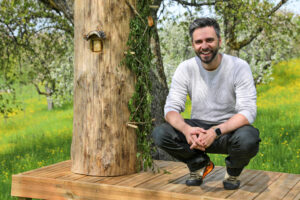
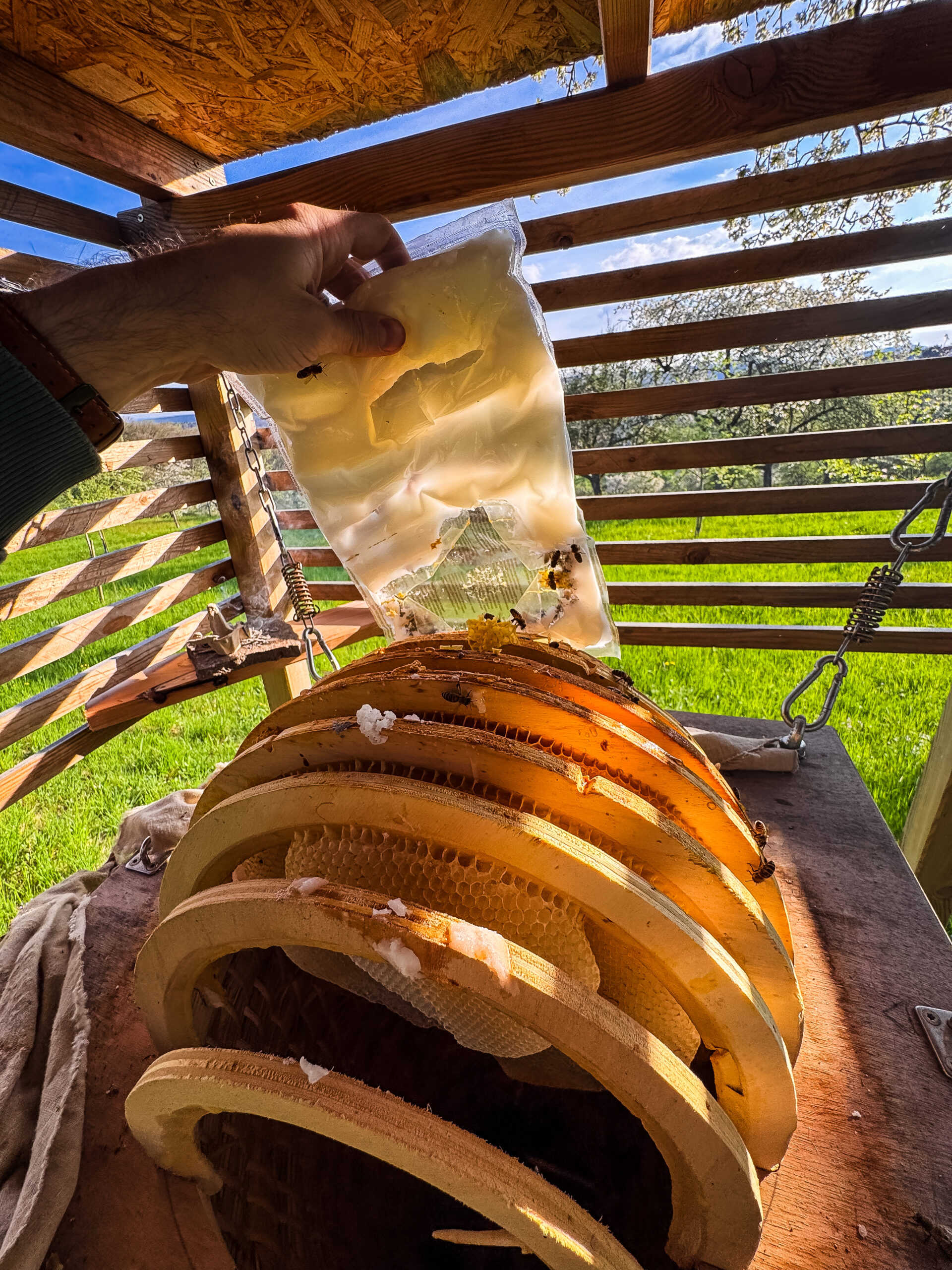
In the Weißenseifener Hanging Hive, my favourite hive, there is a small but thriving colony that fortunately survived the winter. But now it is struggling. The brood nest looks good, but the bee population is far too small. They hardly fly out to collect food, so the food cells are empty. I have no choice but to feed them fondant, which feels wrong given the abundance of blossoms. In a conventional hive, I would now reduce the space and feed them, but that is not so easy with this artistic hive design. Now some difficult questions arise: do I leave the bees in this hive and wait to see if they recover, or do I intervene decisively and move them into a conventional hive? It is a question whose answer I can put off for a few more days. Either way, I won’t feel good about it.
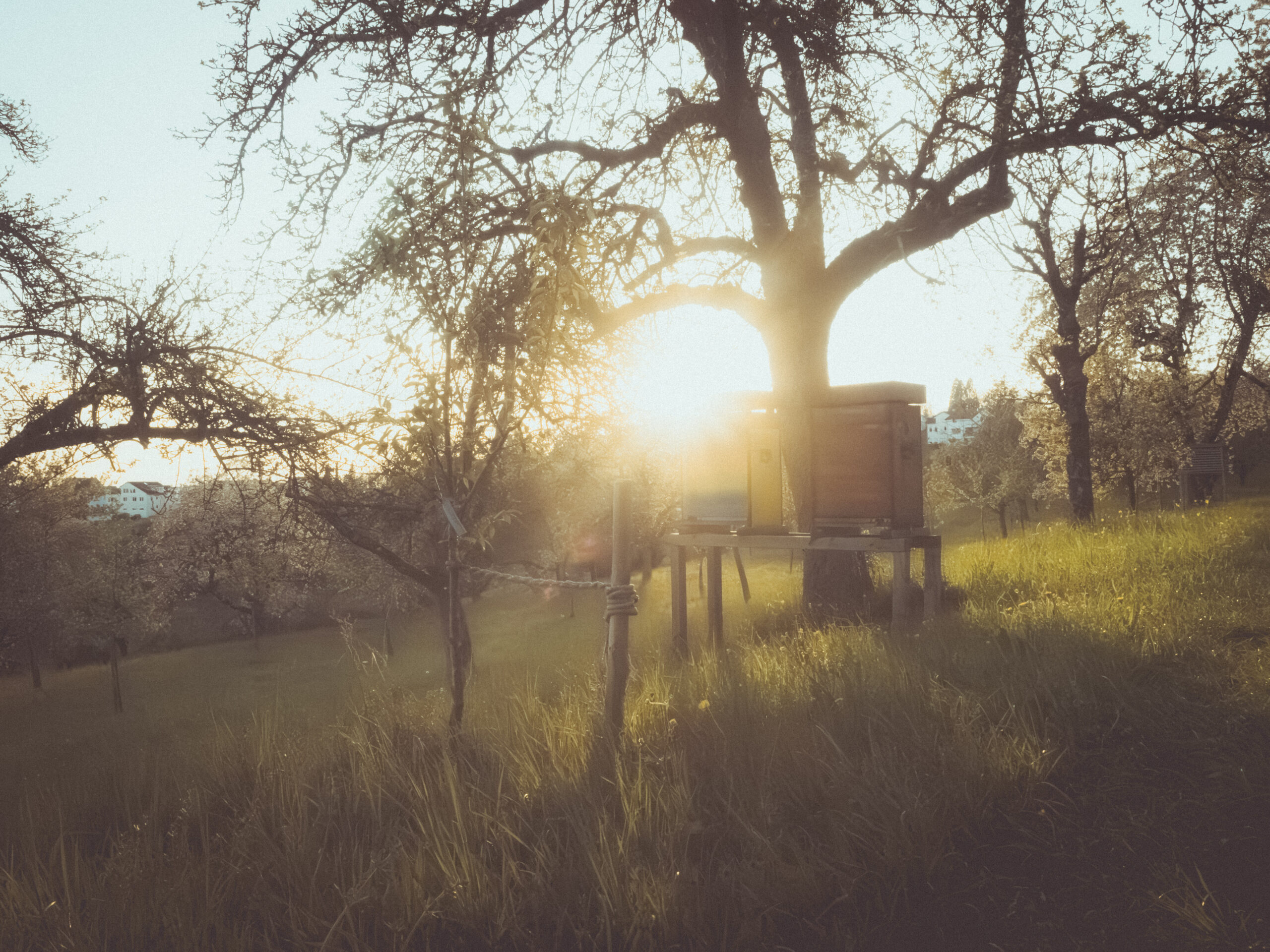
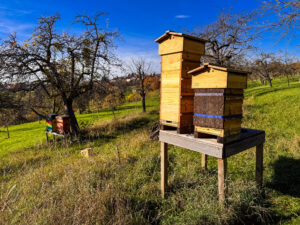
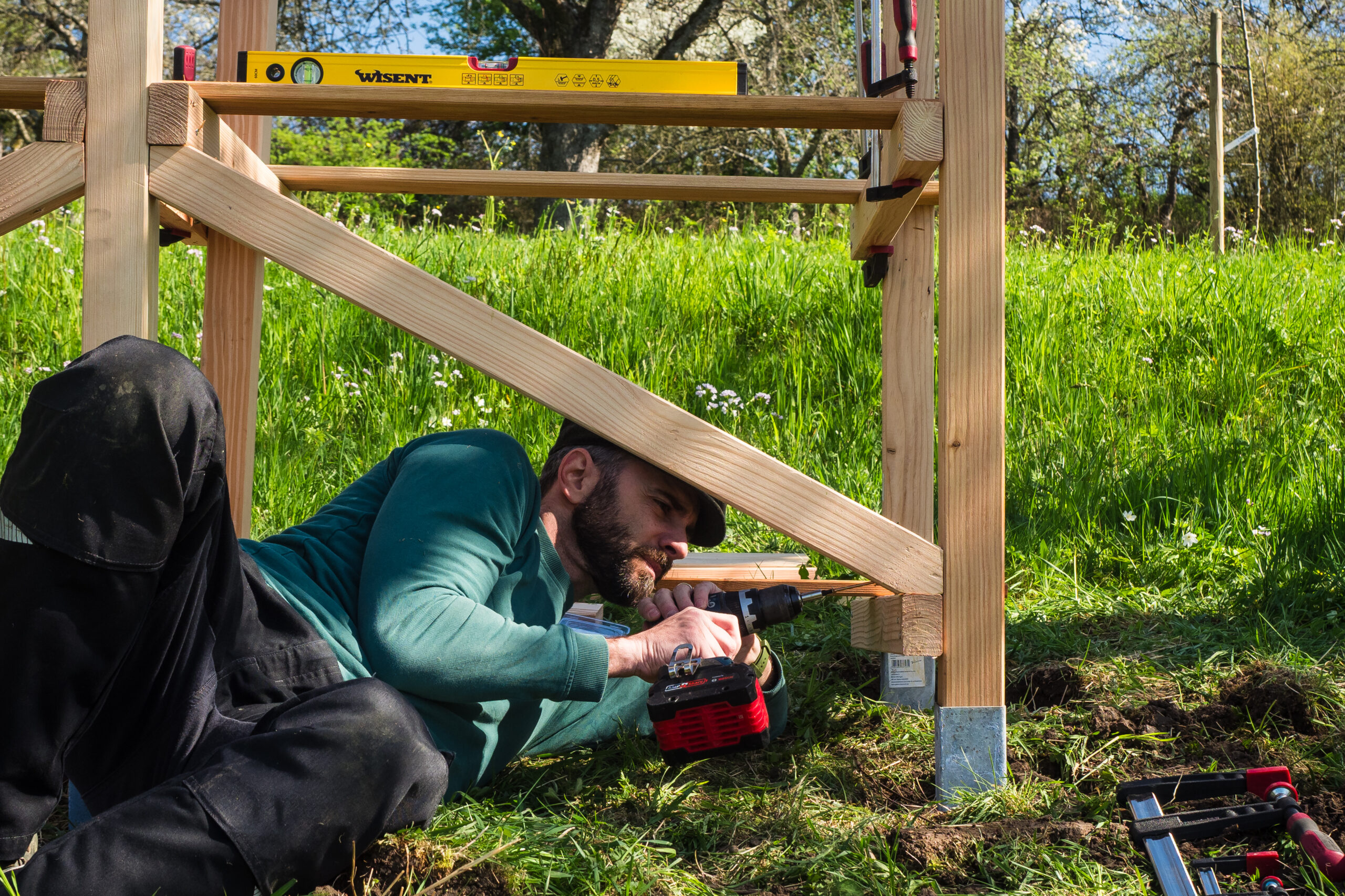
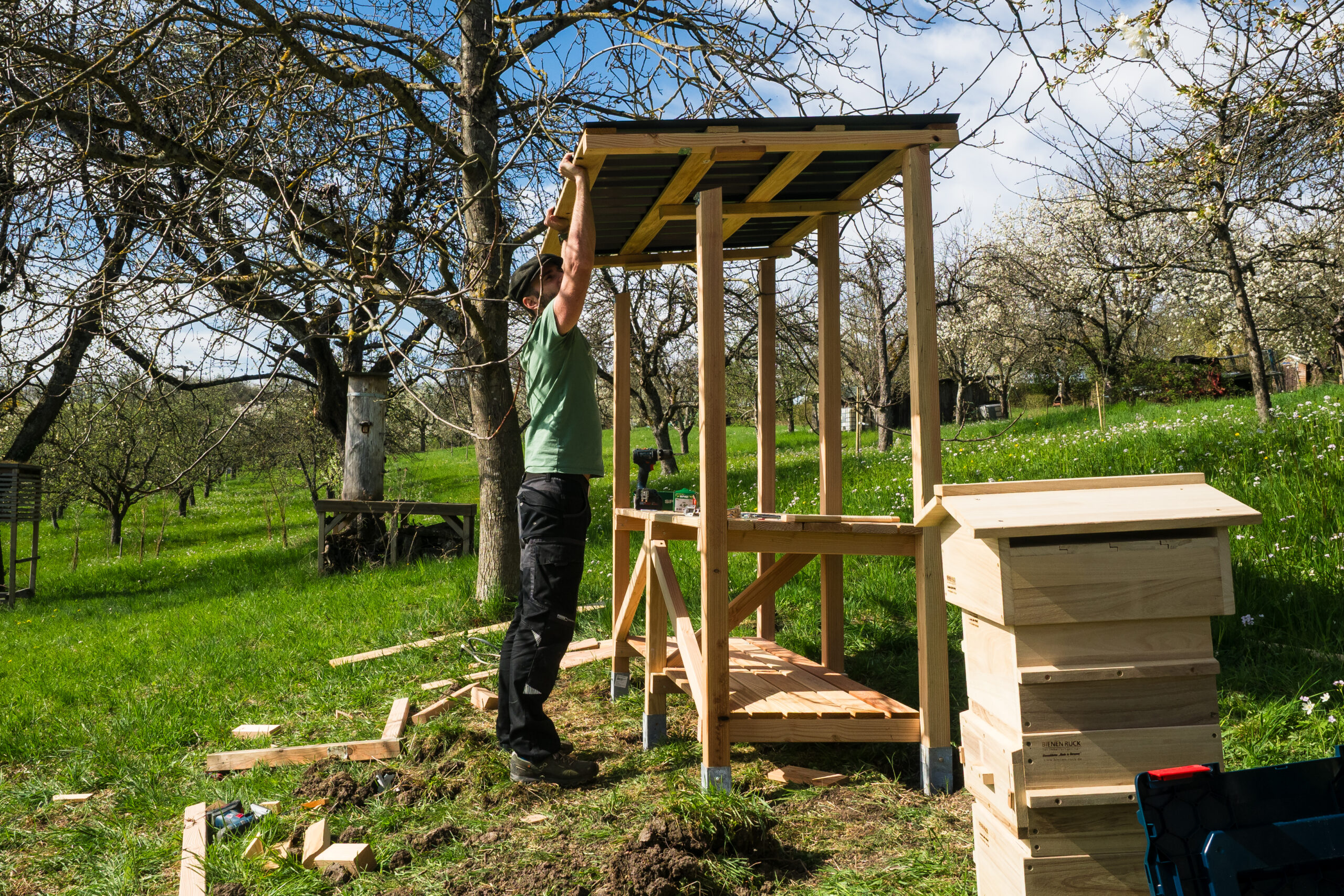
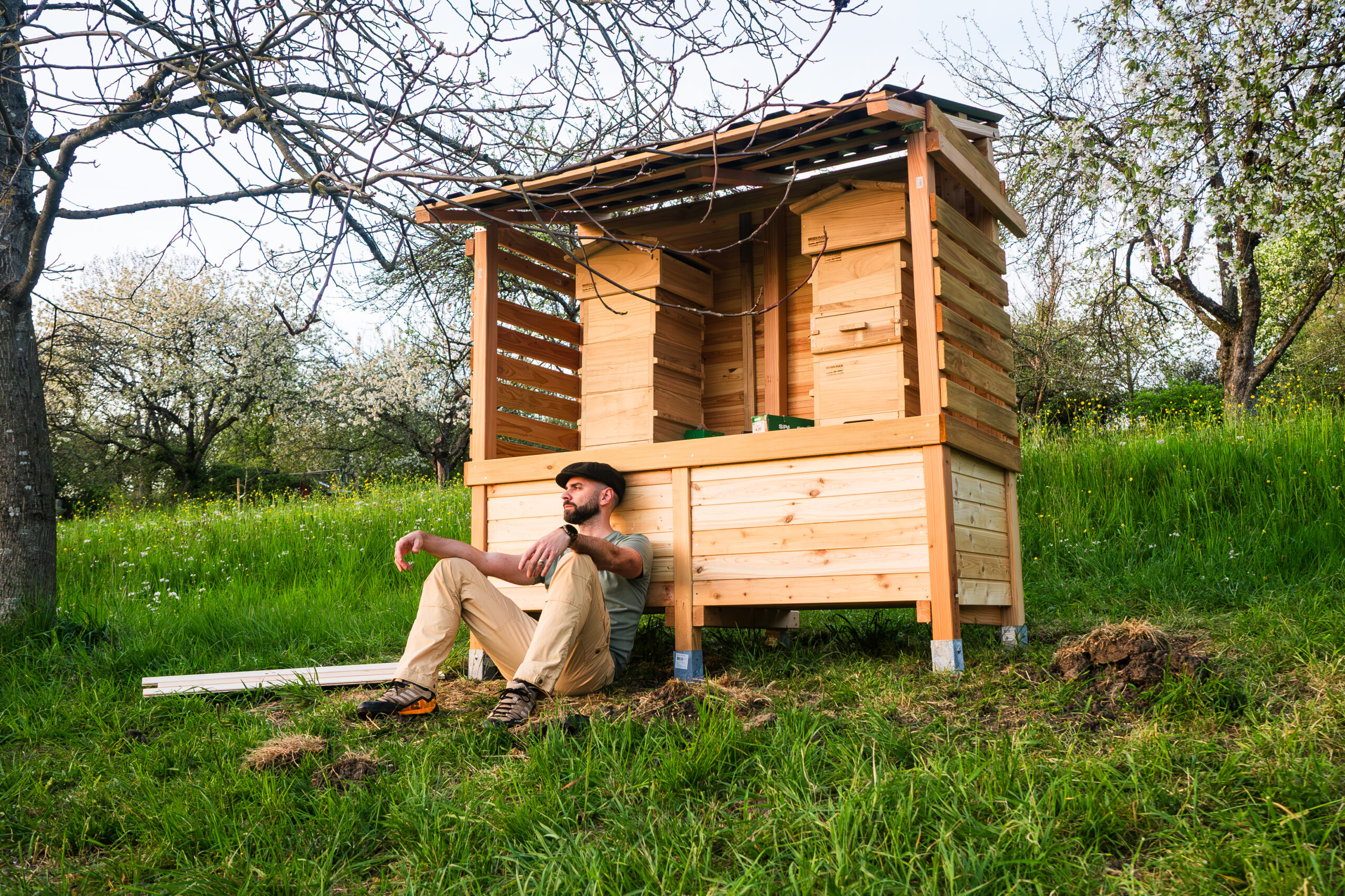
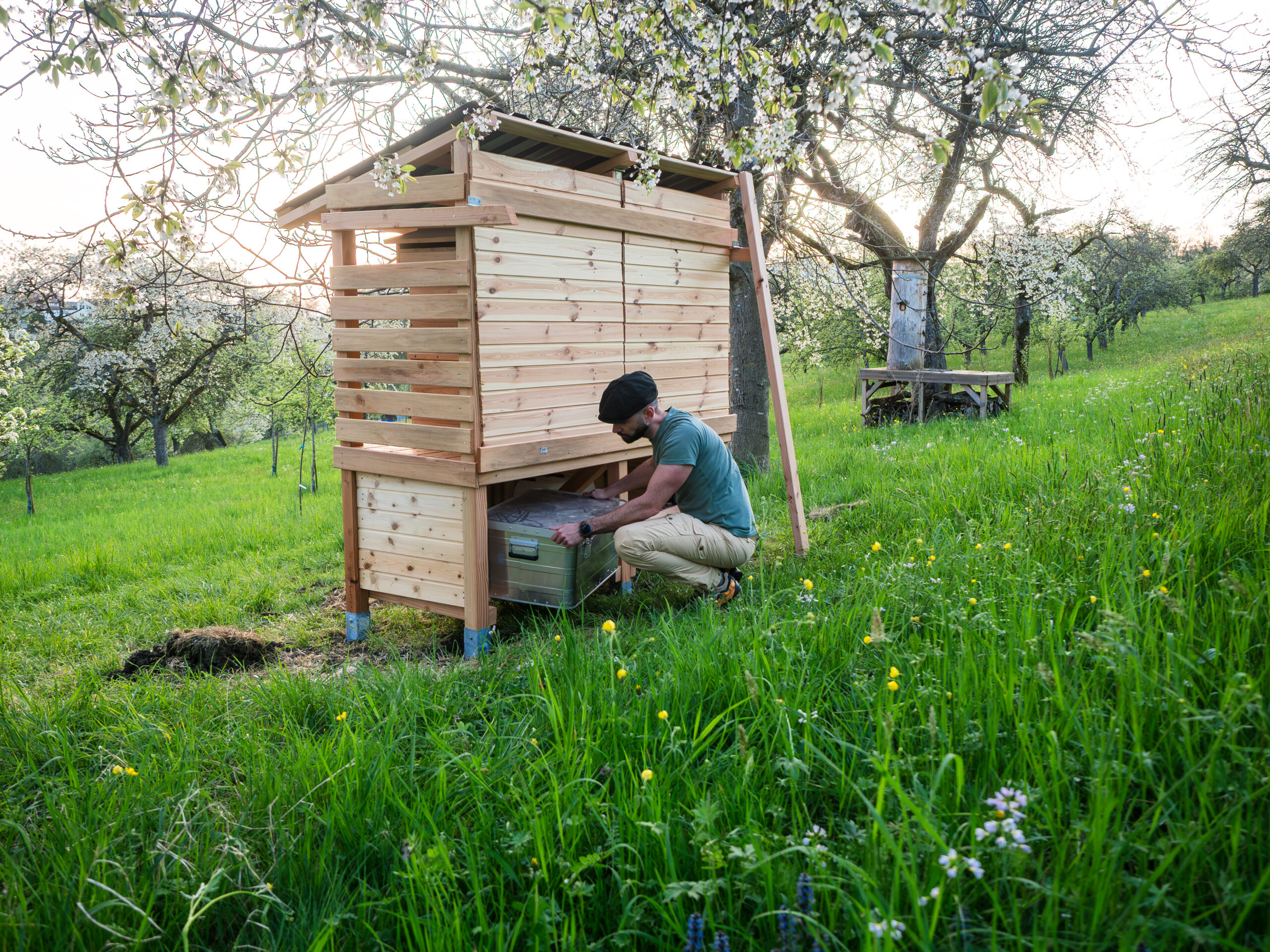
As I mentioned in the last post in the Beekeeping Calendar, I had a project in the pipeline that I had been mulling over for quite some time: I wanted to build a bee shelter with walls and a roof. After a few prototypes made with my children’s wooden toys, a CAD design, and a large order from Globus Baumarkt, I finally got started. By the way, thanks again for all the wonderful support.
A little nervous and short on time, I got to work: removing the turf, hammering in the post anchors, digging the post anchors back out (because I had hammered them in the wrong place), positioning the base beams, fitting the connecting beams, adding the levels, fending off a tick bite, installing the roof, moving the roof (because it looked daft), positioning the roof properly, attaching the removable side panels, and pulling the second tick off my body.
About two days later, there it was: my own covered, almost well-designed bee shelter with storage space. I look back at the result with pride and try not to think about the fact that I still have to install doors, treat the wood, and prepare the Warré hives, because the new colonies will be arriving soon. But that’s enough material for the next post in the Beekeeping Calendar.
Best wishes,
Ante
YouTube: https://www.youtube.com/@AntesGoldenGirls
Instagram: https://www.instagram.com/antes.golden.girls/
TikTok: https://www.tiktok.com/@antes.golden.girls
Website: https://antes-golden-girls.com
Subscribe to our newsletter here so you don’t miss any new blog posts.
Beekeeping Calendar 2025 – April: First inspection of the bees
Beekeeping Calendar 2025 – March: Too many bees? Too much honey?
Beekeeping Calendar 2025 – January: The end and the beginning
January – February: Looking back and planning the new beekeeping season
March: Preparing for the new beekeeping season and ensuring an adequate food supply
July: Never treat bees without first measuring infestation levels
August: How do location and conditions affect the health of bee colonies in midsummer?
Text and photos by Ante Hamersmit Ante Hamersmit has a special way of keeping bees. A log hive resembles a tree trunk...
Text and photos by Ante HamersmitAnte Hamersmit has a special way of ...
Text and photos by Ante HamersmitAnte Hamersmit has a distinctive way...
Important information
Important information: The original texts are published in German. The French, Italian and English versions are translated automatically and checked where possible. Please report any errors to bee@freethebees.ch.