By Ante Hamersmit
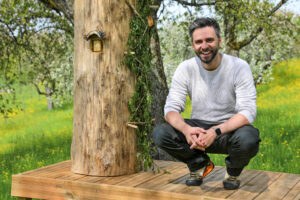
The Christmas break did me good: time for family, good friends and the romance of winter. I enjoyed the cold season with cookies, candle-making and incense smokers. But after a week and a half, an inner restlessness began to stir again. I guess I’m simply not made for long breaks. So I started planning. I like to plan, calculate targets and set deadlines—as if the bees would follow my schedule. All too often, they teach me humility: they trample my plans underfoot, and in the end I find myself somewhere entirely different.
The winter inspection was no different. I thought I was well prepared to give my ladies a winter treatment. But then everything turned out differently:
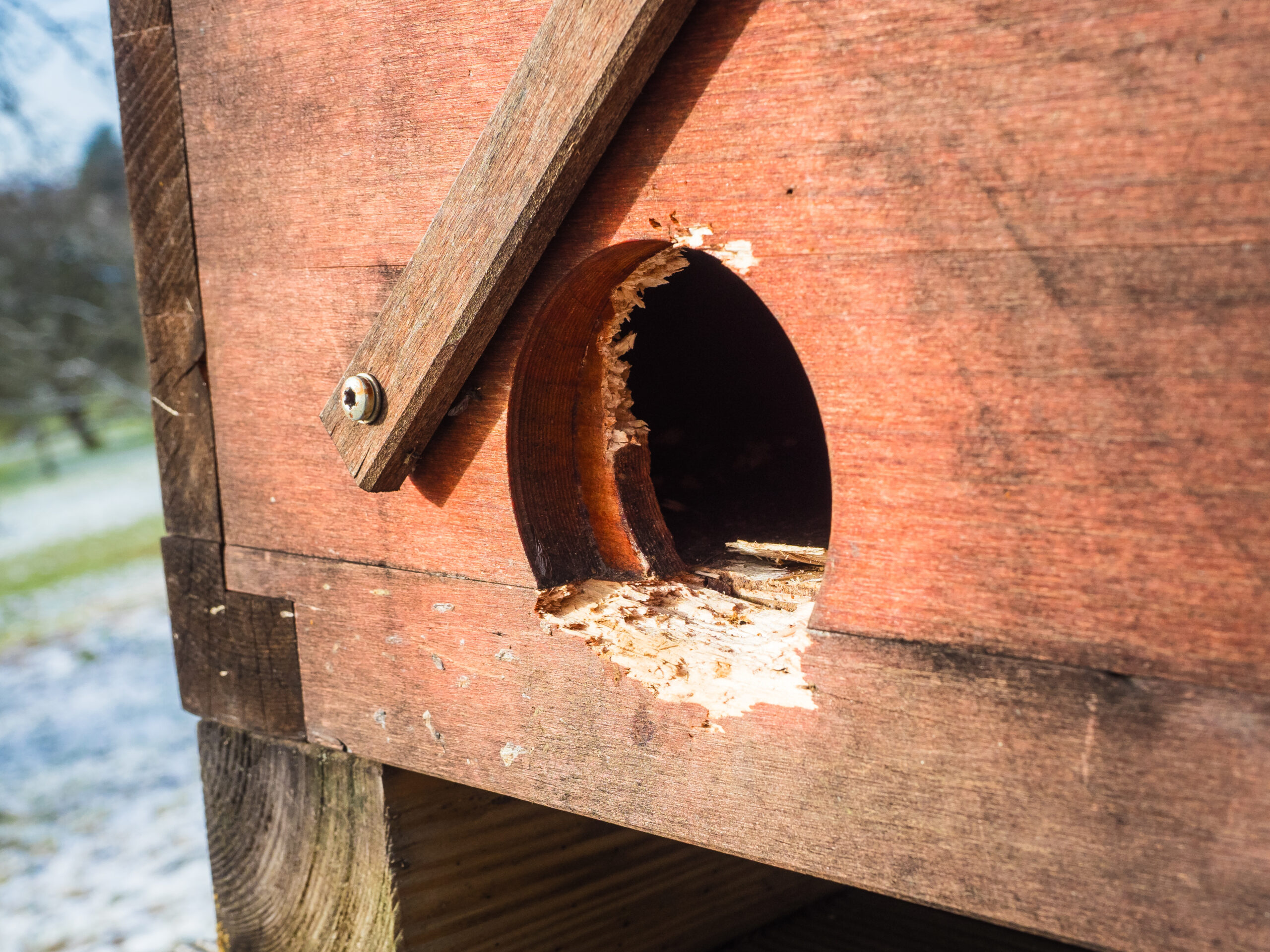
At the entrance to my single-chamber hive there was a huge gaping hole.
The opening should have been small enough for the bees to fly through, but not for mice to get in. Instead, it had been violently torn open—not by vandalism, but by hunger. A woodpecker had probably hoped for a meal and forced its way into the hive. I expected to find carnage inside, but the scene didn’t add up: the colony was dead, but the hive hadn’t been ransacked—the bees had simply disappeared. The honey stores were untouched, the combs intact. It looked as if a cleaning crew had tidied up.
I hadn’t seen that coming. Instead of a winter treatment, I now had to analyse and clean out the hive—my hive, which had housed my strongest colony. But what had happened? Had a woodpecker eaten every bee in the hive? The evidence pointed against it: the tracks did not lead to where the winter cluster had been. I shared what had happened on social media, and the community reached much the same conclusion as I did: the Varroa mite had probably caused the colony to collapse, and the woodpecker had later helped itself to the plentiful bee buffet.
Some few others suspect the bees lost access to their food, – and the more I think about it, the more plausible this explanation seems to me, because the last surviving cluster of bees had retreated into cells to die on a comb with no honey left—a typical sign of starvation. Perhaps you have a theory too? Here is the link to the video, in which I documented the situation.
There was good news during the winter inspection too: the remaining colonies were doing well. I hadn’t dared to cage the queen over winter or to forgo a winter treatment. (Although I’m fairly confident that one colony would make it through without treatment.)
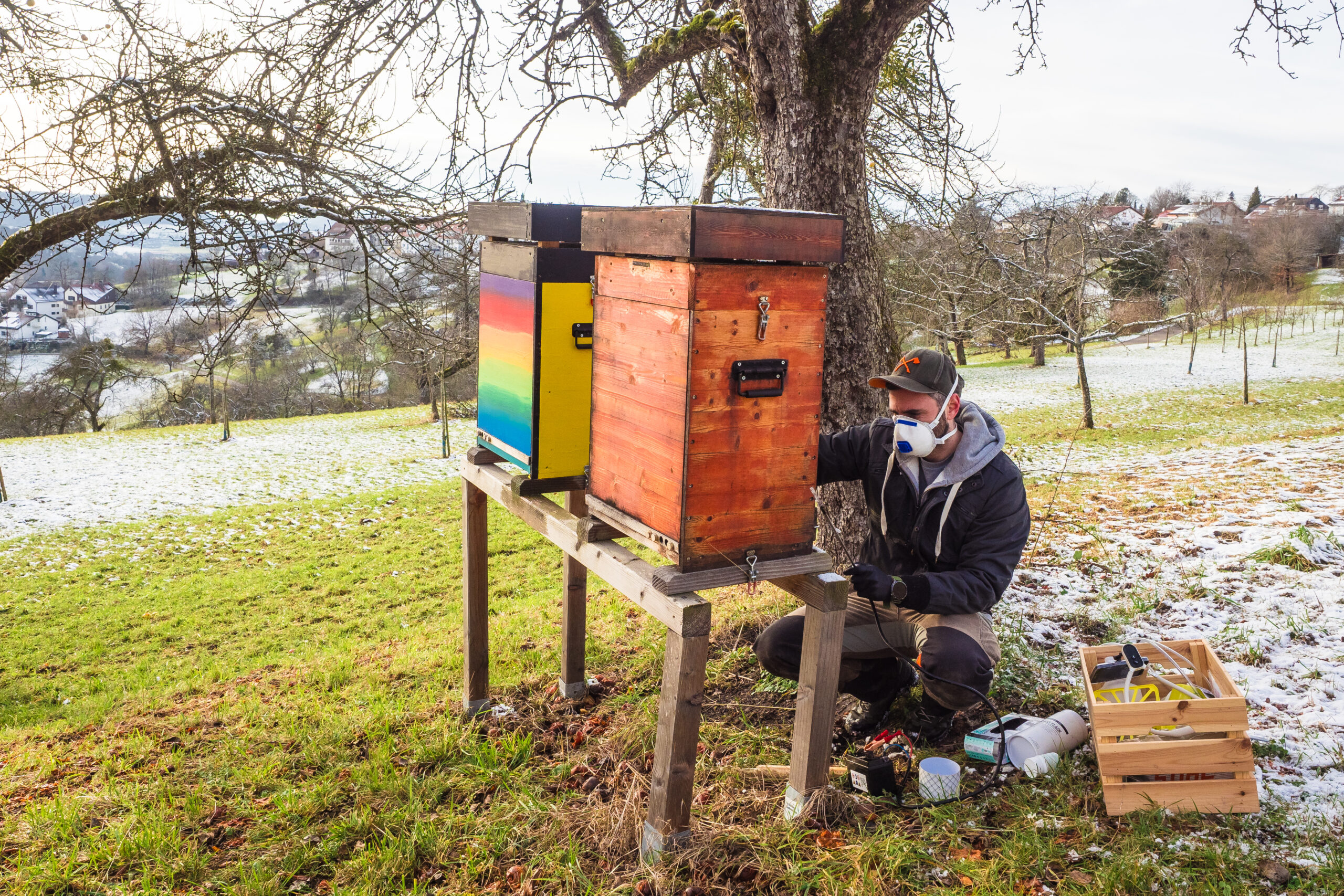
Opinions differ on winter treatment: some people trickle oxalic acid, but I prefer to vaporise it from below. I consider opening the hive, especially in winter, to be a major disturbance to the colony. And anyone familiar with Thun’s philosophy knows that opening the hive has more than just a thermal impact. It is even scientifically measurable that opening the hive can trigger brood-rearing processes that are undesirable at this time of year.
Book recommendation: The Bee
Be that as it may, there I was, applying oxalic acid to the colony in the hope that I was doing the bees some good. “It’s hard to imagine this method being gentle,” I thought as I wore my FFP3 mask and safety goggles, watching which way the wind was blowing so I wouldn’t breathe in any vapour. I told myself, “I’m doing the right thing.” And yet I wonder whether this is the way—whether it should be my way. So far, my treatment-free approaches haven’t been successful. Too many setbacks gradually sap your courage. A short time later, it was done: the bees had been shrouded in vapour, my lungs were still unharmed, and hopefully the mites had been removed.
Three days later, I noticed that as many dead bees had accumulated on the floor since the treatment as had accumulated over the previous months since late summer. So much for gentle. There must be other options.
Back home, I scrapped the plans I had made for the year and started again from scratch. It’s been a while since I wove my Weissenseifen hanging basket at Jennifer Rident’s in France. During that time, we talked a lot about bees, life and death. She told me that bees let you know when they need help and want to be treated. Simply not treating any of them probably isn’t the right way either. Maybe that’s exactly the key for me: more intuition and less protocol. I need to observe and learn more, and certainly take measurements so I can assess their behaviour—but also to feel. I need to learn about the bees’ world so I can act with greater awareness. For the coming season, I plan to get two additional Warré hives, which I hope will give me some insights and which I can use to test biodynamic methods. I’m looking forward to the coming bee season and am curious to see how far the bees will lead me away from my plans this year.
Best wishes,
Ante
YouTube: https://www.youtube.com/@AntesGoldenGirls
Instagram: https://www.instagram.com/antes.golden.girls/
TikTok: https://www.tiktok.com/@antes.golden.girls
Website: https://antes-golden-girls.com
Subscribe to our newsletter here so you don’t miss any new blog posts.
January – February: Looking Back and Planning for the New Bee Season
March: Preparing for the New Bee Season and Ensuring Adequate Food Supplies
July: Never Treat Bees Without First Measuring the Mite Infestation
August: How Do Location and Conditions Affect the Health of Bee Colonies in Midsummer?
Text and photos by Ante Hamersmit Ante Hamersmit has a special way of keeping bees. A log hive resembles a tree trunk...
Text and photos by Ante HamersmitAnte Hamersmit has a special way of ...
Text and photos by Ante HamersmitAnte Hamersmit has a distinctive way...
Important information
Important information: The original texts are published in German. The French, Italian and English versions are translated automatically and checked where possible. Please report any errors to bee@freethebees.ch.