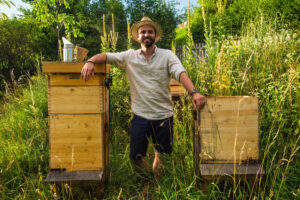
By Ante Hamersmit
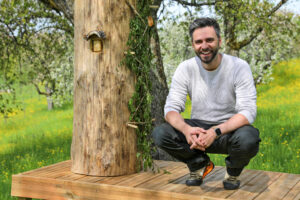
For me, the turn of the year is much more than just turning over a calendar page. As clichéd as it may sound, it is a time for reflection and realignment. I pause, look back on the paths I have taken, celebrate successes and let lessons grow from mistakes. But it is also a time of disruption – breaking old patterns, making new resolutions and adjusting my inner moral compass. It helps to write things down, choose the right words and derive relevant actions. In short: proceed mindfully.
This beekeeping calendar is both a curse and a blessing. It forces me to think things through, critically question my approach and admit my mistakes. At the same time, I look forward to this new experience with enthusiasm and hope to carry out my activities more consciously, with the aim of continuing to grow. I’m taking you along on my journey, my soul-baring, because if there’s one thing I’ve learned from being visible in public, it’s that outside input is the spice of life—even if, in the moment of taking it in, it can make your face contort when you’re on your own. Thank you in advance for a fruitful exchange.
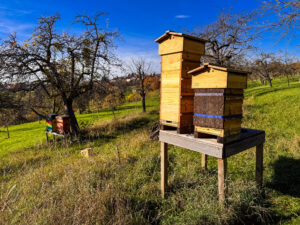
This is my fourth year of beekeeping—a year full of joy, new insights and fruitful partnerships. A year that, like all the years before it, was special. My collection of hives included three single-chamber hives, two log hives, a Lüneburg skep, a Weissenseifener hanging basket and a state-of-the-art HIIVE. The idea was to closely monitor various hive systems, study the bees’ natural development and document what I learned about their homes. This also resulted in my YouTube video “Natural Beekeeping | Which beehive is right for you?”.
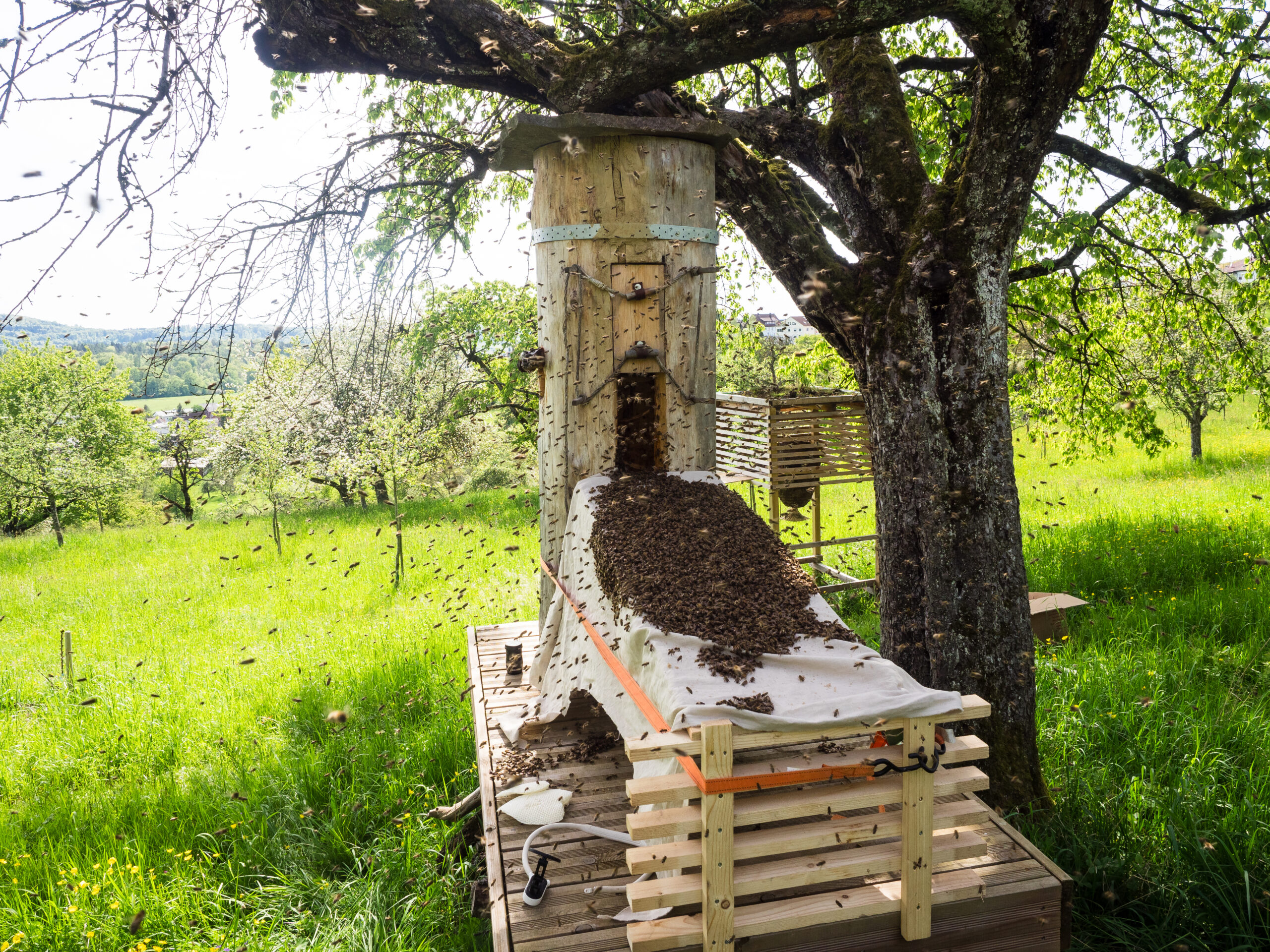
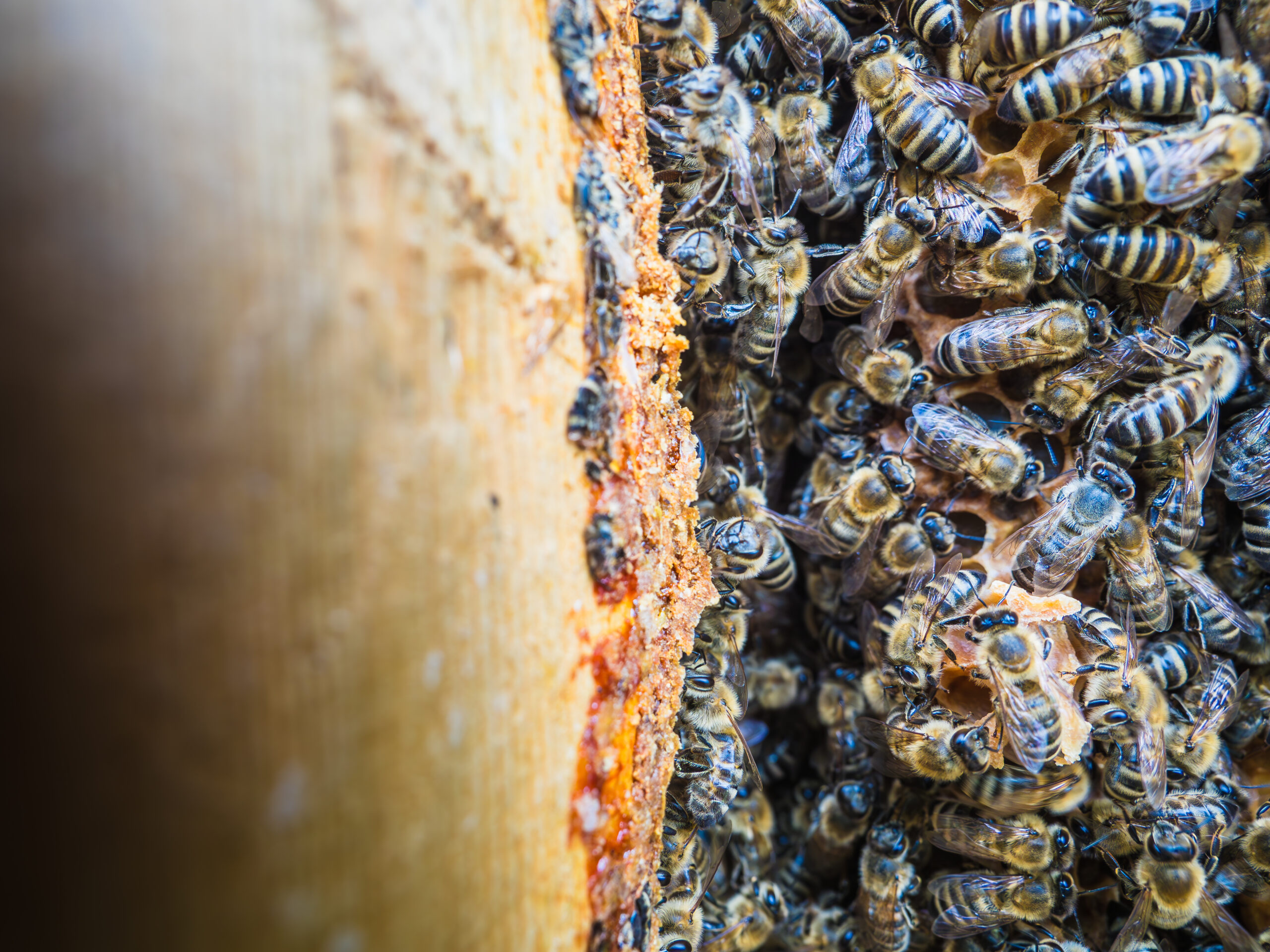
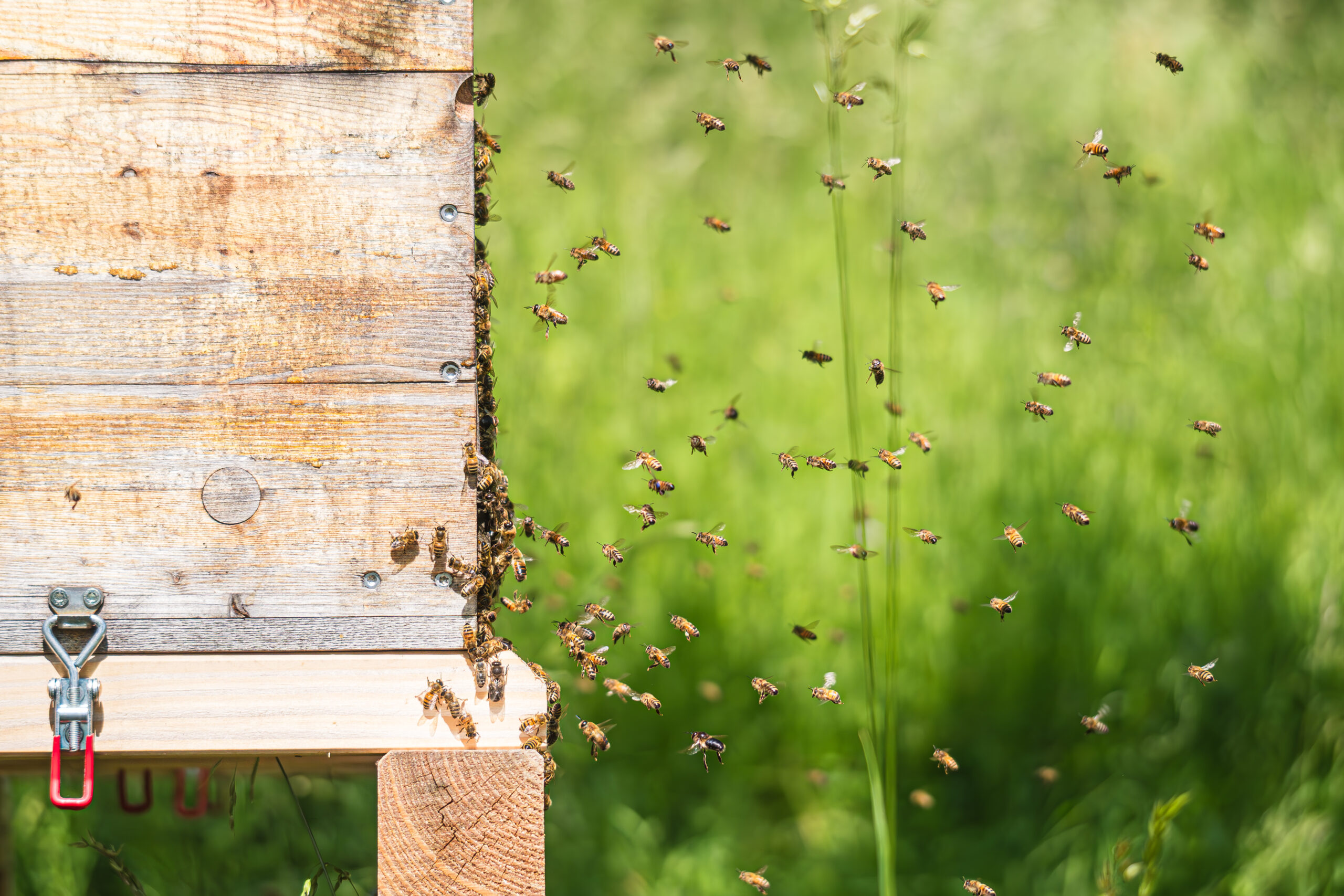
My bees don’t have it easy. They have to build their comb themselves, and I don’t move my colonies from place to place. Despite a careful assessment, I’m going into winter with just four colonies—and even with these, I’m not sure how many will make it through the winter. The bee year had started promisingly, though. But, as so often in life, things turned out differently than expected.
Both colonies in the baskets had a difficult start. I now know why traditional skep beekeepers specify comb-building directions at right angles to the spokes. Over time, however, I managed to correct my mistake and help the colony establish stable comb and reach a healthy colony strength. The Weissenseifener hanging basket simply wouldn’t be occupied. After three swarms left, I managed to persuade the bees to stay by creating a nucleus colony. By late summer, both colonies were so weak that I decided to unite them. I found this major intervention in the colonies difficult, but I hoped it was the only way to avoid losing both.
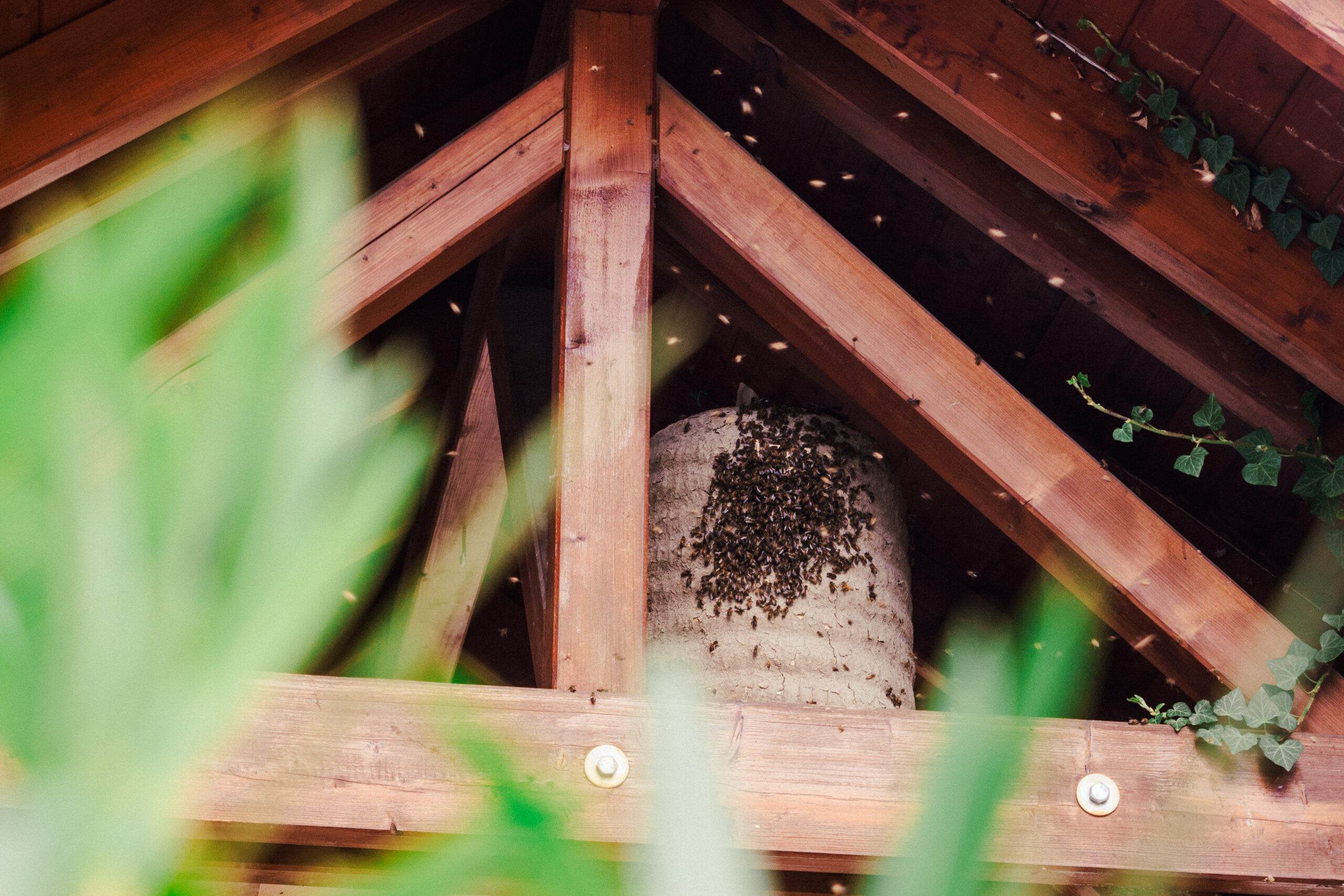
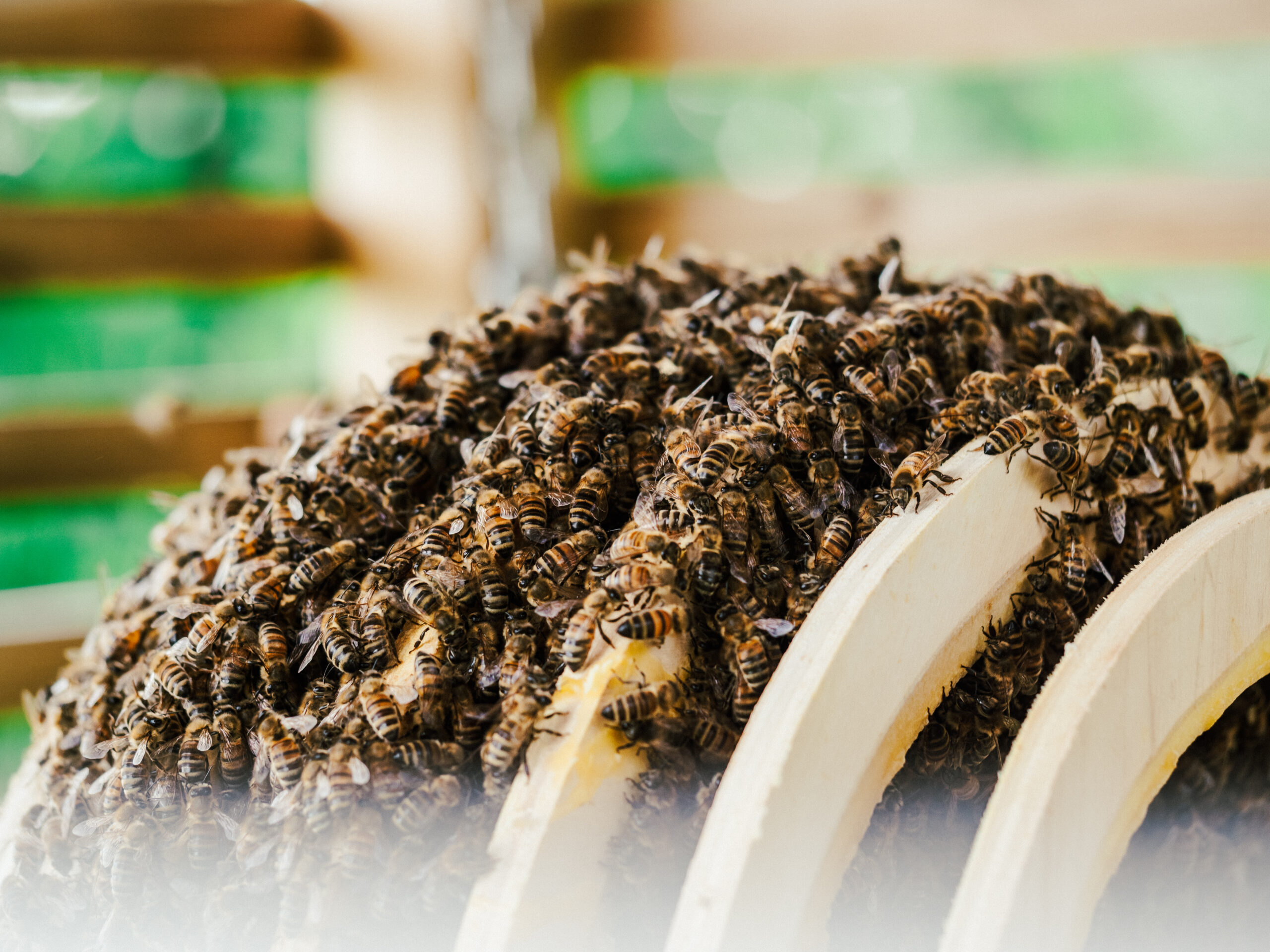
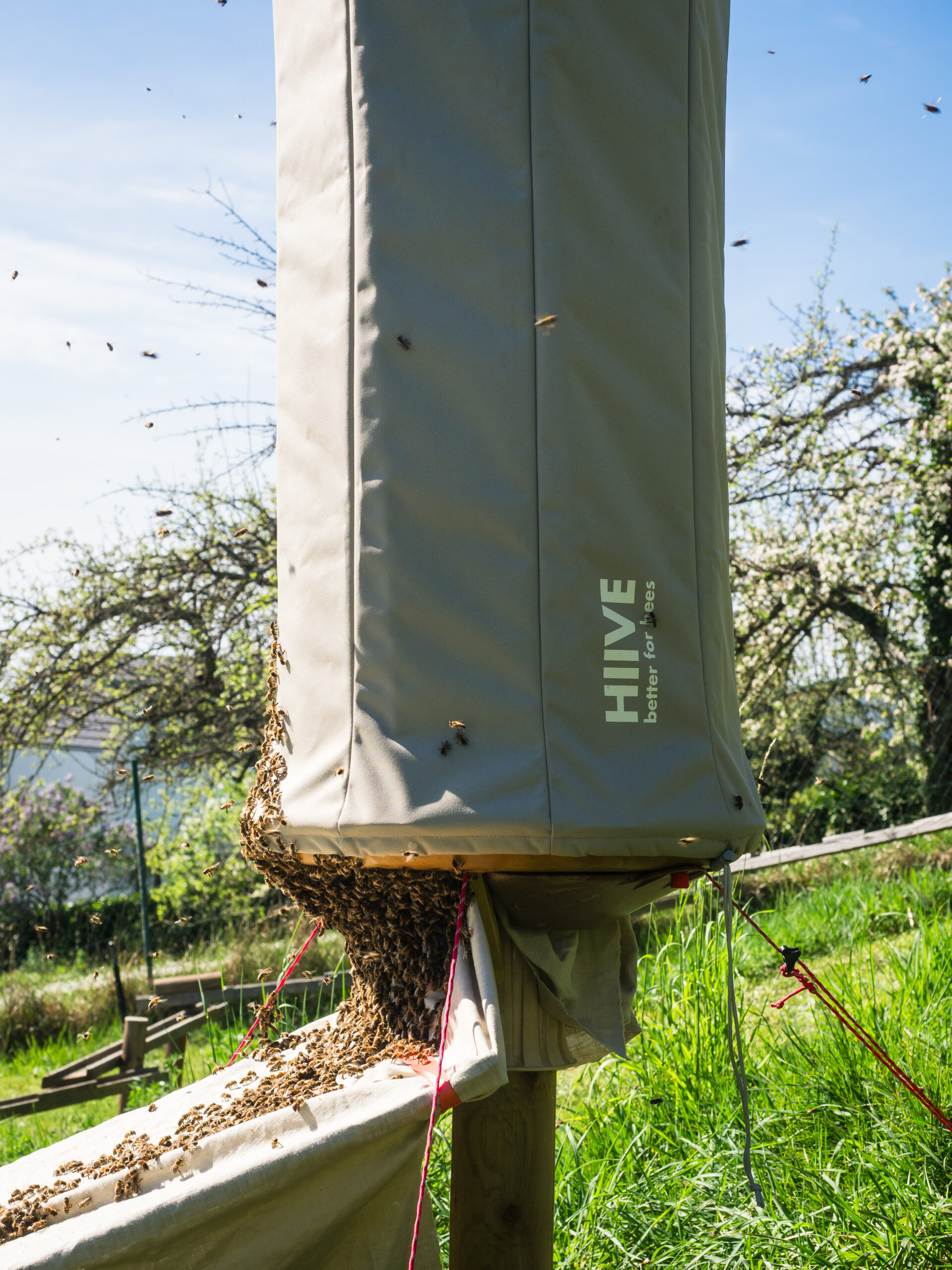
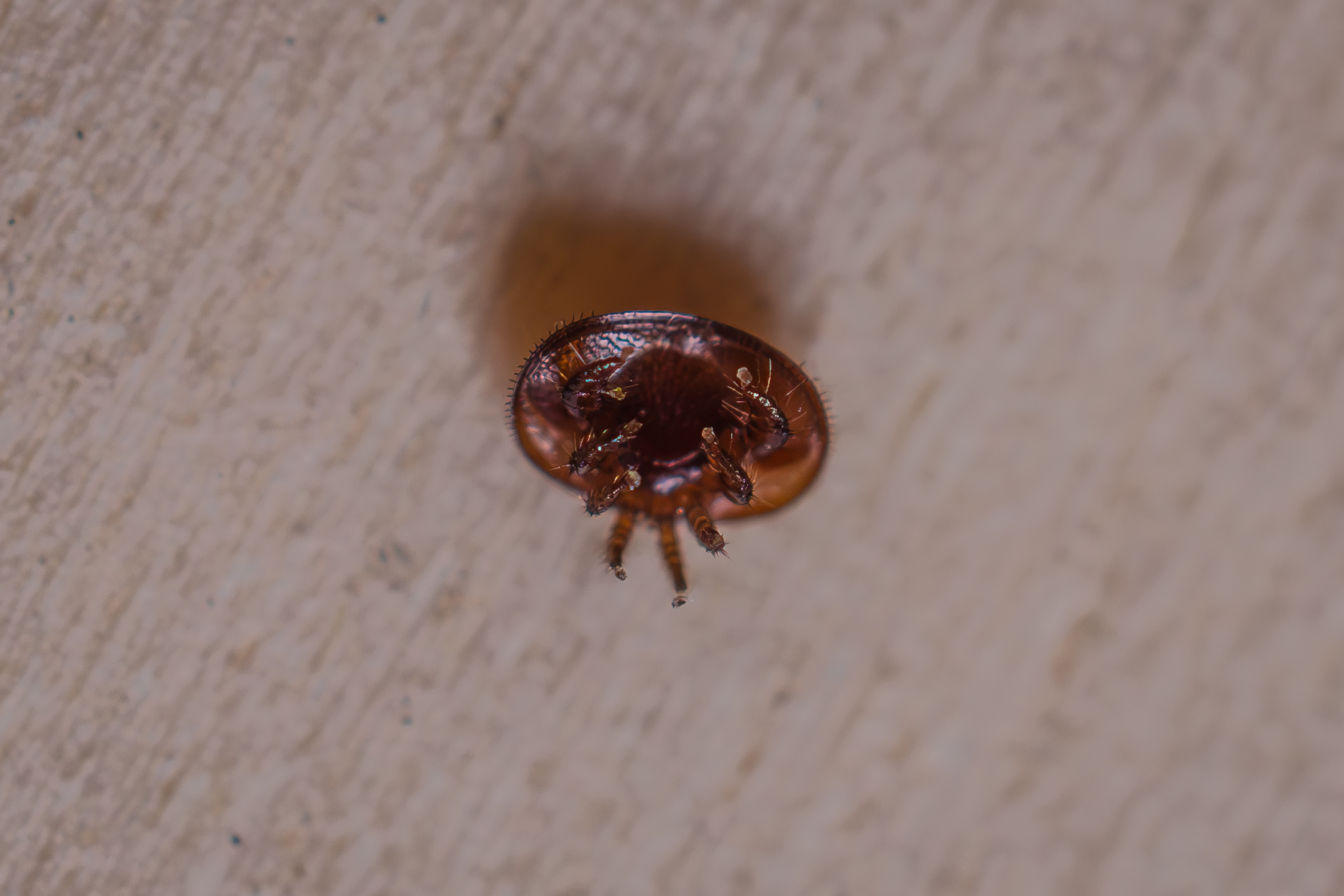
Unfortunately, my HIIVE colony didn’t make it. Despite providing the bees with an optimized home, I didn’t see any Varroa mites falling and apparently misjudged the rising Varroa pressure. The consequences became clear a few weeks later: the bees had absconded, leaving an emptied nest. See the YouTube video: 007 | All the bees are dead – why Varroa was so insidious here.
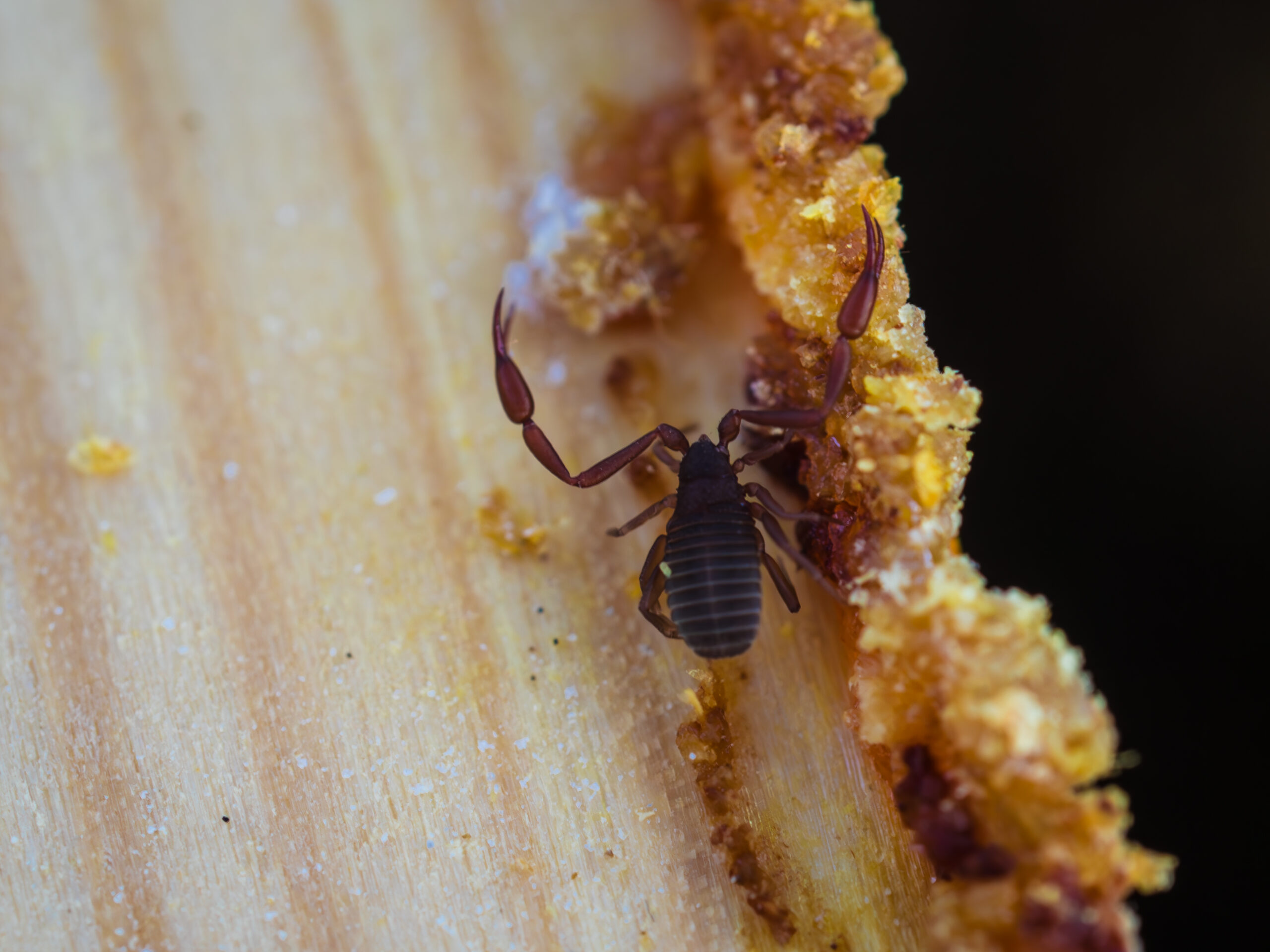
The single-chamber hives were the biggest surprise for me. Despite considering these hives to be the most unnatural, it was in these very hives that I observed the lowest Varroa infestation. I was able to overwinter two of the three without treatment, and I also observed something very pleasing: I even found pseudoscorpions in one of these hives.
The colonies in my log hives did not fare well. Both colonies died in autumn. They were treated with oxalic acid after the Varroa mite fall exceeded the threshold. I couldn’t understand the cause of death, because according to the literature, bees with Varroa abscond. I had good reason to investigate the cause in one of the hives through the Chemical and Veterinary Investigation Office in Freiburg. The findings were as surprising as they were disturbing: the deaths were due to an excessively high Varroa concentration. At the same time, however, no viruses were detected in the colony, although many specialist books describe them as the actual cause of colony collapse. YouTube video: 008 | Dead bees: Surprising lab results reveal the TRUTH
The conventional hive systems have produced better results than the natural ones. Is that the conclusion I draw? No! Because there’s one thing I haven’t mentioned so far: I was able to populate the two untreated, conventional hives with two colonies whose queens are considered “Varroa-resistant”.
It is certainly too early to draw conclusions, but my preliminary assessment is as follows:
A great home is not enough for a healthy bee.
It also takes at least a good bee.
So, a natural home alone isn’t enough for us to do without chemicals. I would like to identify and optimize the factors needed to keep bees healthy and as free of chemicals as possible. At the same time, I need to focus on the factors I can actually influence.
Please get in touch if you’d like to comment on my goals or even support me. Any contact, link or suggestion is very welcome.
Best wishes,
Ante
YouTube: https://www.youtube.com/@AntesGoldenGirls
Instagram: https://www.instagram.com/antes.golden.girls/
TikTok: https://www.tiktok.com/@antes.golden.girls
Website: https://antes-golden-girls.com
Subscribe to our newsletter here so you don’t miss a new blog post.
January–February: Retrospective and planning for the new bee season
March: Preparing for the new bee season and ensuring an adequate food supply
July: Never treat bees without first measuring infestation levels
August: How do location and conditions affect the health of bee colonies in midsummer?
Text and photos by Ante Hamersmit Ante Hamersmit has a special way of keeping bees. A log hive resembles a tree trunk...
Text and photos by Ante HamersmitAnte Hamersmit has a special way of ...
Text and photos by Ante HamersmitAnte Hamersmit has a distinctive way...
Important information
Important information: The original texts are published in German. The French, Italian and English versions are translated automatically and checked where possible. Please report any errors to bee@freethebees.ch.