By André Wermelinger, Managing Director of FreeTheBees
Depending on the region, locality and weather, from mid-April onwards the bees are once again able to make it through without their own food reserves or emergency feeding. The newly available nectar supply is particularly important here; pollen was already readily available earlier in the year. Various meadow and hedge plants are already flowering, as are the first trees. The bee colony visibly grows larger, flight activity increases, and brood takes up a large proportion of the comb.
In April, my main activities are even more focused on my own garden than on the bees. The garden will also benefit the bees later on. Incidentally, my garden is by no means as «tidy» as my former mother-in-law’s. My garden, which might be described as «a little overgrown», blooms early in the year with «weeds» that attract various insects, such as purple dead-nettle, Lamium purpureum. I generally wait as long as possible before preparing the garden anew, and initially weed only those areas that need to be planted early. I never dig over the soil anyway, as that would disturb the soil structure and the diversity of microorganisms. Every year, I add wood chips from my hedge and sometimes a layer of compost, which keeps the soil in excellent condition and supplies the plants with nutrients.
Swarms are also possible from mid-April onwards (the very first swarms from the Swiss Plateau are usually reported as early as March). Beekeepers who are just starting out and want to keep bees on natural comb and in fixed-comb hives are especially interested in strong, large and, if possible, early swarms. A swarm that can still benefit from some of the main nectar flow develops particularly quickly and well. After the main nectar flow, newly hived swarms can hardly manage without supplementary feeding. They do survive the dearth period, but develop so poorly that only in very rare cases can they enter the next winter with sufficient honey stores.
As described in January and February, I have already decided which methods I want to use with which hive systems in the new season. I either built or purchased the necessary equipment in March. Everything is ready for the start. My hives are in place, swarm traps are ready, and so on. Contrary to all the rules of the beekeeping community, I also leave my empty hives standing open, well stocked with old comb and «inoculated» with microbiology from an older hive (debris from the nest cavity), and look forward to the first swarm moving in spontaneously! It is a spectacle that inspires fascination, joy, admiration and inner contentment. Winter is over; life is returning!
As a rule, I lack what conventional beekeepers have in abundance: I have only a limited supply of honey supers and honey frames. I enjoy almost every aspect of beekeeping, but I have limited enthusiasm for honey production. I usually decide at the very last moment, when the main nectar flow takes off with the flowering of the cherry trees, whether to put a honey super on one or two colonies after all. And I usually have to gather the equipment together first, because I failed to prepare in advance. The honey from two colonies every other year is enough for me, and so far I have managed well. Honey from untreated bee colonies, pressed rather than extracted—a rarity that is hardly available to buy anywhere.
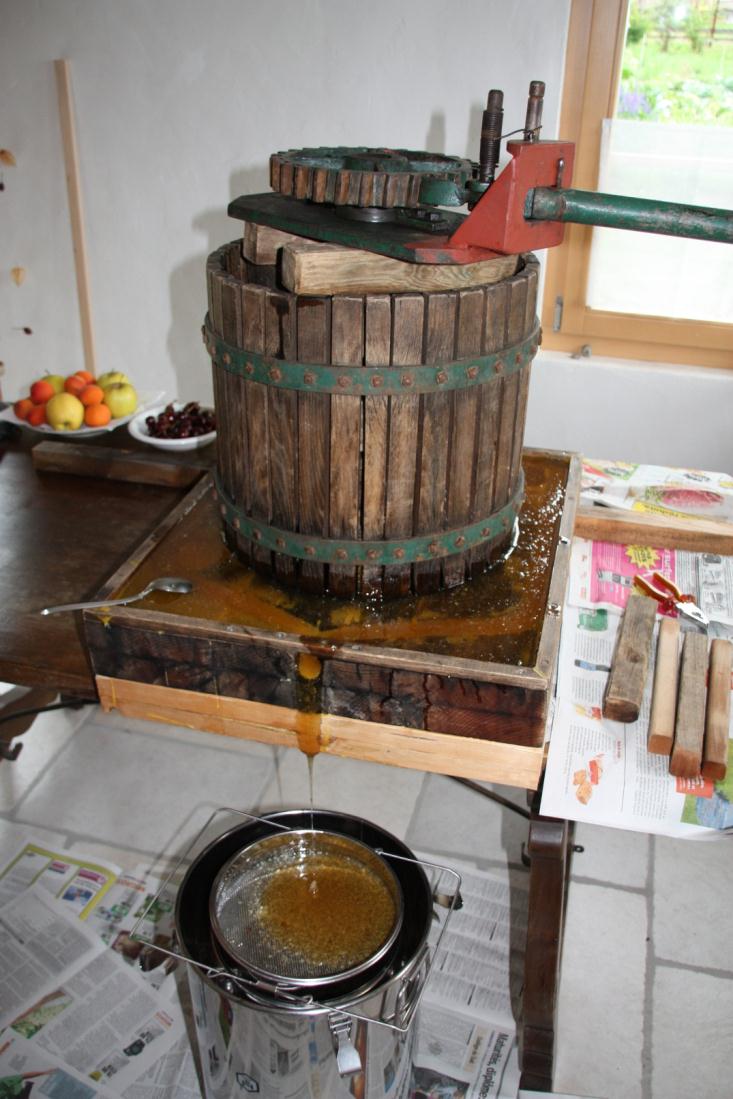
My honey press.
In conventional beekeeping, depending on local conditions, the weather and the strength of the colony, the first honey frames are added to the honey super as early as April (especially in the Swiss hive, which can be expanded very gradually). I will not go into detail here about exactly when and how much honey-super space is optimal; many conventional beekeepers know far more about that than I do.
And as I never tire of pointing out, adding a honey super serves one purpose and one purpose only: increasing the beekeeper’s yield. Its unwanted side effect is to delay, and in some cases prevent, the natural behaviour and swarming of the bee colony, and in all cases to influence them. This has a direct and adverse effect on bee health, because swarming is an efficient natural cleansing mechanism. When I casually call this, in colloquial and biologically inaccurate terms, the «castration» of the bee colony in front of beekeepers, I am invariably fiercely rebuked and criticised. «Swiss beekeepers are not obsessed with yield and do not practise intensive beekeeping,» say leading figures in the beekeeping world. But no one can give me a convincing argument for why a honey super should otherwise be added as part of «good beekeeping practice». As we know, a wild bee colony in nature often starves, while the beekeeper harvests 20 kg of honey from the colony. Between starvation and the 20 kg harvest stands the beekeeper, with their methods, which we at FreeTheBees call «intensive». And as we have shown, providing pollination services in a nature-oriented way is more important than intensive honey production, for both ecological and economic reasons. In current beekeeping, we are effectively producing the wrong product, and doing so in a highly intensive and unsustainable way.
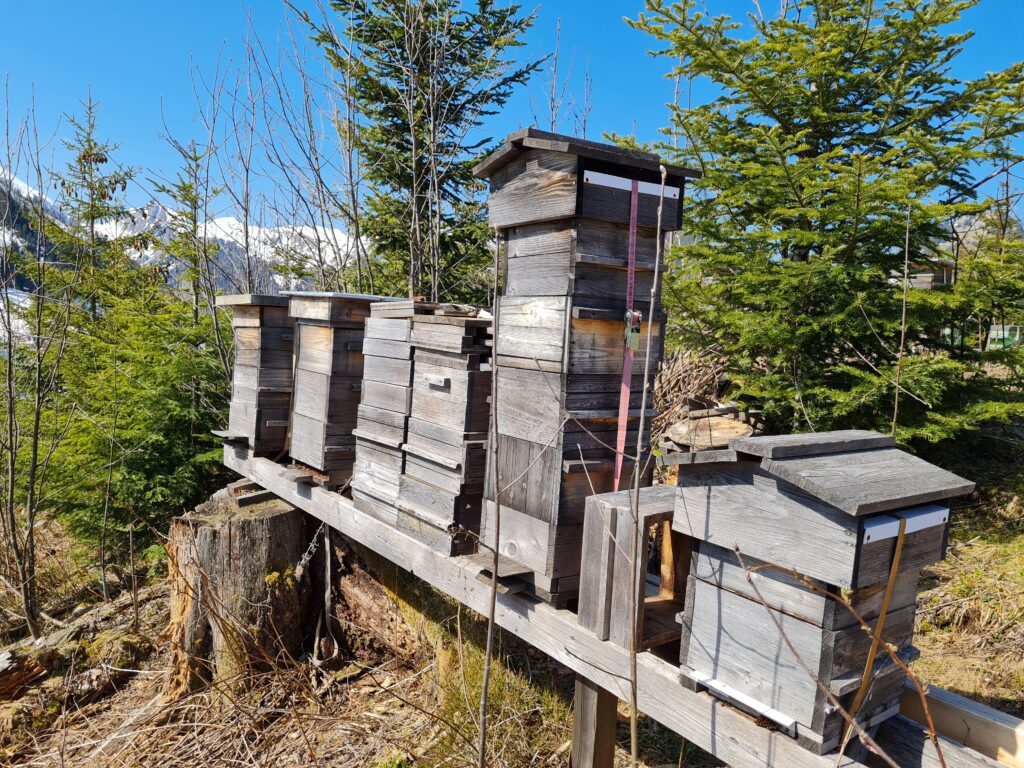
April is the last opportunity to consider where to place the bees and prepare the apiary accordingly. Ask two beekeepers and you will get at least three opinions on what is right. But it seems to me that a few points are emerging that can be regarded as a consensus.
Let us first look to nature: bees nest high up in trees, well away from the ground. My original teacher and mentor, Émile Warré, believed that bees should be kept at ground level. I think he is mistaken on this point, even though I greatly value everything else he taught me. Wherever possible, I try to imitate nature, even if I cannot always justify everything with evidence.
Bees also dislike windy locations. Wind would also unnecessarily drain a lot of energy from the hive. Direct midsummer sun can be problematic, too. Bees can cool their home with water, but this takes a great deal of energy. Bees in a hollow tree in the forest are unlikely to have ever faced this challenge to the same extent.
The cold Bise comes from the north, rain from the west, and the sun from above. It therefore seems sensible to me to be able to protect the bees especially from the sun overhead and from the north wind. This leaves east and south as possible directions for the entrance. I prefer an east-facing entrance to catch the morning sun, but if the entrance is protected from the midday heat in high summer (for example, under a hedge), I also orient entrances to the south.
Of course, I also regularly lose colonies, since I do not treat them at all. But losses are simply part of the process; they are part of the essential natural selection that is the sole guarantee of evolution. The death of a colony is a step forward in evolution: strong selection for those that are adapted and those that are not. We must learn to put the negative connotations of bee losses, familiar from beekeeping, into perspective and consider them in their broader context, both over time and across space.
In my early days as a beekeeper, and in my younger—still more naïve—years, I cleaned all my hives meticulously. Old comb had to go, the floor had to be swept, and all the inside walls had to be nicely scorched with a gas burner. The idea was microbiological purity: no «bad» viruses or bacteria, clean down to the pores. It also took a great deal of time.
Well, I have learned, and today I see my thinking back then in a completely different light. In the millions of years of bees’ highly successful evolution (scientifically speaking, it is >30 million years; in fact, it is probably closer to 70 million years, in any case far more than the roughly 200,000 years of human experience on Earth), surely no one has ever cleaned a tree cavity, let alone disinfected one. Today we know how important the gut microbiome is to human health, and there are plenty of indications that this is likely to be true of the microbiome in tree cavities and bee health as well. Michael Bush cites the 30 insect species, 170 mite species and 8’000 microorganisms that live alongside the bee colony. Many of them are important symbionts. Those that are supposedly labelled «dangerous» can have a positive effect (for example, the relatively harmless Virus A cited in scientific literature, which protects bees from the deadly Virus B). And even the unwanted ones are only one side of the coin: the bee colony has a multi-layered defence system, with an immune system and defence strategies.
After careful consideration, this led me some years ago to decide that I would no longer clean my hives, especially not my nature-oriented habitats such as tree-cavity imitations.
If a colony dies in winter, there are two possible scenarios:
A whole host of conventional beekeeping experts would probably call me a slob if they saw me leave habitats eaten through by wax moths standing open. But viewed from a somewhat broader perspective, and with an understanding of biological and evolutionary connections (Nothing in biology makes sense except in the light of evolution, Theodosius Dobzhansky, 1973), they would probably be more cautious about condemning my approach. One example is Prof. Alexandre Aebi of the University of Neuchâtel, who visited me with one of his doctoral students and took various samples from different hive systems, from centimetre-thick nest debris to scrape samples from the habitat walls. The samples are now being sequenced and analysed; high biodiversity in my hives is expected. I seem to be one of the very few «beekeepers» from whom such valuable samples can even be taken.
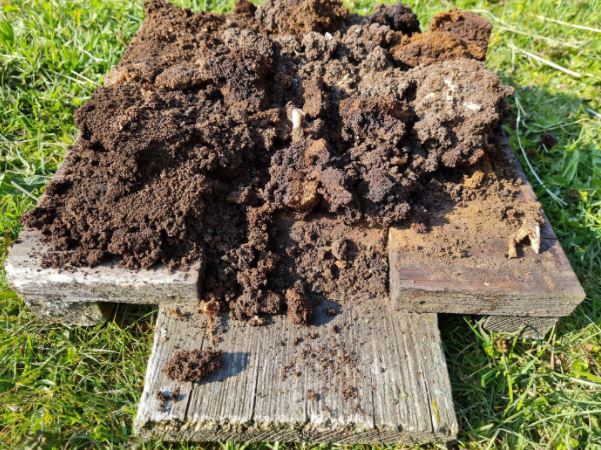
Compost from my beehive.
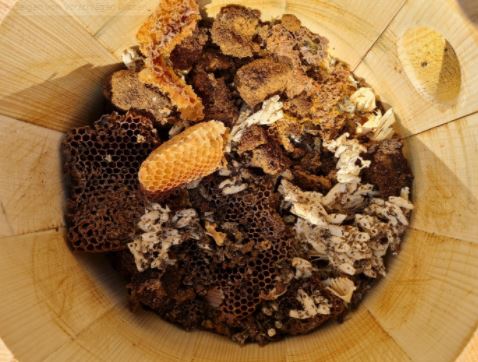
Comb remnants in my SwissTree.
Have fun putting this into practice. I look forward to sharing more insights into my work in May.
Do you have any questions? Join our monthly online Community Meeting on 8 April on the topic «Start of the Beekeeping Season». Register here now.
Subscribe to our newsletter here so you don’t miss any new blog posts.
January–February: Looking back and planning for the new beekeeping season
March: Preparing for the new beekeeping season and ensuring an adequate food supply
July: No bee treatment without first measuring infestation levels
August: How do location and conditions affect the health of bee colonies in high summer?
In our conference series “Bees Without Borders”, renowned bee scientist and breeder Dr. Ralph Büchler showed on 28 Oc...
Martin Ott is convinced: We know enough to solve ecological crises. What is missing is a relationship with this knowl...
Important information
Important information: The original texts are published in German. The French, Italian and English versions are translated automatically and checked where possible. Please report any errors to bee@freethebees.ch.