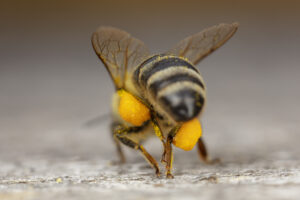
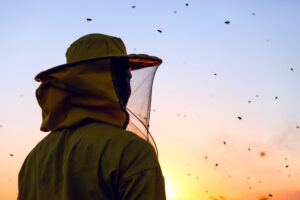
Honey bees are exploited as livestock, even in Swiss hobby beekeeping. This is despite the fact that most hobby beekeepers actually want to do something good for bees and nature. Many beekeepers and bee enthusiasts are unaware of the negative impact conventional beekeeping practices have on bee health. FreeTheBees wants to encourage new beekeepers to question existing beekeeping methods and familiarise themselves with species-appropriate, bee-friendly approaches. This is the only way to preserve honey bees for future generations.
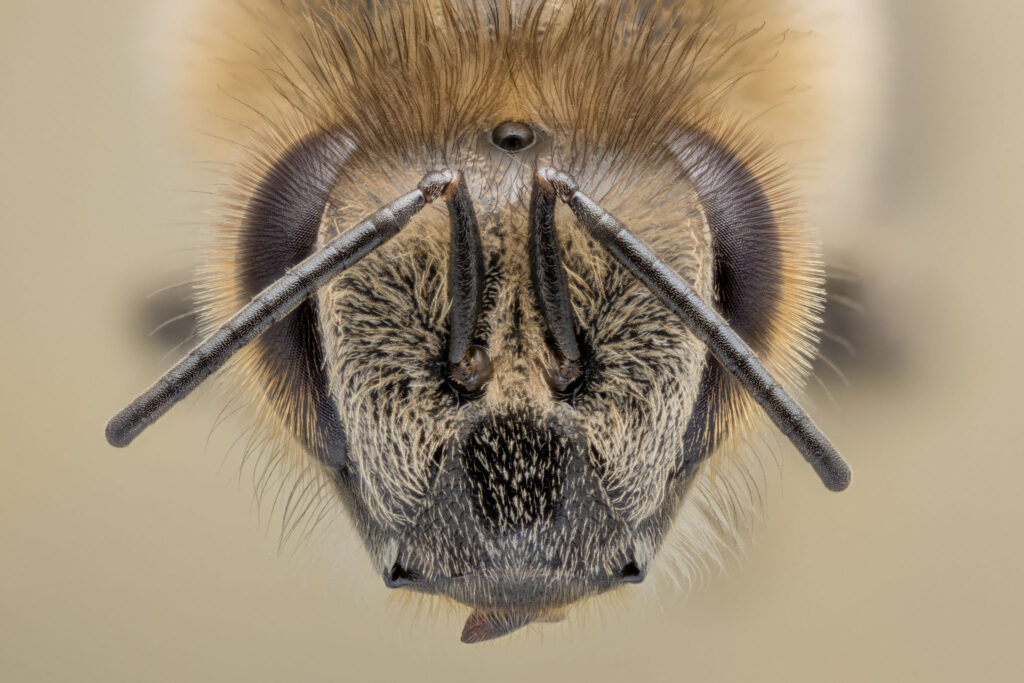
According to scientific evidence, honey bees have existed for more than 30 million years. The bee has undergone an extraordinarily successful evolution. Over millions of years, it has survived countless new viruses, bacteria, fungi and parasites, as well as several climate changes. The key to its adaptability lies in natural selection: whatever survives and is therefore adapted to nature reproduces. Everything else perishes.
Historically, bees have managed to withstand not only natural pressures but also human ones. Even early beekeeping did not harm bees. Back when bees lived in the forest, our ancestors would steal the honey and wax coveted from bee colonies, often causing them to starve to death. But unlike today, natural population dynamics could easily make up for the loss of a colony. A lost bee colony would be replaced by a new swarm the following spring.
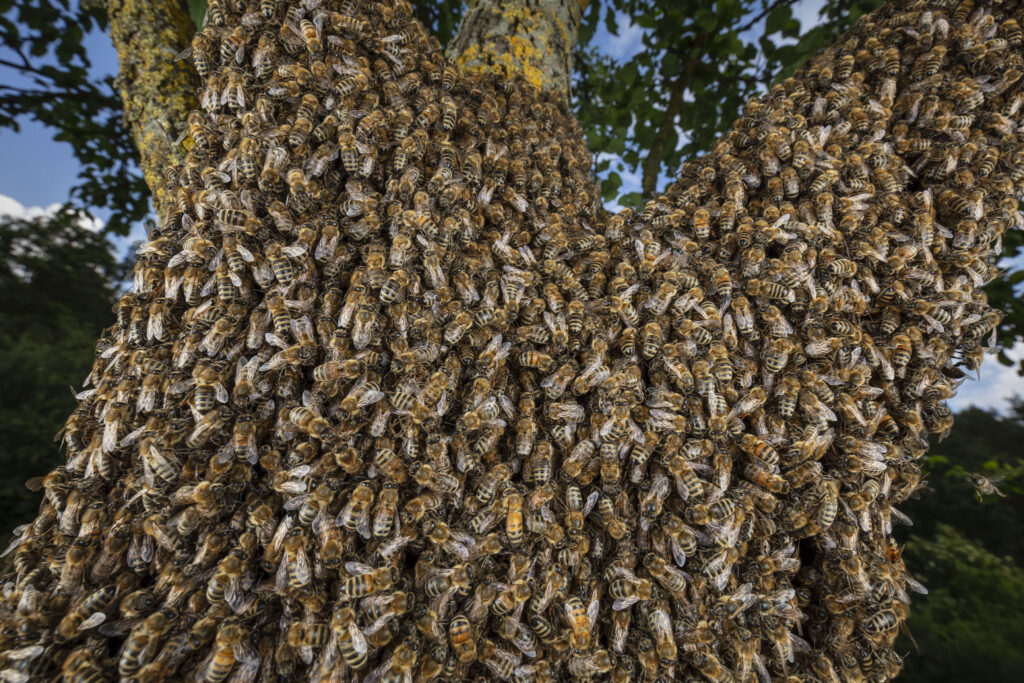
Over the last 200 years, this balance has tipped. On the one hand, the honey bee as a wild animal has almost disappeared. On the other, humans began to interfere heavily with natural processes through increasingly intensive honey production. The way honey bees are kept has continued to evolve in favour of maximising yields, at the bees’ expense. Their needs only mattered insofar as they affected their ability to produce honey.
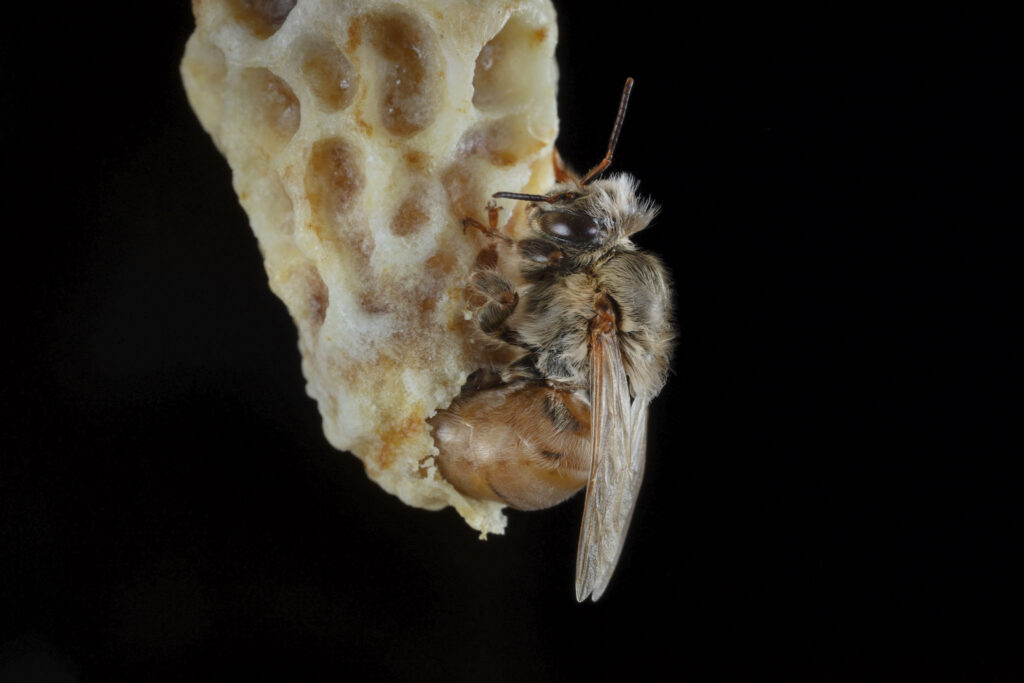
What was once a wild forest animal quickly became Switzerland’s third most important livestock animal. Today, almost the entire Swiss honey bee population is in the hands of beekeepers. Bees have almost disappeared from nature—and with them the natural adaptability, survival instincts and resilience that enabled them to weather the upheavals of the last millions of years.
Beekeepers around the world are feeling the consequences. Many of their colonies fail to survive the winter or die during the year seemingly out of nowhere. The causes of this mass die-off are often misunderstood, however, and attributed to climate change, the Varroa mite introduced from Asia, or certain pesticides. Scientific studies show that this view is too narrow. High winter losses, the epidemic spread of parasites and diseases, and the loss of the ability to survive independently are also due to the unintended side effects of keeping animals in an exploitative manner.
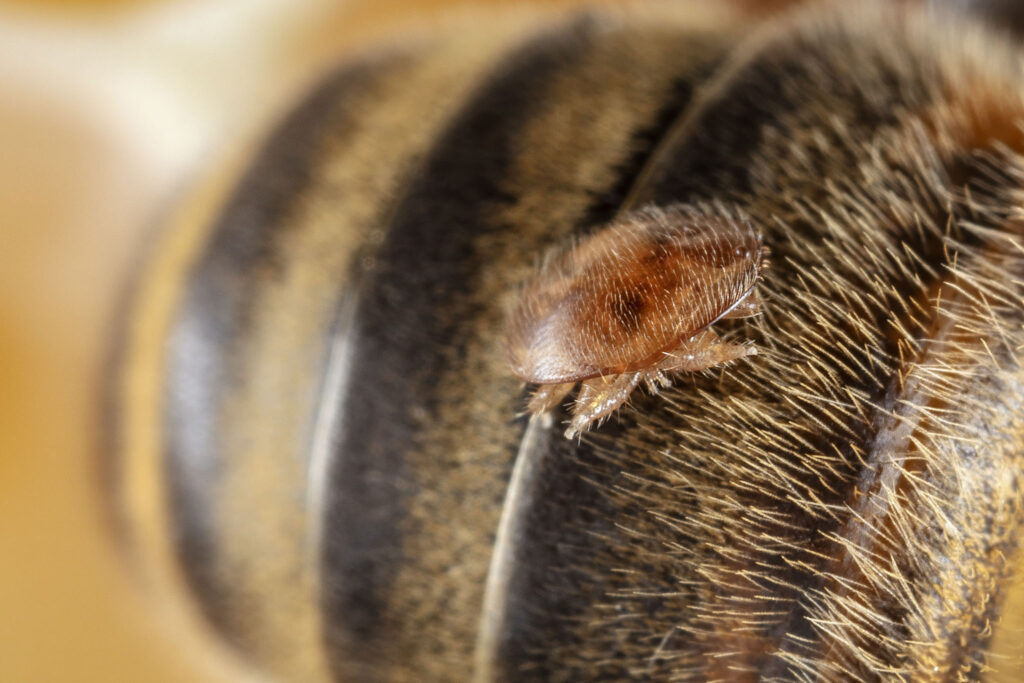
Let’s take a look at six harmful practices of yield-driven mass livestock farming focused on maximising honey production, which continue to shape hobby beekeeping today.
To meet the beekeeper’s high honey production targets, the bee colony in the hive has to undergo a series of interventions designed to increase production. These control swarming and brood rearing—that is, reproduction—so that the colony focuses all its energy and resources on honey production.
In nature, a honey bee colony would need to produce just enough honey to survive, yet in reality colonies in many parts of Switzerland often starve. In a hive, the beekeeper harvests an average of 20 kg of honey. This is only possible thanks to methods that are now criticised in livestock and poultry farming, but are still common practice in beekeeping.
Good to know: What matters is not the amount of honey harvested, but the honey reserves available to the bees. Either you leave the colony to nature and are glad if it can overwinter on its own honey, or you manage the colony, harvest an average of around 20 kg of honey and feed it around 10 kg of sugar water to ensure its survival.
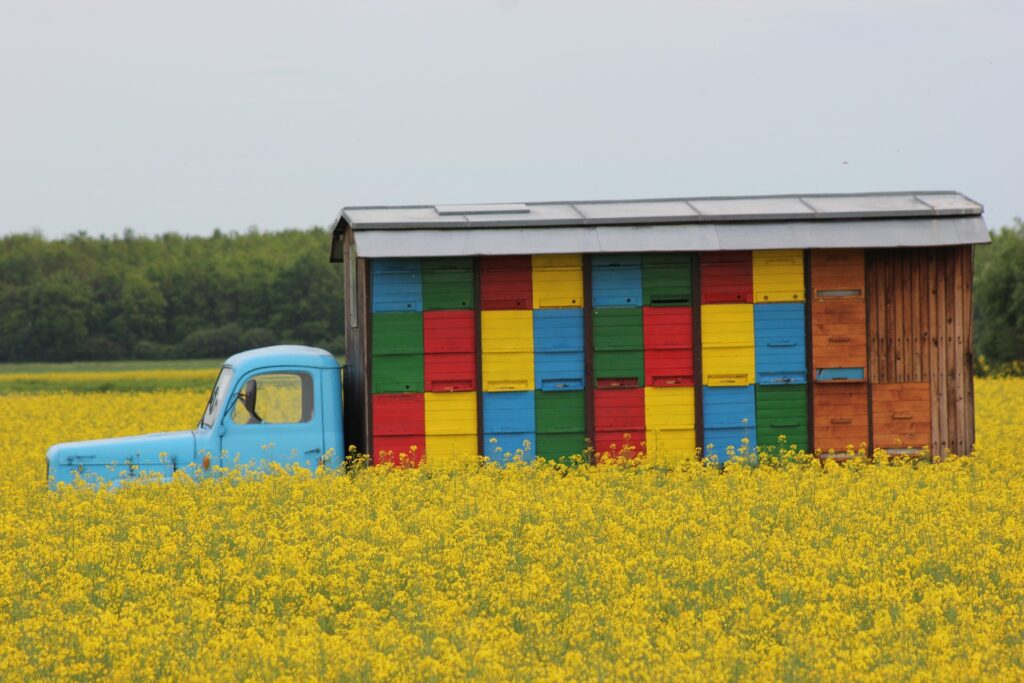
To get the most honey from the spring and summer nectar flows, bees have to devote themselves exclusively to honey production—not, as nature intended, to reproduction as well. Beekeepers use various means to prevent swarming, especially during the main spring nectar flow.
One tried-and-tested trick is to place an empty honey super on top of the hive, so the colony can store more nectar more quickly. This keeps the bees working and working, producing more and more honey. While this pleases the beekeeper, it is like castrating the bee colony.
Good to know: The natural swarming instinct is an ingenious and cleansing invention of nature. Artificial reproduction, which becomes necessary when the swarming instinct is interrupted, can never replicate this effect.
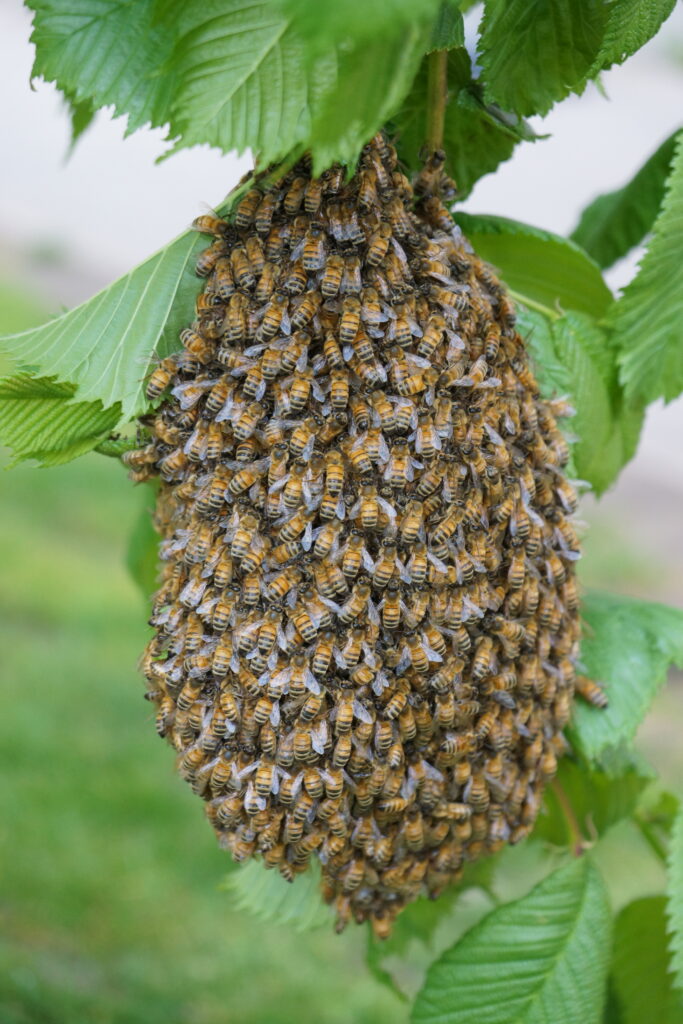
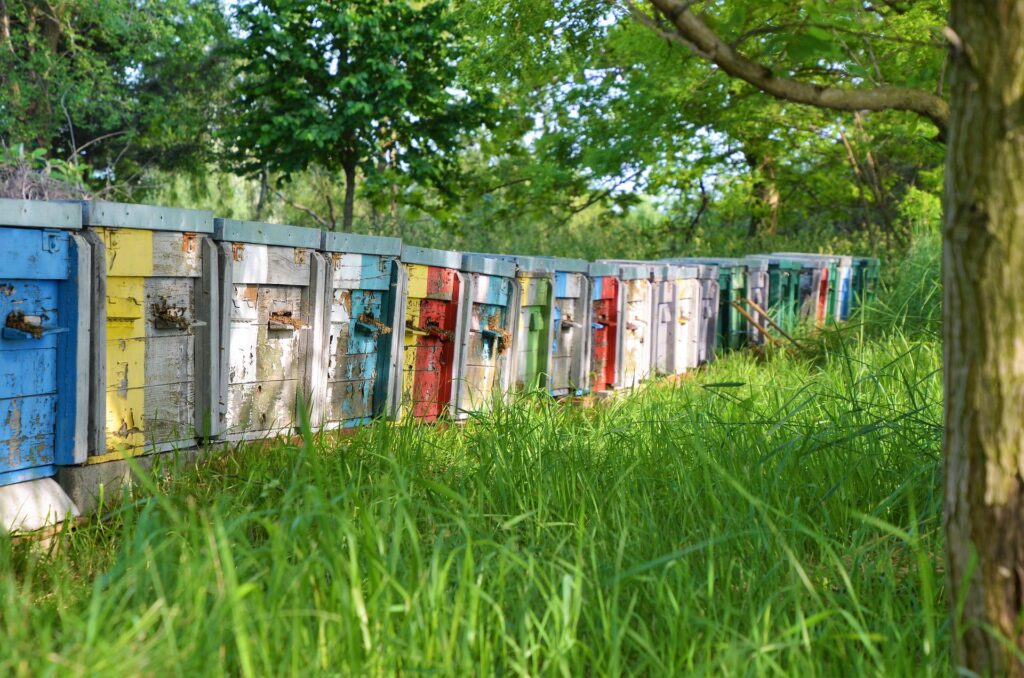
Inside the neat rows of colourful beehives, the climate is usually extremely unhealthy. The design, dimensions and materials of the hives are optimised for honey production and ease of handling, but not adapted to the needs of bees.
What is convenient and efficient for the beekeeper poses major health risks for the bees. Traditional beehives are unnaturally large, poorly insulated and do not allow moisture to escape. These are ideal conditions for fungi, pathogens and parasite populations. For bees, it is usually too damp and too cold.
Good to know: In nature, a bee colony searches for and selects its habitat according to carefully considered criteria. A tree cavity still offers the best indoor climate; bees can maintain an optimal climate inside it using little energy, much like we do in a Minergie-certified home. Today, naturalistic habitats are available that recreate this climate and provide bees with a healthy home.
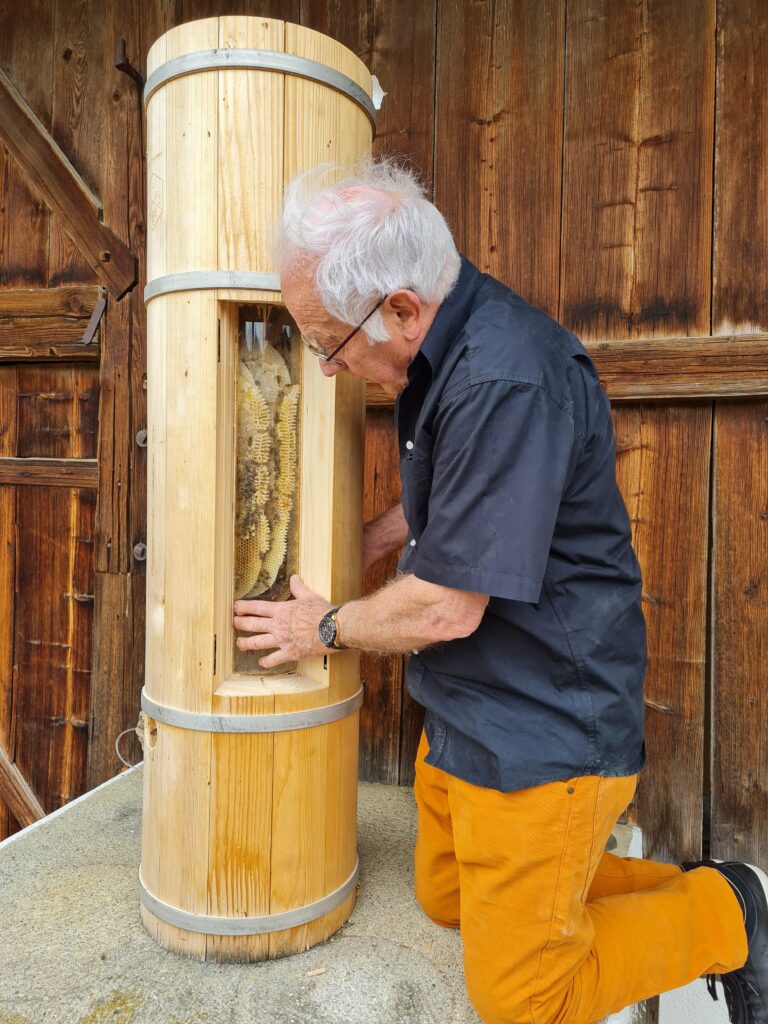
As honey bees are inactive during winter but do not hibernate, the colony has to build up sufficient winter reserves. Even on the coldest winter night, it needs to maintain a core temperature of around 20 degrees.
The larger, damper and more poorly insulated the habitat, the more energy this requires. Since conditions in conventional hives are rarely ideal, bees have to put in an immense amount of energy and work to make the hive habitable—often more energy than they have.
Good to know: In a tree cavity, bees benefit from a warm, dry climate. In their natural habitat, they process around 30–40 kg of construction and nutritional materials over the course of a year. In a hive, this can be as much as 220 kg—at least five times more!
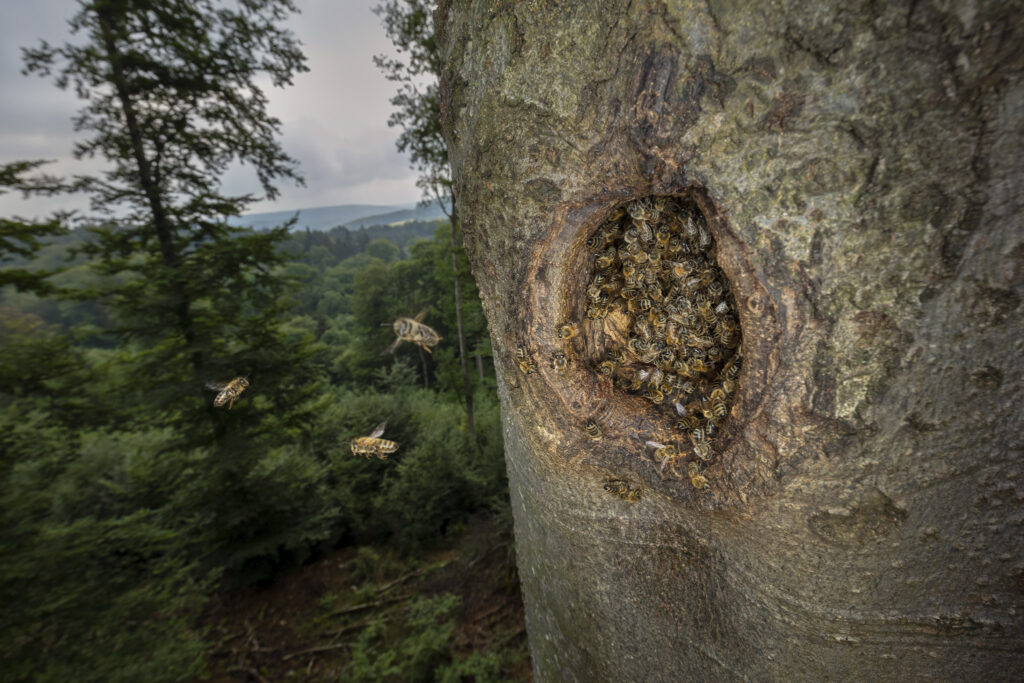
In the wild, there are around 1–5 bee colonies per square kilometre. But beekeepers may easily keep 10 or 20 colonies in just a few square metres, in hives arranged side by side and one above the other. What looks idyllic is actually a form of mass livestock farming that puts every battery-cage poultry operation in the shade.
More honey bees do not contribute to the conservation of the species. On the contrary: the higher the number of managed honey bees in a small area, the greater the risk of disease transmission and the greater the competition with wild bees and other important pollinators.
Good to know: Diversified beekeeping and a natural density of bee colonies would support ecological balance and have a positive impact on bee health.
In beekeeping, when a large proportion of the honey is taken from the colony, the bees are fed sugar syrup. 10 kg of industrial sugar per bee colony is not unusual; sometimes it is more.
This cheap, artificial feed is a poor substitute for honey, as it never contains the same rich range of macro- and micronutrients. What is practical and economical for the beekeeper leads to unwanted side effects for bee health.
Good to know: Their own honey is ideally composed to strengthen bees’ immune systems and protect them from disease.
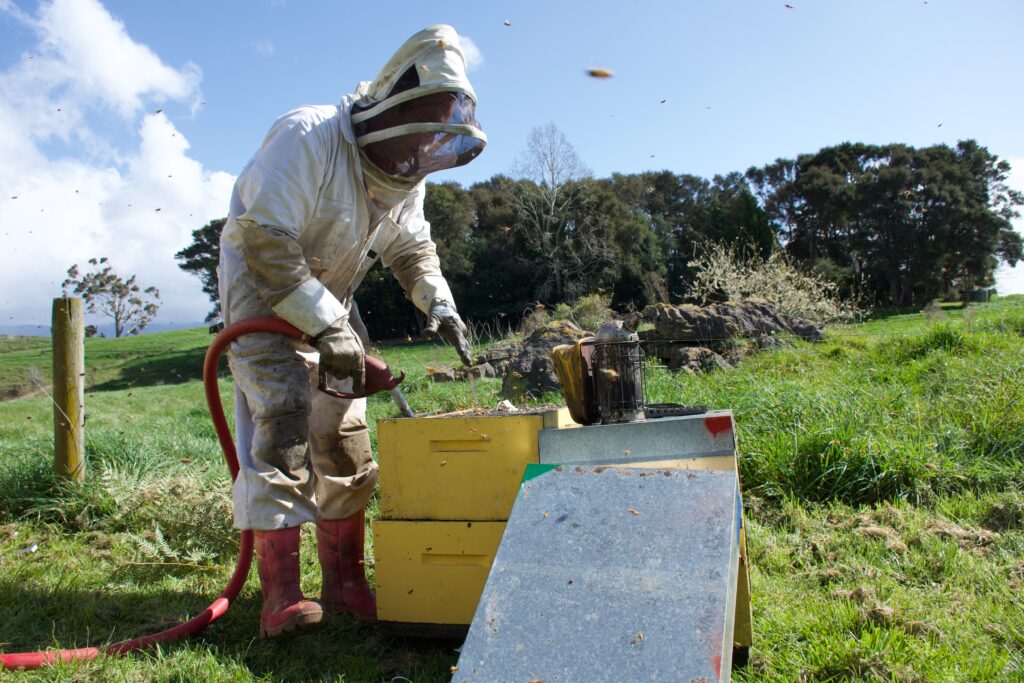
Many new beekeepers are unaware that honey-focused beekeeping is not the only way to keep bees. There are simple, practical methods that provide better conditions for honey bees and rely less on artificial interventions.
The FREETHEBEES beekeeping methodology teaches and demonstrates that diversifying beekeeping methods can already bring about positive change in beekeeping. The aim is not to impose a single method, but to take a long-term perspective and develop alternatives to today’s standard practice. Unfortunately, there is no longer one single right method. The primary goal should be to preserve honey bees for future generations. Second, we must safeguard pollination, which is far more important economically and ecologically than honey. Honey production should come third.
We can still take action and work together to create more sustainable beekeeping. Hobby beekeepers in particular, who began keeping bees out of love and fascination for the animal, have a key role to play. With their help, we can save honey bees from extinction and contribute to protecting local biodiversity.
Read the original text by André Wermelinger, “The honey bee: exploited as livestock, on the brink of extinction as a wild animal” in the Summer 2022 Bulletin.
In our conference series “Bees Without Borders”, renowned bee scientist and breeder Dr. Ralph Büchler showed on 28 Oc...
Martin Ott is convinced: We know enough to solve ecological crises. What is missing is a relationship with this knowl...
Important information
Important information: The original texts are published in German. The French, Italian and English versions are translated automatically and checked where possible. Please report any errors to bee@freethebees.ch.