Forage gaps, that is, periods when bees can find almost no nectar, have an extremely adverse effect on the development of honey bee colonies and on other insect species in general.
The most severe forage gap probably occurs around mid- to late May, after the fields have been mown and the fruit trees have finished flowering. More generally, however, bees encounter green deserts over long periods of the season. This is due, on the one hand, to over-fertilization and, on the other, to mowing far too regularly.
André Wermelinger’s natural meadow project on his own property has taken far longer than he could ever have imagined. After 15 years without fertilizer and with annual efforts to increase the diversity of flowers, results are now visible for the first time. These results will sustain themselves without any further effort and can therefore be described as natural. At present, the meadow is only mown. The first cut, according to the specialist in wildflower meadows, is between 5 and 20 June; the second cut is in late summer. The cut grass is left on the meadow for 3 days to ripen and dry, and is turned several times to allow the seeds to fall.
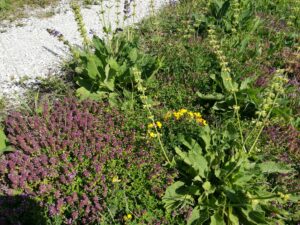
This is what one of the new sections looks like. It is buzzing with activity! In the background is a log hive with a bee colony.
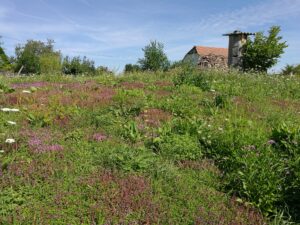
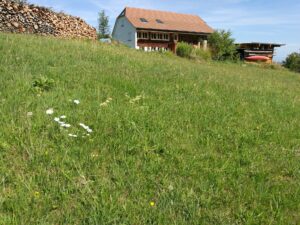
For comparison, the meadow 20 m away with the same exposure. This plot has been managed extensively by the neighbouring farmer for several years. The taxpayer pays the farmer subsidies for this. Yet it is completely useless and a green desert for insects!
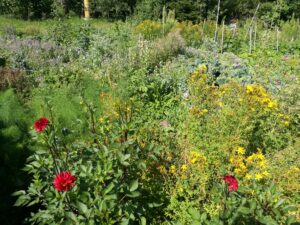
Of course, the vegetable garden can also be in bloom while still producing a high yield of vegetables. Here, too, there is buzzing among the cultivated vegetables. Some vegetables are also deliberately left unharvested and allowed to flower. Here are a few impressions of André Wermelinger’s garden.
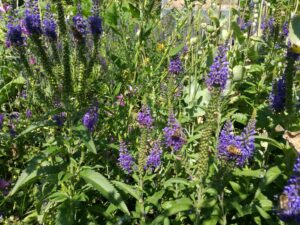
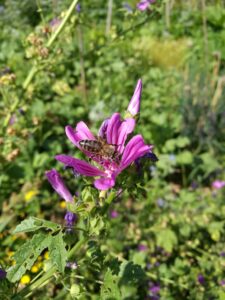
A neighbour’s comment is interesting: “Since you have owned and managed the property, there have been considerably more insects living here”.
As of 15 September 2026 On 20 May 2026, the Swiss federal popular initiative “For the Safeguarding of Pollination of...
On 30 July 2026, 44 donors accepted our invitation to Estavayer-le-Lac—the highest attendance ever at a FreeTheBees d...
Around 30 members and the board met on 25 July for the annual members’ gathering at Park Seleger Moor in the canton o...
Important information
Important information: The original texts are published in German. The French, Italian and English versions are translated automatically and checked where possible. Please report any errors to bee@freethebees.ch.