…Single people can decide entirely freely who should receive their assets after their death…
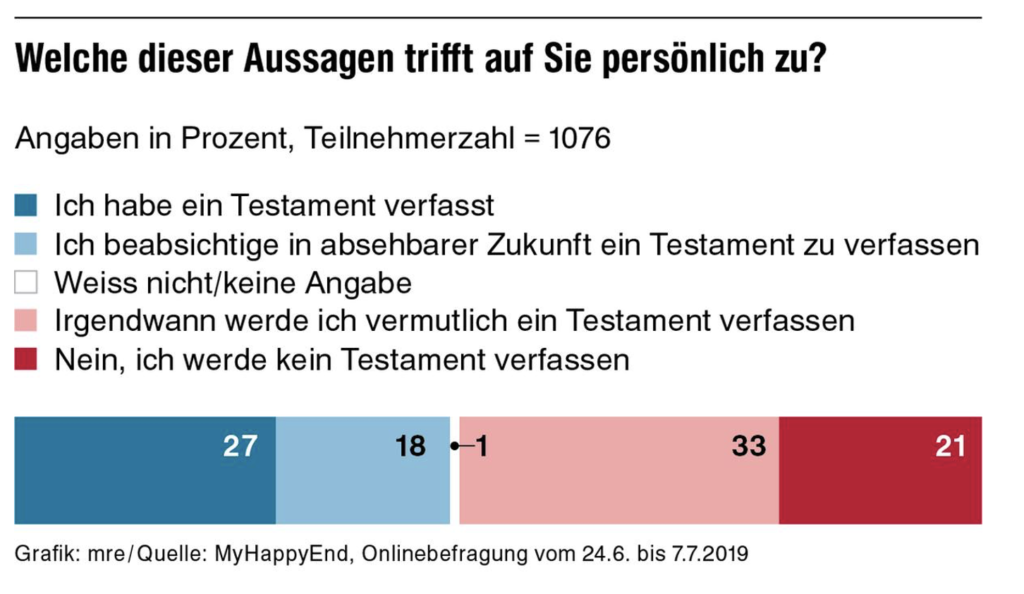
In September 2019, Tagesanzeiger reported that, according to a survey conducted in July 2019, a large majority of people in Switzerland consider making a will “very important” or “quite important”; yet only 27 per cent of them actually go on to make one.
The coronavirus pandemic has once again reminded us how quickly everything in life can suddenly change. That is why it is worth making provisions in good time and clarifying the things that matter to you. Many matters should be set out in writing so that they can take effect. This may require a will, an advance directive and/or a lasting power of attorney.
In this blog post, we would like to take a closer look at making a will for single people.
“In particular, the assets of single people often go to heirs whom the deceased would not have chosen to benefit…”, says Beat Schellenberg from Nachlasstreuhand.ch. It is therefore advisable to plan your inheritance early.
Thomas Fabian, Head of Philanthropy at FREETHEBEES, was able to bring Beat Schellenberg on board as an interviewee to discuss this complex, interdisciplinary subject of “inheritance succession for single people”.
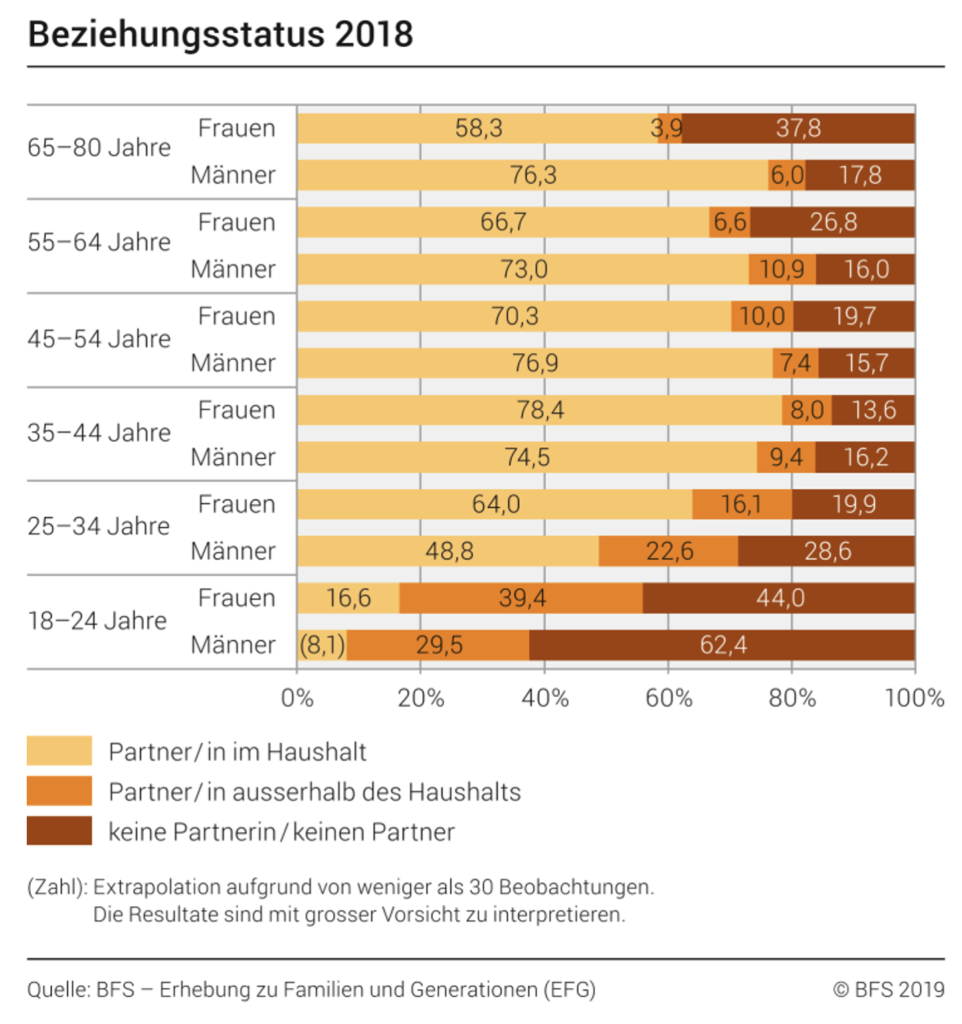
TF: According to the Swiss Federal Statistical Office (SFSO), there were around 3.8 million private households in Switzerland at the end of 2019. Just over a third of these households consisted of a single person, accounting for 16% of the permanent resident population living in a one-person household. While this proportion may seem low, it takes on considerably greater significance when it comes to inheritance planning. Beat, what does inheritance succession look like for single people in Switzerland?
BS: If someone dies leaving neither a spouse nor descendants, their parents inherit under the rules of intestate succession. If their parents have already died, their own brothers and sisters take their place, followed by their nieces and nephews.
If there are no heirs in what is known as the parental line, the estate passes to the grandparental line. In addition to the grandparents, this includes uncles and aunts, cousins, and so on.
If there are no such heirs either, the state inherits. In such cases, the estate is usually divided between the deceased’s municipality of residence and the canton.
If single people do not decide what should happen to their assets after their death, the beneficiaries may eventually be people with whom they had little or no relationship. Intestate succession can be changed by making a will.
In a will, the testator can name their heirs. Single people who leave neither descendants nor parents behind do not have to respect any compulsory shares. From 1 January 2023 (following the revision of inheritance law), the compulsory share of the parents under inheritance law will also be abolished, if they are still alive. This means single people can decide entirely freely who should receive their assets after their death.
TF: What should single people consider to organise their inheritance as effectively as possible? Is there a guideline? What are the challenges?
BS: The following four points are particularly important for single people who want to make proactive arrangements for their inheritance in good time:
Assigning pension assets
Occupational pension and vested benefits, as well as assets in pillar 3a, are not part of the estate. The insurance conditions or foundation regulations determine who receives these assets in the event of death and how much influence the insured person can have over the order of beneficiaries.
Money for a good cause
Many people without close relatives particularly want their assets to go towards a good cause. This can be achieved through a will. For example, they can set up their own charitable foundation. At Nachlasstreuhand.ch, we are familiar with many such cases in which single people want to support charitable causes even after their death through a testamentary disposition.
Have your will reviewed
Many wills are not worded clearly enough. For example, the phrase “My estate should go to charitable institutions” leaves many questions unanswered:
Consider appointing an executor
The prospect of an inheritance often arouses financial interest among some potential heirs. It may therefore be advisable to appoint a knowledgeable and impartial executor to carry out the terms of the will, mediate in the event of disputes between heirs, and ensure that the estate is divided quickly and cost-effectively.
…Thank you for your time, Beat! We would be glad to return to this
important topic in a future blog post, even though it is “unpleasant” for the vast majority of people.

In October, FREETHEBEES is holding three free webinars in collaboration with DeinAdieu and the Swiss Notaries Association
Our speaker, Dr iur Marc’Antonio Iten, will explain what matters when writing a will. We will also show you how to draw up your will simply and, if you wish, how to include our organisation or another charitable organisation of your choice.
Programme
We look forward to receiving your registration. Please choose one of two available dates and register directly via the following links:
Amnesty International Switzerland, Biovision, Swiss Refugee Council, Fragile Suisse, FREETHEBEES, Rheumaliga Schweiz and Pro Infirmis are holding this event together. The webinar is aimed primarily at people aged 50 and over, but may also be of interest to younger people. The event is organised by DeinAdieu.ch and is free of charge.
Free will consultation with the Swiss Notaries Association, 25 October 2021
FREETHEBEES is also offering a free will consultation in collaboration with the Swiss Notaries Association.
We would like to give FREETHEBEES supporters the opportunity to receive up to 30 minutes of free advice from an independent notary. Together with the Swiss Notaries Association, we are therefore offering you the opportunity to book a free consultation by calling 031 326 51 90 on Monday, 25 October 2021, between 8:00 and 17:30. The consultations themselves will take place between 26 and 29 October. You can choose whether you would prefer to speak by phone or via Zoom. Take advantage of this opportunity and make provisions for the future.
https://www.tagesanzeiger.ch/schweiz/standard/nur-ein-viertel-hat-sein-testament-gemacht/story/16618667
As of 15 September 2026 On 20 May 2026, the Swiss federal popular initiative “For the Safeguarding of Pollination of...
On 30 July 2026, 44 donors accepted our invitation to Estavayer-le-Lac—the highest attendance ever at a FreeTheBees d...
Around 30 members and the board met on 25 July for the annual members’ gathering at Park Seleger Moor in the canton o...
Important information
Important information: The original texts are published in German. The French, Italian and English versions are translated automatically and checked where possible. Please report any errors to bee@freethebees.ch.