The honey bee plays a special role: it is both a wild animal and a farmed animal. In Switzerland, it is predominantly kept by beekeepers, while wild-living honey bee colonies are rare and, to date, have been recorded and taken into account systematically only to a limited extent. This situation affects the species’ natural ability to adapt and increases its dependence on human intervention. In addition to protecting the species in the wild, honey bees kept by beekeepers deserve to be kept in a more species-appropriate and natural way. FreeTheBees has developed and compiled the necessary concepts for this.
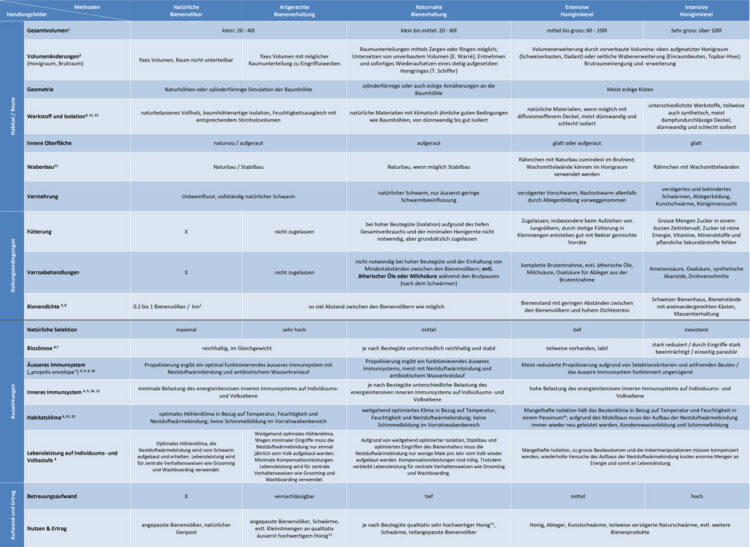
How can different forms of beekeeping be compared and classified? The FreeTheBees Beekeeping Methodology provides…
Beekeeping Methodology
Getting started with beekeeping requires careful consideration. Find the guide here.
Getting Started with Beekeeping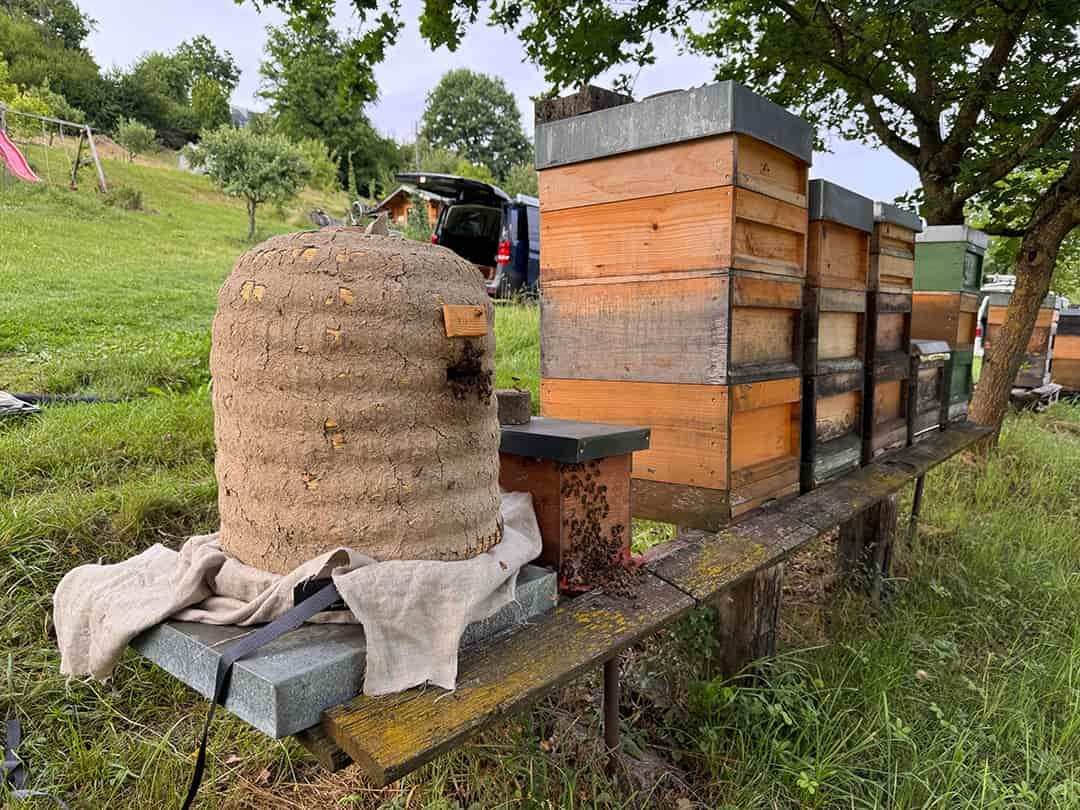
Volume, material and insulation determine the climate in the colony and affect energy consumption, health…
Hives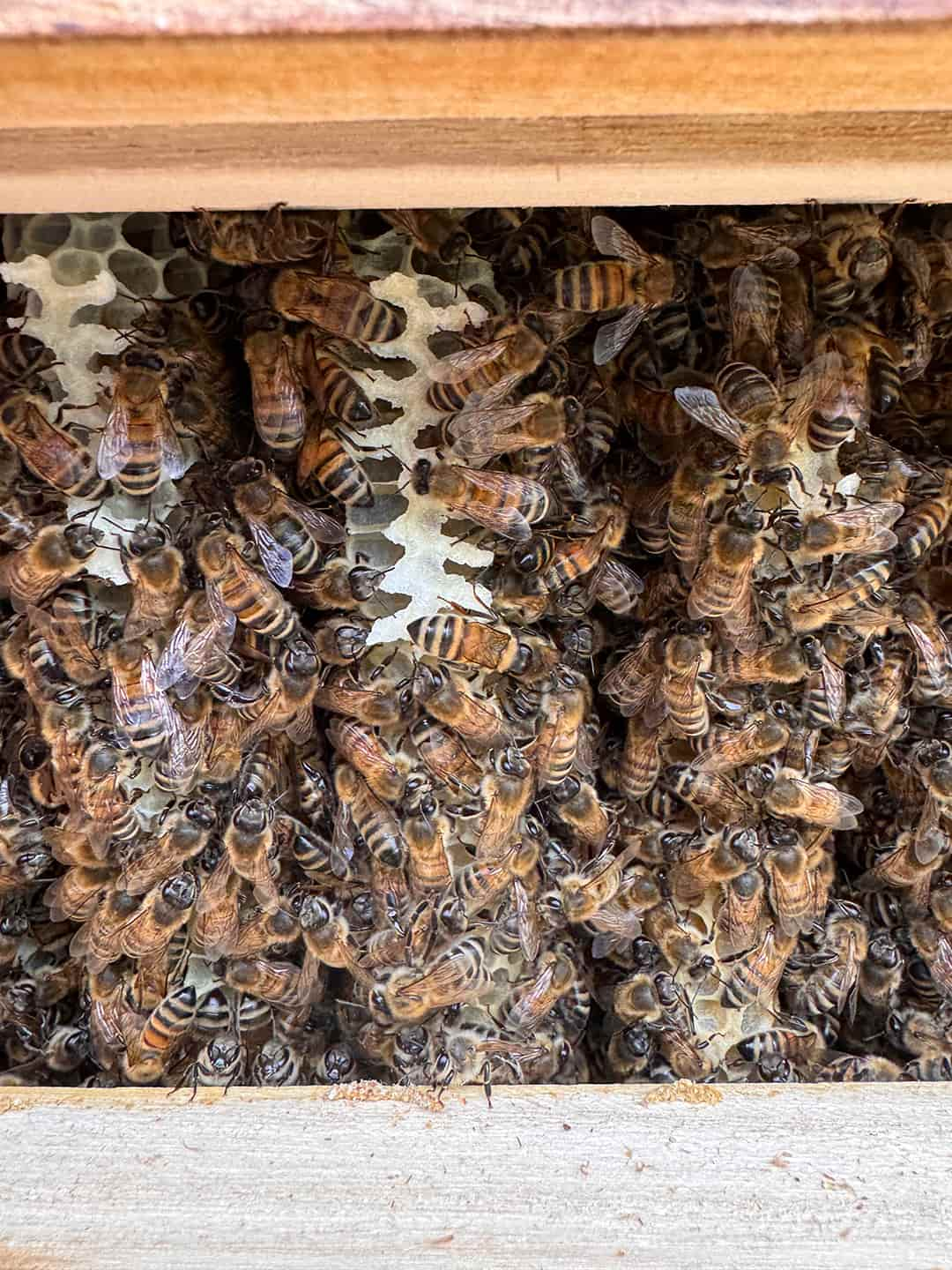
A strong colony is not created through treatment, but through suitable conditions and low levels…
Health & Resilience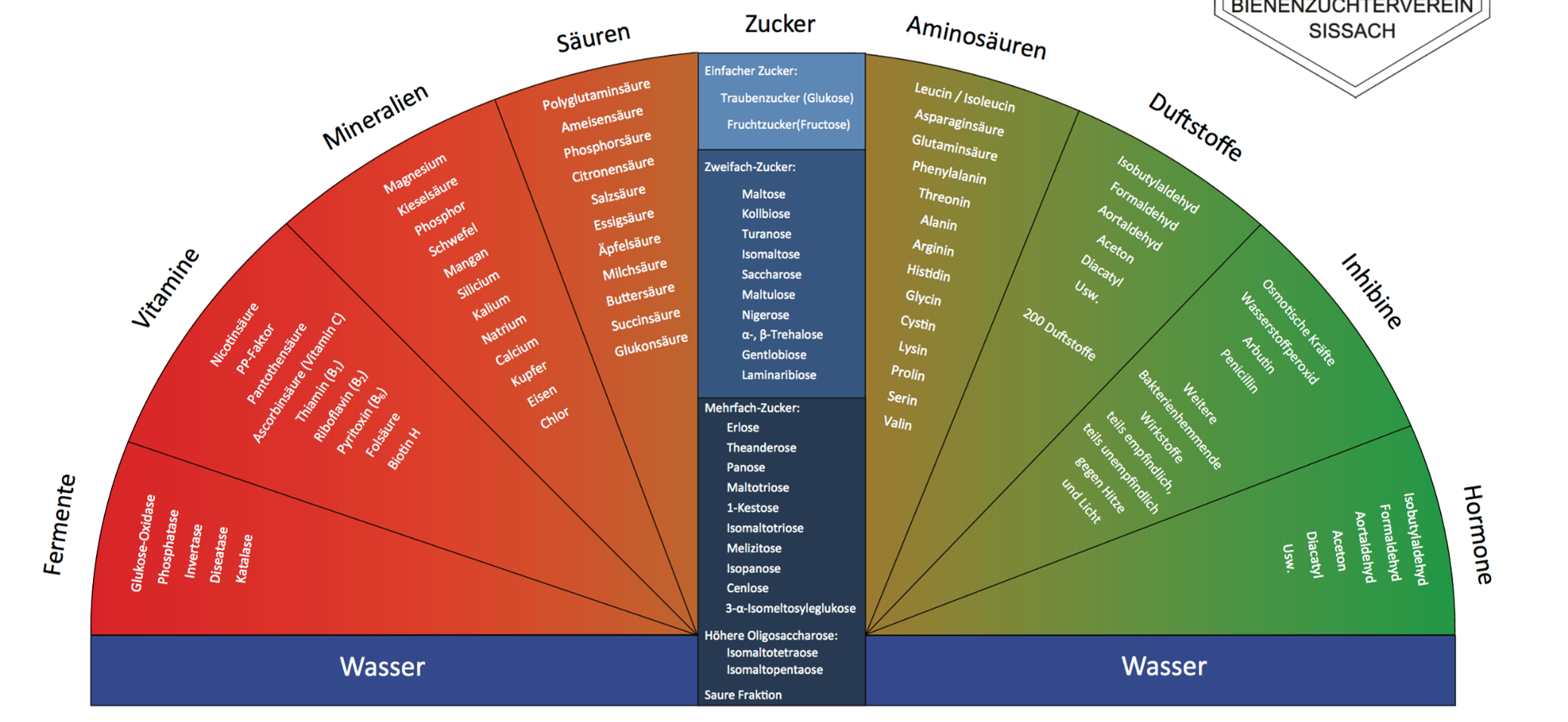
Honey is more than a source of energy. Feeding affects metabolism, the immune system and…
Feeding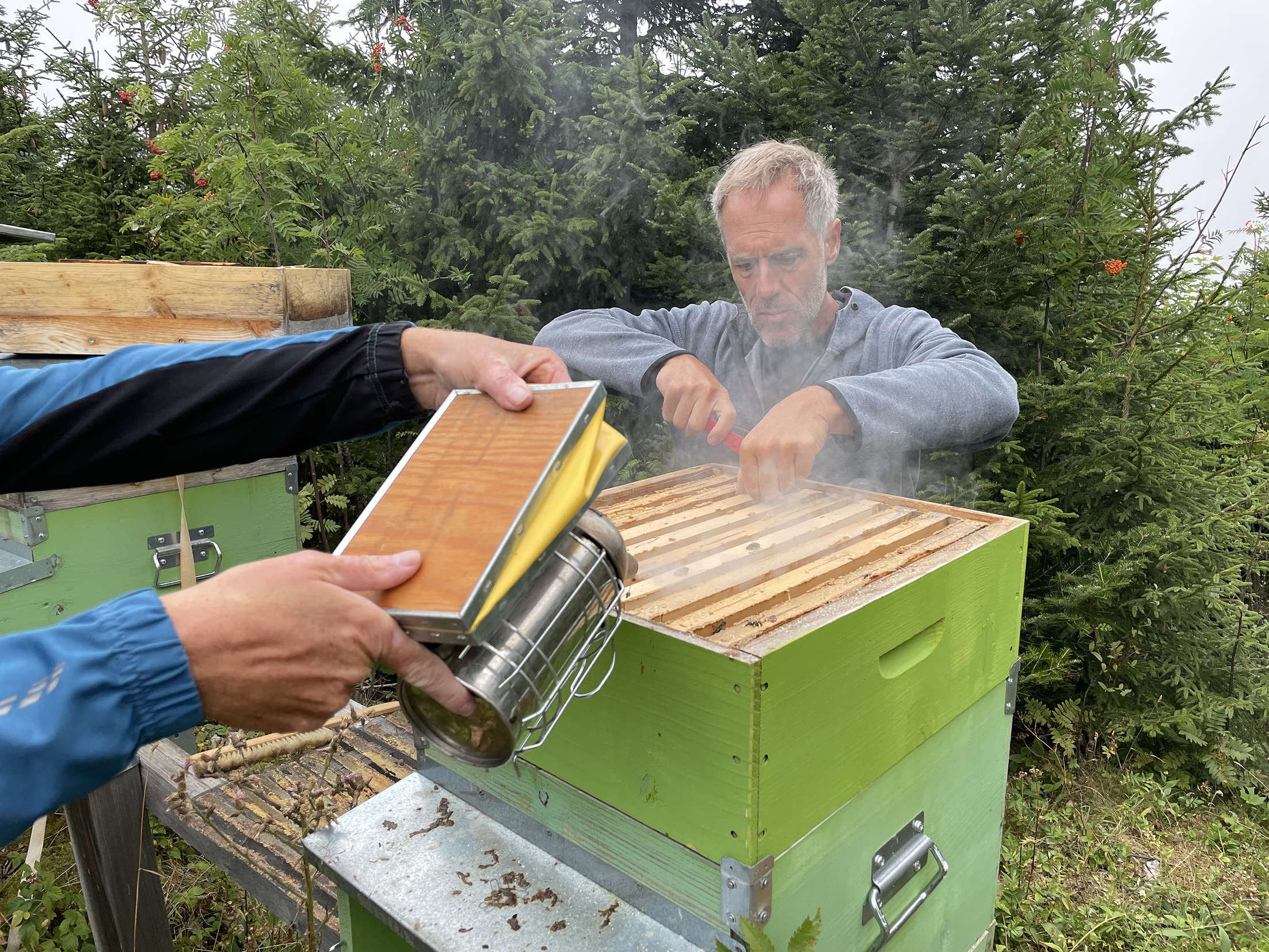
Alongside conventional treatment approaches with significant side effects, there are a number of more interesting,…
TreatmentYes, honey bees can coexist with the Varroa mite if they live in suitable habitats and are subject to natural selection. Scientific studies, beekeepers who do not treat and observations of wild-living colonies show this convincingly. Swarming is a key natural mechanism for reducing parasite pressure: during swarming, the brood break interrupts the mite’s reproductive cycle.
No. International studies show that the risk of disease tends to run in the opposite direction: from apiaries with high colony densities to wild-living colonies. Conventional beekeeping with large-scale colony management favours the spread of viruses, fungi and parasites. By contrast, wild colonies in tree cavities develop greater natural resilience, because only resistant colonies survive and pass on their genes.
In addition to wild-living honey bee colonies, FreeTheBees has analysed all known beekeeping practices and derived five different beekeeping methods from them. The corresponding table distinguishes levels of intensity in beekeeping. At one end, «wild-living honey bees» serve as the reference point. At the other, «intensive honey production» serves as the reference. Between these, the main methods «nature-oriented beekeeping» and «extensive honey production» are defined. See the FreeTheBees beekeeping Methodology
Absolutely NOT! The methodology was developed for beekeepers and nature lovers. It is intended to raise awareness of the intensity of different forms of beekeeping and show how you can optimise your chosen approach in line with your own objectives. Moving to the right means more intensive beekeeping and higher honey yields, but also greater complexity and a higher level of beekeeping knowledge required. Moving to the left means a simpler, less time-consuming and more nature-oriented approach, but with no honey yield. See the FreeTheBees beekeeping Methodology
It makes sense to align the choice of treatment with the intensity of the chosen beekeeping method. Those who keep bees more intensively and expect higher honey yields from them can hardly avoid Varroa treatment. Those who leave the bees to nature neither need to nor should treat them. For extensive honey production, FreeTheBees recommends chemical-free but highly effective interventions based on the work of Dr Ralph Büchler, specifically complete brood removal and the trapping comb method. See the FreeTheBees beekeeping Methodology
Choosing the right bee habitat is essential. It follows the choice of beekeeping method in accordance with the FreeTheBees Beekeeping Methodology. Wild-living honey bees belong in a habitat that is as close to nature as possible, such as a tree cavity. Honey bees kept using nature-oriented methods benefit from diffusion-open hive covers and good insulation. For extensive honey production, choose a reasonably well-insulated hive, usually rectangular and fitted with movable frames. Conventional beekeepers aiming for the highest possible honey yield use conventional hive systems such as Dadant, Segeberger, Swiss hive, etc. These are designed for the convenience of the beekeeper, but do little to meet the bees’ needs for species-appropriate conditions. See the FreeTheBees beekeeping Methodology
On 9 October, a class from Collège du Sud came on a school trip to our site in Vaulruz, right among the bees. The stu...
In our conference series “Bees Without Borders”, renowned bee scientist and breeder Dr. Ralph Büchler showed on 28 Oc...
“I observe how nature works” For over 15 years, Heinz Weder has been observing free-living honey bee colonies. He has...
Important information
Important information: The original texts are published in German. The French, Italian and English versions are translated automatically and checked where possible. Please report any errors to bee@freethebees.ch.