In large parts of Switzerland, honey bees can no longer find enough food to survive. This makes the issue of feeding bees a central one. The question is not only which product to choose, but also which feeding method is optimal.
Countless practical trials conducted over many years, as well as discussions with various experts, show that in large parts of the Swiss countryside, particularly on the agriculturally dominated Swiss Plateau, honey bees can no longer gather enough food for their own colonies. The main cause is a lack of plant biodiversity.
Bee colonies living under natural or near-natural conditions often starve miserably in many parts of Switzerland as early as the beginning of winter, or at the latest towards the end of winter, when their food requirements rise dramatically to maintain warmth in the brood nest. The same applies to large parts of Germany and other neighbouring countries.
In stark contrast to this is the honey yield of a conventional Swiss beekeeper: an average of 20kg, and sometimes up to 40kg per colony. The difference between natural colonies starving and the average yield in beekeeping is irrefutable evidence of the high intensity of beekeeping.
Anyone who keeps bees in a near-natural way and does not want to lose them should make ensuring their food supply the top priority. Ideally, this is achieved by enhancing the local habitat. In most cases, however, feeding bees is also necessary, at least temporarily. Yield-oriented beekeeping likewise cannot do without feeding.
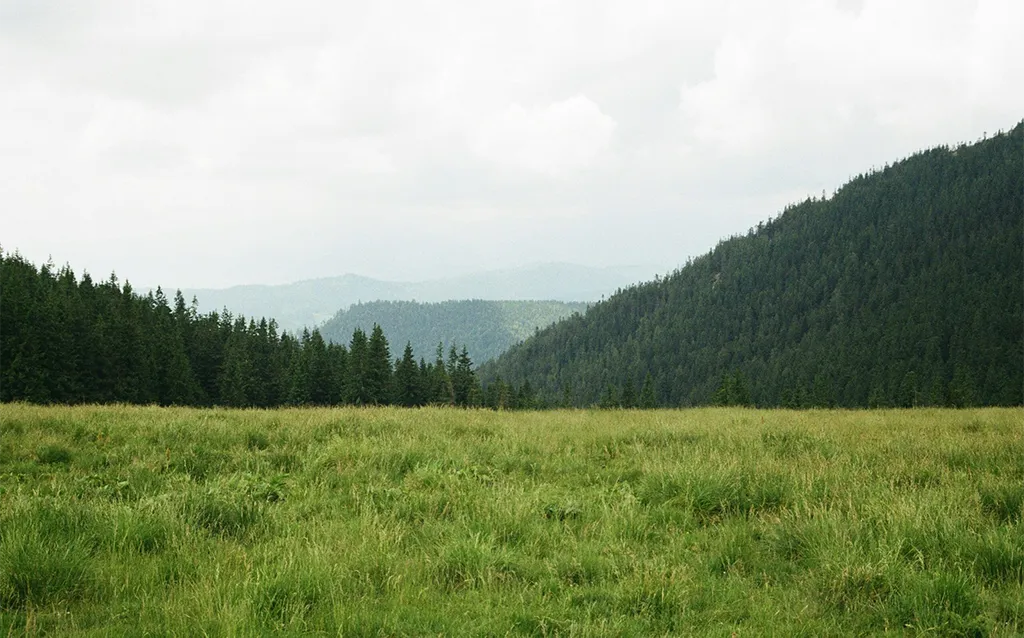
Green desert without floral diversity.
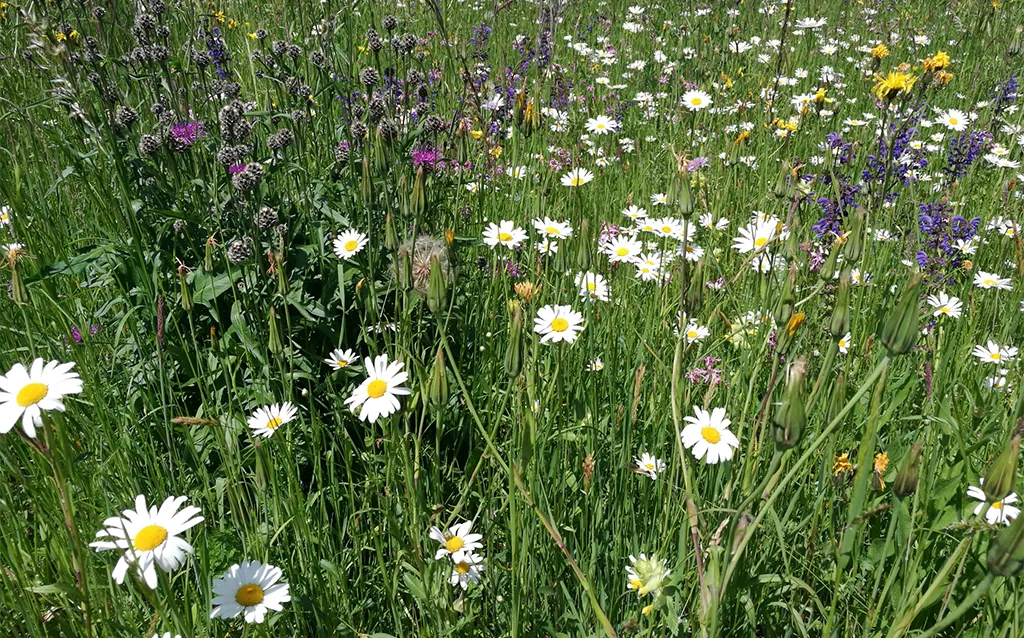
Species-rich flower meadows.
Choosing the right product for feeding is crucial. As the honey spectrum makes unmistakably clear, honey is not the same as industrial sugar. And there are considerable differences even between industrial sugars.
Feeding honey may seem counterintuitive, especially since it requires another beekeeper to keep their bees for yield and, accordingly, at high intensity.
The use of sugar products has been studied. In some cases, sugar feeding significantly shortens the lifespan of bees. Mirjanic et al. (2013) report the lifespan of a bee under the following feeding conditions:
This makes the choice of product clear for FreeTheBees: enzymatically inverted sugar syrup. FreeTheBees does not intend to advertise a product, but the only enzymatically inverted sugar syrup in Switzerland is made by Hostettler and is available in organic quality.
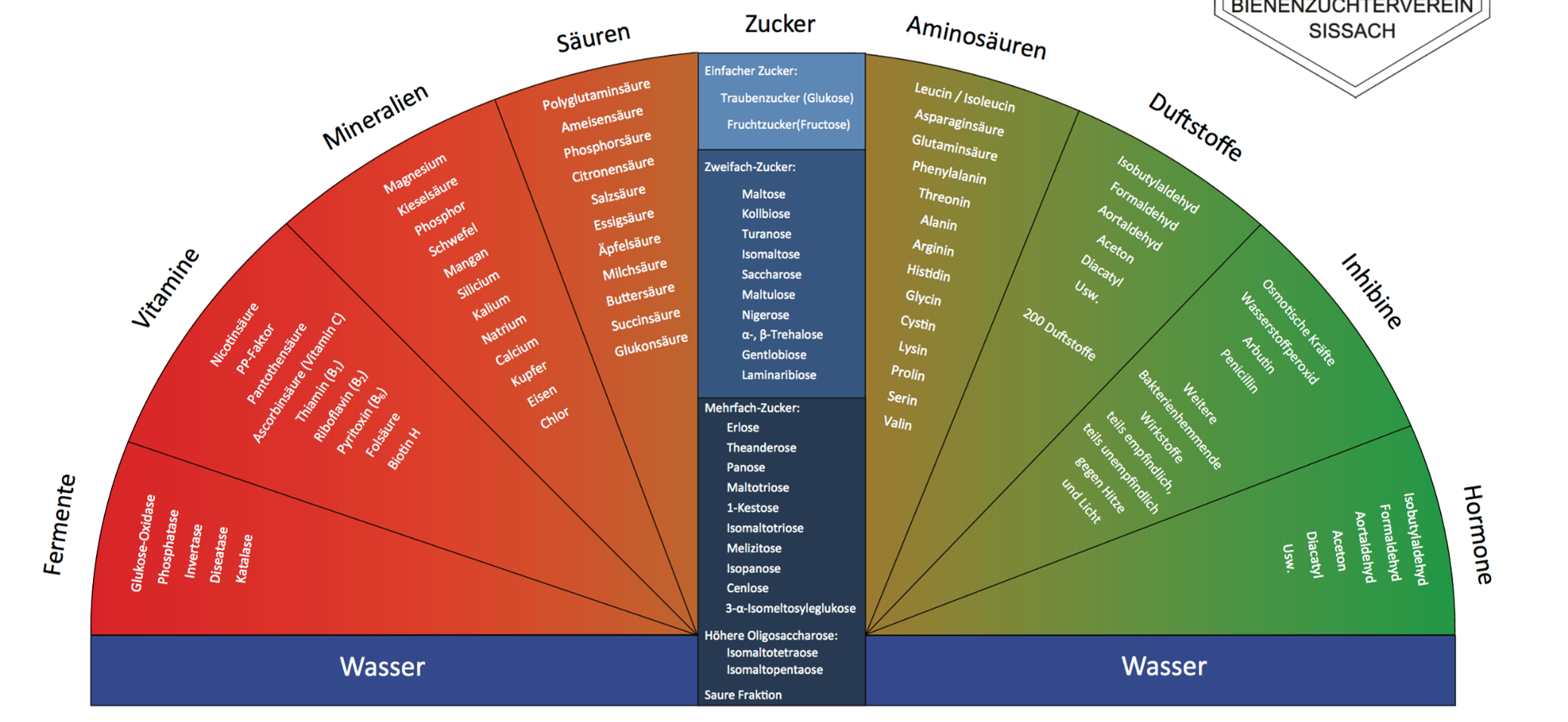
The honey fan. Source: https://www.bienensissach.ch/wordpress/der-honigfaecher/, 21.07.2023
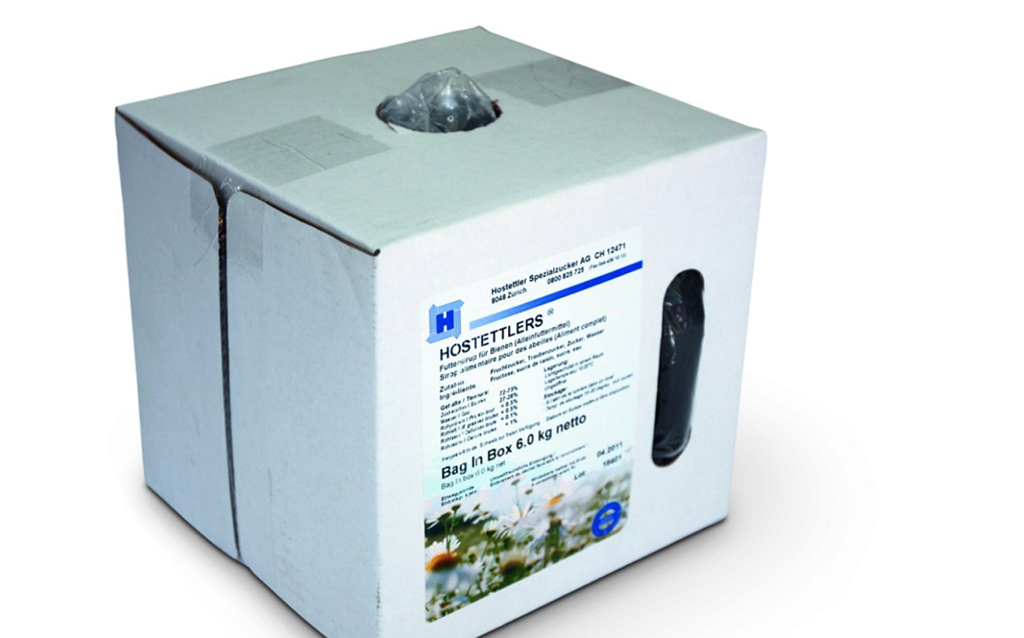
Enzymatically inverted sugar syrup by Hostettler, organic quality.
Solid sugar pastes protect bees from starvation. If necessary, they can be placed on the hive even in cold temperatures and provide an additional food reserve that bees consume readily and quickly. They are useful, for example, in February or March, when nights are still cold and bees have already begun to rear brood, meaning they need a great deal of energy to heat the brood nest. Sugar pastes are not, or are barely, stored as reserves and have little effect on stimulating building and brood-rearing activity.
Liquid feeding is suitable during the warmer season for stimulating building and brood-rearing activity, bridging gaps in forage availability, and what is known as feeding up bee colonies for winter. Feeding bees in autumn before the equinox, as practised in conventional beekeeping, seems of little use under more near-natural beekeeping methods. Colonies kept in a near-natural way are better fed regularly in small amounts. This improves the overall nectar balance throughout the year, strengthens the bees’ health and reduces side effects.
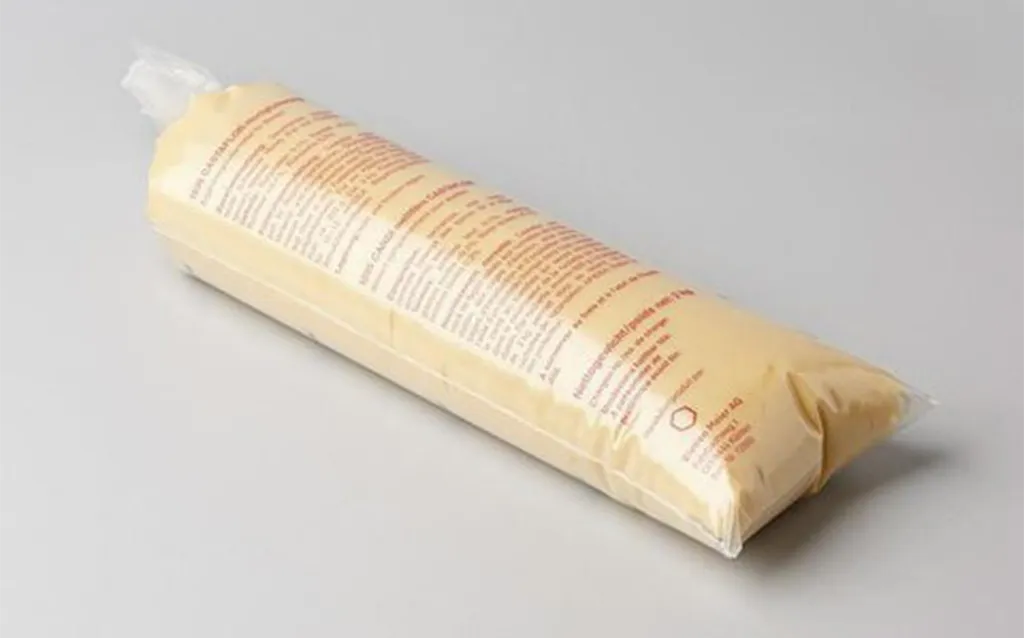
Sugar paste
Enzymatically inverted sugar syrup by Hostettler, organic quality.
André Wermelinger has extensively tested the key aspects of feeding in practice, in line with the beekeeping method, and documented them for others to use.
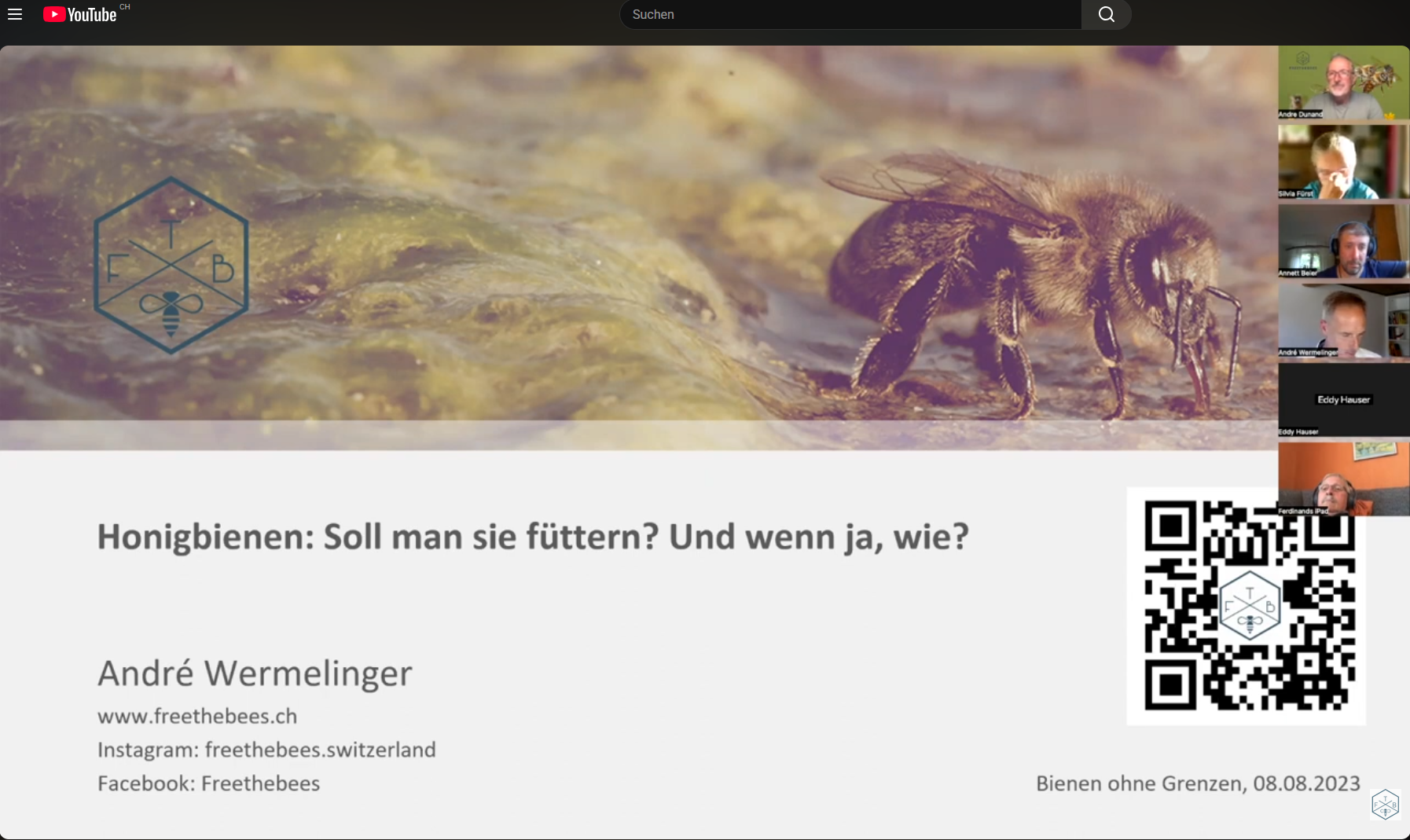
Talk by André Wermelinger on feeding honey bees according to the FreeTheBees beekeeping method.
Talk: Feeding
Keeping and feeding bees are integral parts of FreeTheBees courses.
Course materialsOn 9 October, a class from Collège du Sud came on a school trip to our site in Vaulruz, right among the bees. The stu...
In our conference series “Bees Without Borders”, renowned bee scientist and breeder Dr. Ralph Büchler showed on 28 Oc...
“I observe how nature works” For over 15 years, Heinz Weder has been observing free-living honey bee colonies. He has...
Important information
Important information: The original texts are published in German. The French, Italian and English versions are translated automatically and checked where possible. Please report any errors to bee@freethebees.ch.