Pollen and nectar are essential for our insects. Honey bees in particular need a stable supply of pollen and nectar throughout the entire bee season.
In the agriculturally dominated Swiss Plateau, there are so-called forage gaps, that is, periods when very few plants are in bloom. Honey bees are particularly affected by a lack of continuous nectar flow. Without enough nectar, honey bee colonies enter a kind of emergency and survival mode: they make it through the flower-poor period, but build up their colonies and brood very little. As a result, they can barely gather enough food reserves for the following winter. They often starve miserably as early as late autumn, or at the latest in early spring, when the energy required for brood rearing is high despite the still-cold nights.
With gardens, parks, hedges, etc., conditions for bees in cities are often better today than in the countryside. This is encouraging on the one hand, and alarming on the other. It also shows how easily these challenges can be addressed in the future.
A qualitative assessment of nectar flow and, consequently, the abundance of flowers gives an idea of the critical situation facing wild-living honey bees on the agriculturally dominated Swiss Plateau.
Because the bees develop poorly during the forage gap, the colonies have lost many forager bees and first need to build up their numbers again. It takes around 6 weeks before a bee starts collecting nectar: 21 days as brood, followed by 21 days of in-hive work caring for brood. By then, the bee season is largely over. The colony enters the following winter with insufficient honey reserves.
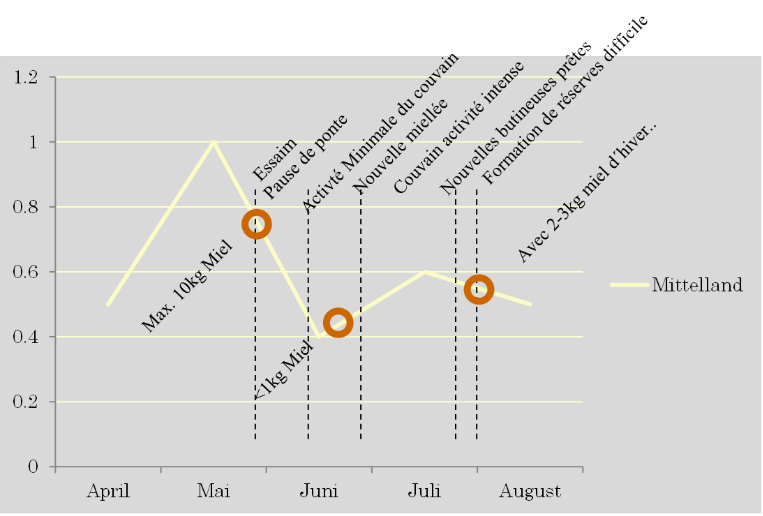
Forage conditions for honey bees on the Swiss Plateau. Qualitative assessment by FreeTheBees.
Modern agriculture focuses on high yields. Crops such as rapeseed provide enormous quantities of nectar in a very short time. There is a scarcity of flowers before and after the rapeseed blooms. Usually, no other plants bloom in a rapeseed field.
But even meadows have become impoverished, for example because of severe over-fertilisation, reflected in yellow fields completely dominated by dandelions. Here, too, a short-lived surplus of nectar is created; what is missing is a longer-lasting bloom with a great diversity of flowering plants.
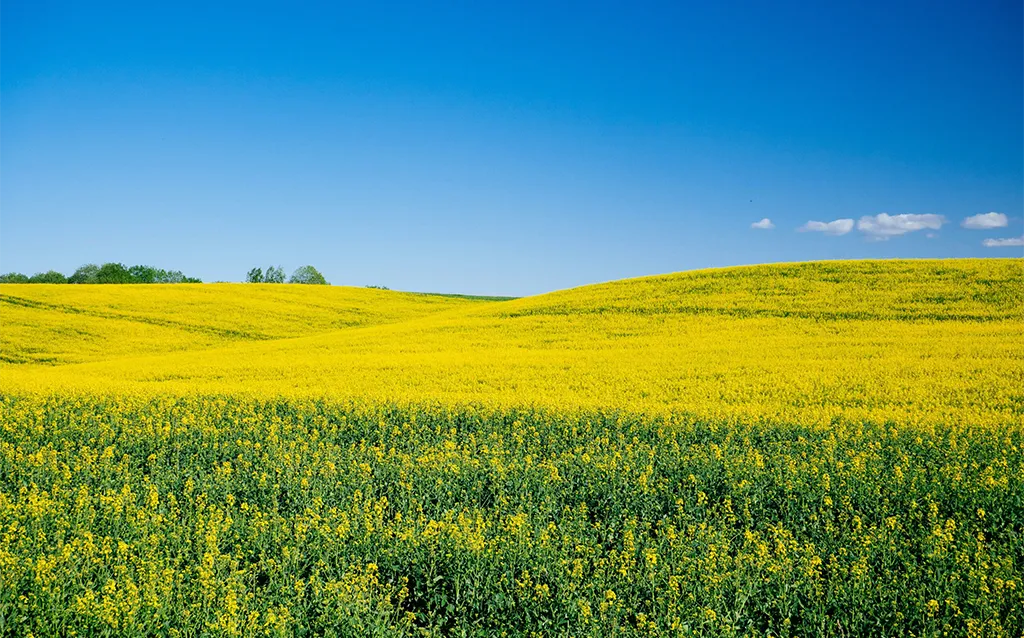
Rapeseed fields are monoculture-like landscapes, however beautiful they may look.
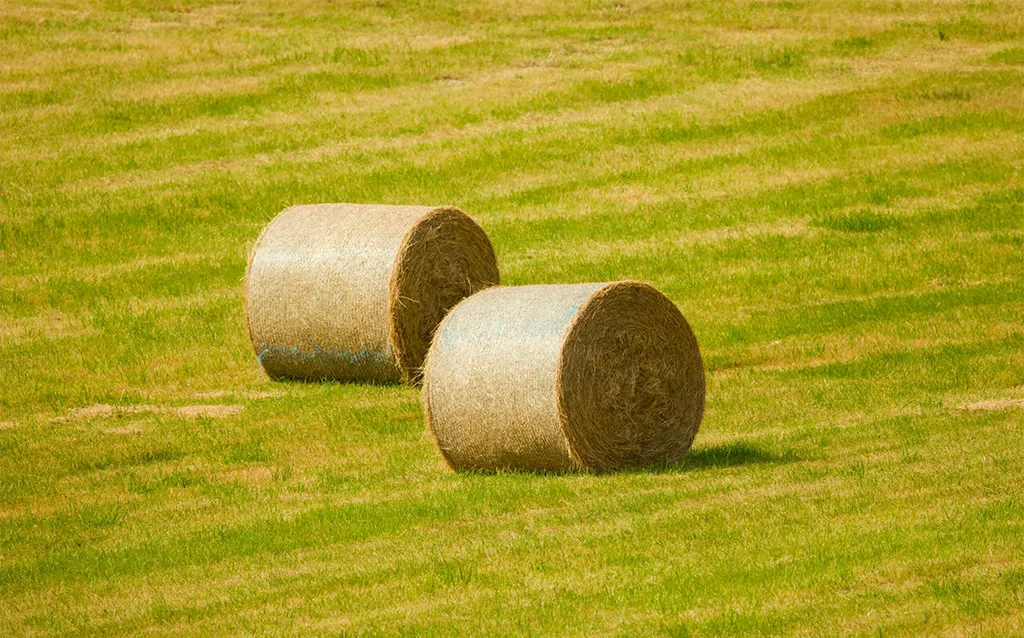
Hay bales and silage, some even wrapped in white plastic.
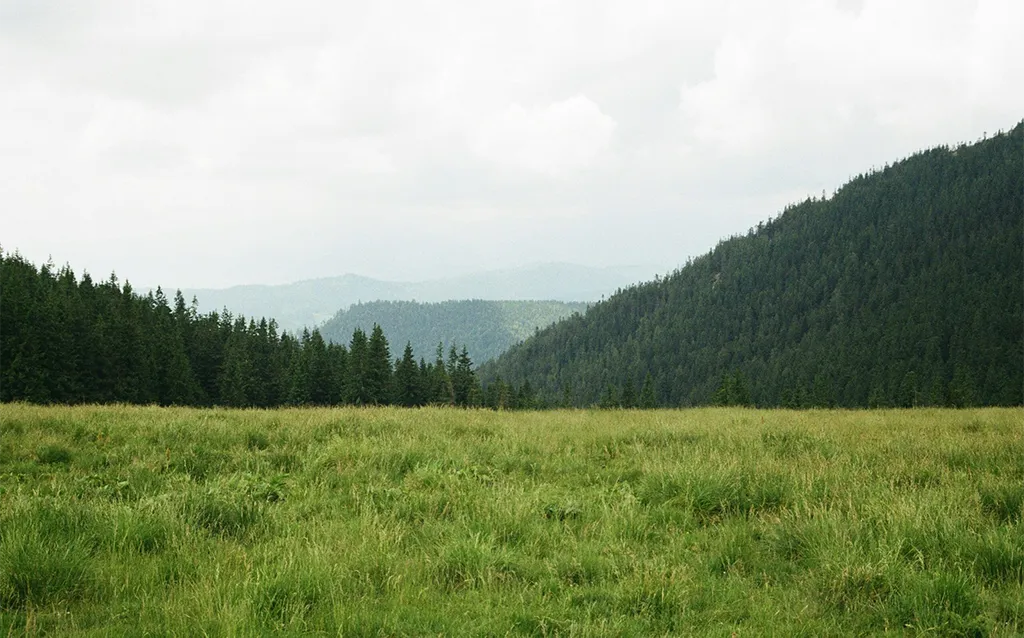
Green desert without floral diversity.
As explained above, planting another fruit tree that blooms in the wonderful month of May, when bees are not short of food, only helps to a limited extent. We focus on targeted measures during precisely those periods when bees lack food. We also focus on species and flower diversity.
For targeted planting, we recommend the forage plant calendar and bee pasture guide from Inforama in Zollikon, Bern, Switzerland.
In your garden, the most effective ways to help bees are to grow native flowering plants, leave patches of bare soil and avoid pesticides. Continuity is important: provide flowers from March to October. Leave faded perennials standing over winter, as they provide nesting material and overwintering sites. With the Bee-Finder, you can select plants that support the wild bees found in your area.
Native wild plants are much more valuable to bees than cultivated varieties or exotic ornamental plants. Top plants include wild teasel, viper’s bugloss, meadow sage, bellflower, wild carrot, scabious, clover and native fruit trees. Double-flowered cultivated varieties often contain neither pollen nor nectar and are useless to bees.
On 9 October, a class from Collège du Sud came on a school trip to our site in Vaulruz, right among the bees. The stu...
In our conference series “Bees Without Borders”, renowned bee scientist and breeder Dr. Ralph Büchler showed on 28 Oc...
“I observe how nature works” For over 15 years, Heinz Weder has been observing free-living honey bee colonies. He has...
Important information
Important information: The original texts are published in German. The French, Italian and English versions are translated automatically and checked where possible. Please report any errors to bee@freethebees.ch.