Getting started in beekeeping requires careful consideration. What goals are you pursuing? Which methods will help you achieve them most effectively? Which bee habitats or hive systems are suitable for practising the method you want to use?
Aspiring beekeepers often take up beekeeping with little reflection. They know someone who already uses a Dadant hive or a Swiss hive and start by buying the same hive system. Or they sign up for a conventional course that offers no transparency about possible beekeeping methods and recommends the same method and hive system to all participants.
It would be more sensible to first give careful thought to your own goals:
You should also consider how much responsibility you want to take on towards bees and nature:
FreeTheBees begins every course with an overview of the different methods. How does a colony of bees live in the wild? How can you achieve maximum honey yields? Several compromises between these approaches are also presented, such as natural beekeeping or extensive honey beekeeping.
INTRODUCTION TO NATURAL BEEKEEPING
Experienced beekeepers often lack knowledge of gentler and more responsible methods. They do not even have to give up honey yields. They just need to work a little differently. Today, it is possible to keep bees entirely without chemicals and achieve similar honey yields to those of conventional beekeeping.
Those who want to take even greater responsibility for bees and nature can devote part of their beekeeping practice to natural beekeeping and providing pollination services, and/or create additional nesting sites for wild honeybees.
Switzerland does not need more beekeepers. In particular, it needs beekeepers who work thoughtfully and responsibly.
FURTHER TRAINING IN NATURAL BEEKEEPING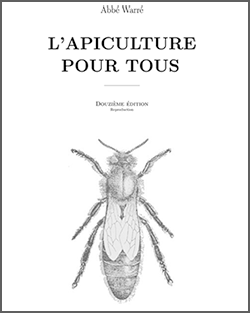
In the 1920s and 1930s, Émile Warré tested many common hive designs over a number of years and developed his own beekeeping method. In our view, this is a very interesting introduction and a method well worth considering for beginners.
You can read the PDF for free in several languages:
FreeTheBees recommends that beginners and young beekeepers initially stick to one approach rather than mixing different approaches from the outset.
FreeTheBees founder André Wermelinger began beekeeping based on Émile Warré’s document «Apiculture pour tous». For his first few years, he followed Warré’s example as closely as possible, which allowed him to learn quickly and effectively.
Only later did André Wermelinger depart from the original teachings and adapt the Warré method to the present day. This led to the following document in 2013: Warré Beekeeping Today in Switzerland
Much time has passed since then. The knowledge of that time has continued to develop and is now shared through a wide range of concepts, courses, materials, YouTube recordings and the FreeTheBees website.
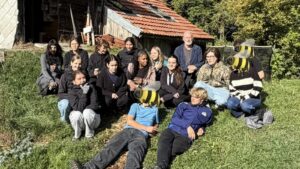
On 9 October, a class from Collège du Sud came on a school trip to our site in Vaulruz, right among the bees. The stu...
In our conference series “Bees Without Borders”, renowned bee scientist and breeder Dr. Ralph Büchler showed on 28 Oc...
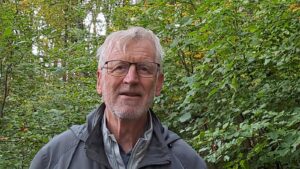
“I observe how nature works” For over 15 years, Heinz Weder has been observing free-living honey bee colonies. He has...
Important information
Important information: The original texts are published in German. The French, Italian and English versions are translated automatically and checked where possible. Please report any errors to bee@freethebees.ch.