What 540 million years of Earth’s history teach us:
«Nature evolves on timescales different from those of humans.»
We humans usually view the world through a very small window of time.
Our personal experience spans a few decades. Historical records go back a few thousand years. Even modern scientific measurements often cover only short periods.
Earth’s history, by contrast, spans billions of years.
Life has existed on our planet for more than 3.5 billion years. During this time, countless species emerged, ecosystems changed fundamentally, continents shifted, climate zones disappeared and new forms of life evolved time and again.
The species living today represent only a small fraction of this long evolutionary history.
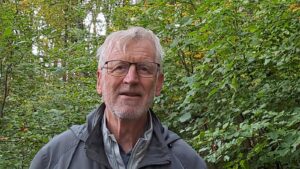
Palaeontologist Prof. Dr. Hugo Bucher, scientific advisor to FreeTheBees and former director of the Palaeontological Institute at the University of Zurich, studies such developments using fossil records of marine organisms. His research reveals how closely climate, environmental change, biodiversity and evolution are interconnected.
This long-term perspective in particular helps us take a more nuanced view of current discussions about biodiversity, agriculture, climate change and species conservation.
Species emerge. Species change. Species disappear. New communities of life emerge.
Earth’s history resembles an ongoing «dance of species»: constant change over immense periods of time.
Palaeontology shows that extinction is not an exceptional state, but part of evolution itself.
More than 99.99% of all species that have ever existed are now extinct.
And yet, in the long term, new diversity has repeatedly emerged after major crises. Mass extinctions led not only to losses, but often also to profound evolutionary changes and the emergence of new forms of life.
Nature has an enormous capacity for adaptation and regeneration. This does not mean, however, that species extinction is harmless.
Evolution often unfolds over thousands to millions of years, while human societies think in terms of decades and generations.
The crucial question, therefore, is not whether «life» will continue in the long term, but under what conditions people, agriculture and today’s ecosystems will be able to exist in the future.
Earth’s history shows that major evolutionary upheavals were often associated with profound changes in the climate system.
According to current research, many mass extinctions were triggered by enormous volcanic events. So-called mantle plumes—rising streams of hot material from within the Earth—caused extensive basalt outpourings. These altered the composition of the atmosphere and disrupted the climate system’s dynamic equilibrium.
As a result, the climate sometimes shifted into new stable states: from cold to warm, from warm to hot, or, in extreme cases, to «superhot» phases.
This is particularly striking in the largest known mass extinction in Earth’s history, at the transition from the Permian to the Triassic, around 252 million years ago.
At that time, approximately 95% of marine species disappeared!
The exceptionally long recovery period following this event is remarkable. While biodiversity recovered significantly within about one million years after many other mass extinctions, recovery after the Permian-Triassic event took around six million years.
Recent research by Prof. Dr. Hugo Bucher and international colleagues suggests that the prolonged crisis was not caused solely by the initial volcanic catastrophe. Rather, the long-term instability of the climate system that arose from it may have been decisive.
Climate models show that the Earth system can shift between different relatively stable states:
The crises themselves often arise during abrupt transitions between these states—at so-called tipping points.
On the one hand, such instabilities led to additional waves of extinction. At the same time, however, they greatly accelerated the evolution of many groups of organisms. Species with a high capacity to adapt were able to occupy new ecological niches and evolve rapidly.
Earth’s history thus shows that evolution does not always proceed slowly and steadily. Under severe environmental stress, it can accelerate considerably.
It is also interesting that, in the long term, life itself helped stabilise the climate—particularly through the global carbon cycle and the rebuilding of large amounts of biomass.
Life and the environment continually influence one another.
Stable ecosystems often function like pyramids: many plants feed herbivores, which in turn provide a food source for a smaller number of predators. High biomass and stable food chains create long-term ecological balance.
During major environmental crises, however, this balance can change fundamentally.
The structure of ecosystems then resembles a spinning top more than a pyramid: biomass declines, food chains become more vulnerable and ecological relationships change more rapidly. Such systems are much more sensitive to additional environmental changes.
Under these conditions, evolutionary processes can accelerate. At the same time, however, the vulnerability of the system as a whole increases.
Earth’s history thus shows that stability is not a permanent state, but a delicate balance between change and adaptation.
Not all evolutionary processes take millions of years.
Insects and microorganisms in particular can adapt remarkably quickly to changing environmental conditions.
A new generation of honey bees emerges every year. This means that selection processes can become visible relatively quickly.
Scientific studies and practical experience show, for example, that honey bee populations can develop the ability to cope with parasites such as the Varroa mite—particularly where natural selection processes are still allowed to take place.
For FreeTheBees, one idea is therefore central:
The honey bee does not need to be saved from evolution—it needs its evolutionary conditions restored.
Natural adaptability does not arise primarily through maximum control, but through:
Diverse landscapes allow organisms to move to more favourable habitats and promote different adaptation strategies. Monotonous and highly standardised environments offer far fewer such opportunities.
What matters is not only the stability of a system, but above all the speed of environmental change and the availability of suitable refuges.
The honey bee is not only a pollinator, but also a bioindicator.
Where honey bees can no longer survive in the long term without intensive human support, many other animal and plant species are often under pressure too.
Agriculture, too, merits a nuanced perspective.
Historically, traditional small-scale agriculture created new habitats in many places:
As a result, biodiversity even increased for a time in many regions.
It was only with the strong industrialisation and intensification of agriculture from the 20th century onwards that this balance increasingly changed:
FreeTheBees therefore does not treat «agriculture» as a problem across the board.
What matters instead is how agriculture is practised—and whether natural living and adaptation processes can continue.
Science is not a rigid dogma.
It thrives on:
Complex topics such as biodiversity, agriculture, beekeeping and ecology in particular require different points of view.
FreeTheBees therefore deliberately seeks to encourage people to:
It is not ideologies that should be at the centre, but the honest search for sustainable solutions for people and nature.
Above all, Earth’s history shows one thing: nature is greater, older and more complex than we often assume.
This puts human arrogance into perspective—but not our responsibility.
For even though life continues to change and renew itself over the long term, the decisions we make today help determine the conditions in which future generations will live.
And that is precisely why respectful dialogue about new perspectives is worthwhile.
Prof. Dr. Hugo Bucher
Research areas:
On 9 October, a class from Collège du Sud came on a school trip to our site in Vaulruz, right among the bees. The stu...
In our conference series “Bees Without Borders”, renowned bee scientist and breeder Dr. Ralph Büchler showed on 28 Oc...
“I observe how nature works” For over 15 years, Heinz Weder has been observing free-living honey bee colonies. He has...
Important information
Important information: The original texts are published in German. The French, Italian and English versions are translated automatically and checked where possible. Please report any errors to bee@freethebees.ch.