Article by André Wermelinger, Founding President and Managing Director of FreeTheBees
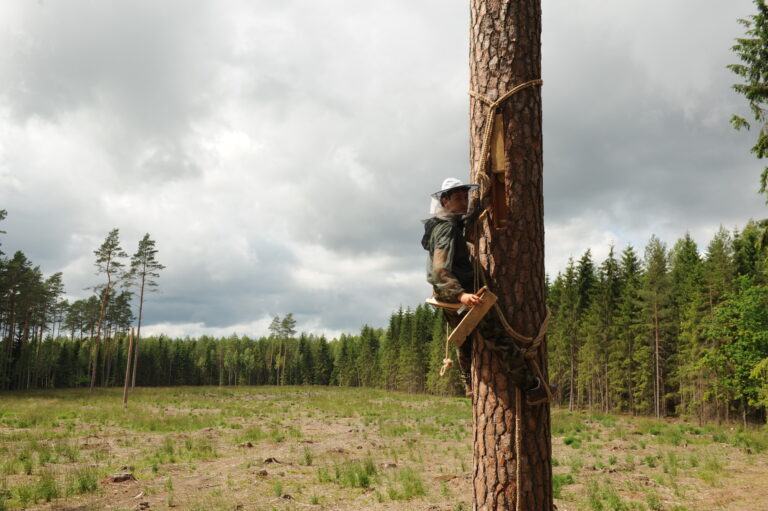
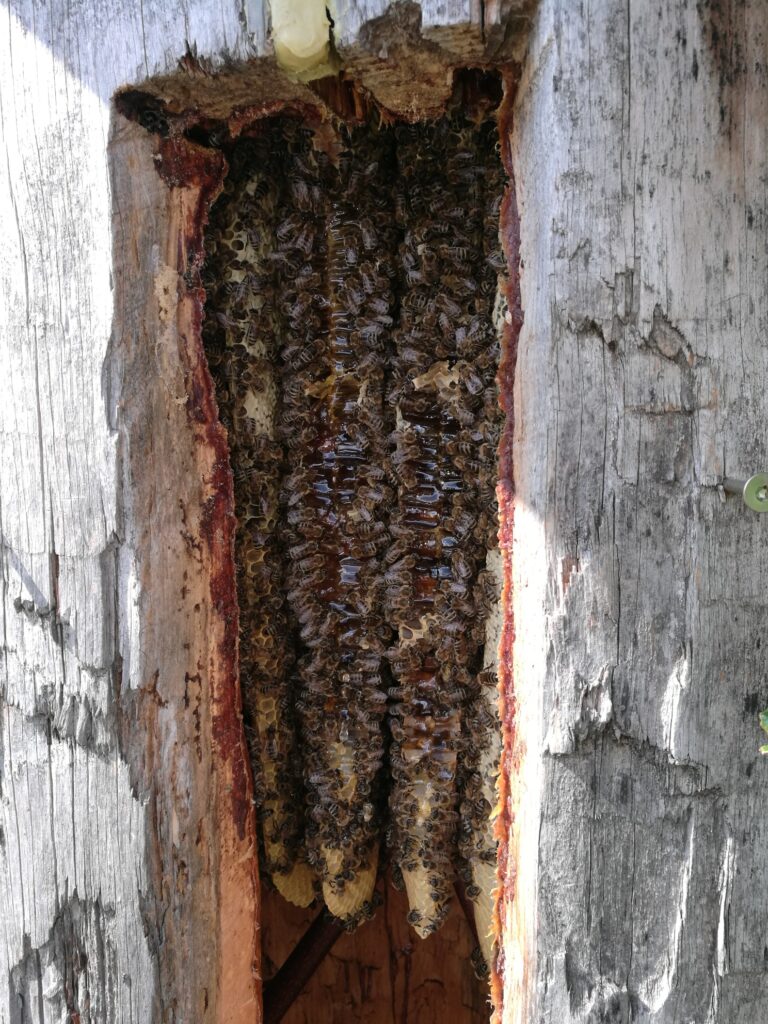
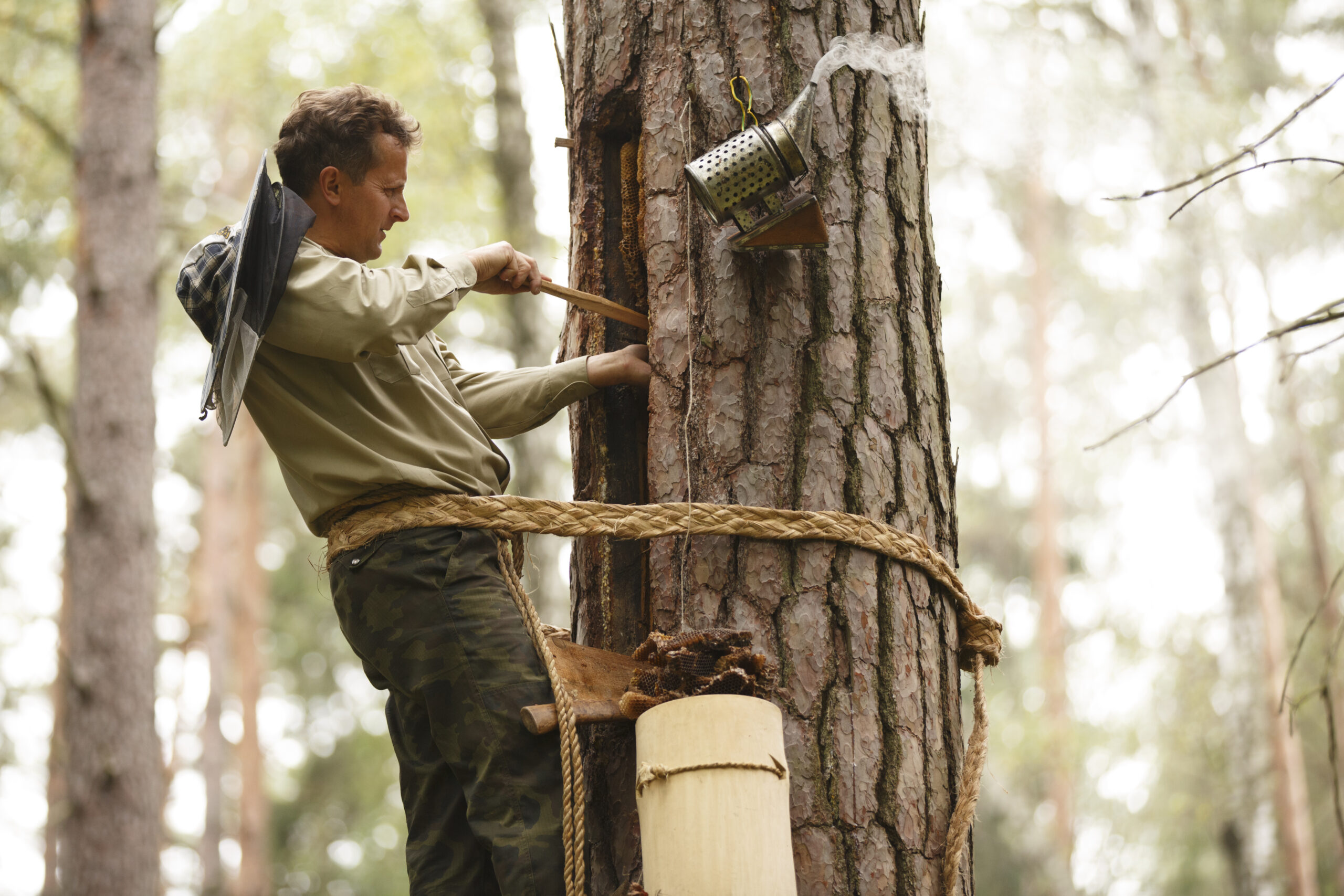
New and modern is not always better: The cultural heritage craft of the medieval tree beekeeper enables us today to create ecologically valuable tree cavities in order to promote biodiversity in the forest. In addition to free-living honey bees, countless other species and species communities benefit from these artificial tree cavities. Furthermore, tree beekeeping, which was once focused on the production of honey and wax, now represents a pioneering and innovative approach to responsible, species-appropriate and nature-oriented beekeeping.

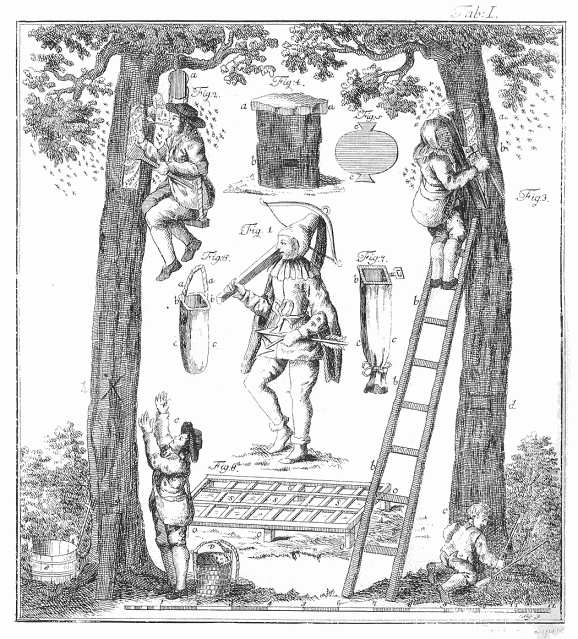
In the Middle Ages, tree beekeepers were the first commercial producers of honey and wax. They were no different from today’s beekeepers, except that they held a higher social status: wax was valuable for making candles, and honey was the only available sweetener.

Tree beekeeping is the most natural form of beekeeping possible. It is more important today than ever. On the one hand, it raises beekeepers’ awareness of natural processes. On the other, tree cavities have become rare in our time and benefit not only bees but countless other species and species communities, some of which live in symbiosis with the honey bee and have a positive effect on bee health.
The tree beekeeper’s cavity offers honey bees significant advantages over keeping them in conventional beehives:
Especially today, when beekeepers consider keeping bees in beehives to be normal, tree beekeeping is becoming increasingly important. For the first time, beekeepers can once again observe how their bees would actually live in a natural habitat. They can draw conclusions about their current beekeeping practices and learn how intensively they manage their production colonies and how strongly they influence the bees’ way of life to increase honey yields.
Tree beekeeping raises awareness of natural and human-influenced processes in the beehive.

Forest beekeeping in living trees largely disappeared from Europe at the end of the 19th century. Fortunately, this cultural heritage craft survived in the Shulgan Tash Nature Reserve in the southern Urals in Russia. The Bashkirs passed it down from generation to generation, from father to son, from the Middle Ages to the present day, and continued practising it.
At Shulgan Tash in the Urals, Dr Hartmut Jungius and Dr Przemysław Nawrocki (both now members of FreeTheBees’ Scientific Advisory Board) learned about this cultural heritage craft of tree beekeeping through a WWF project funded by the Swiss Agency for Development and Cooperation (SDC), and decided to bring this traditional craft back to Poland.
This initiative led to the creation of more than 150 tree beekeeper’s cavities in living trees and many more log hives. Many of them are in Polish national parks.
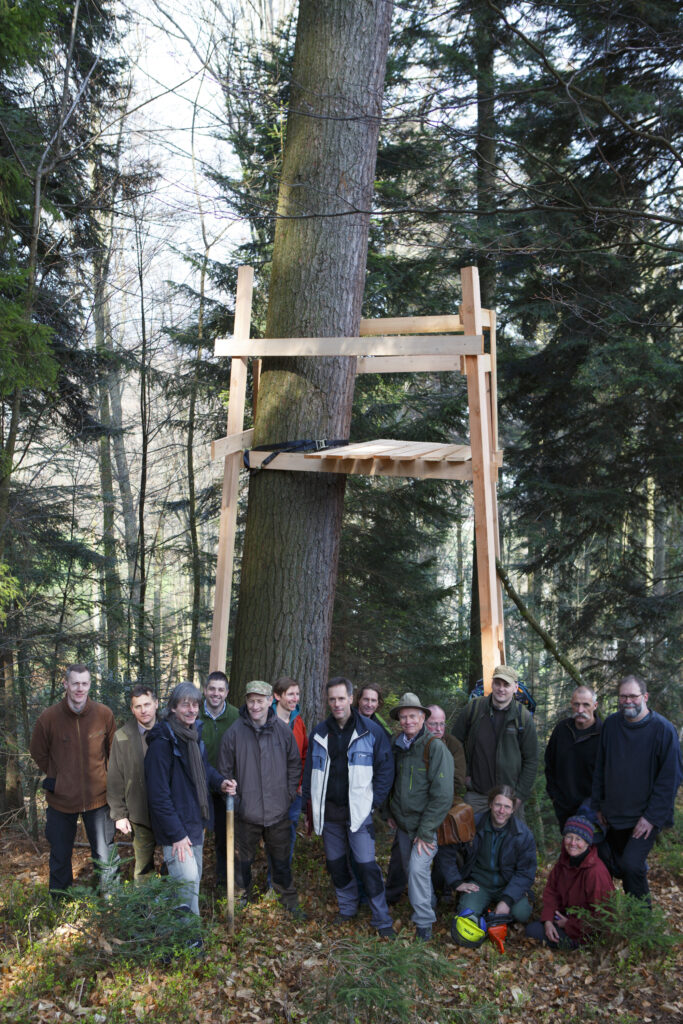
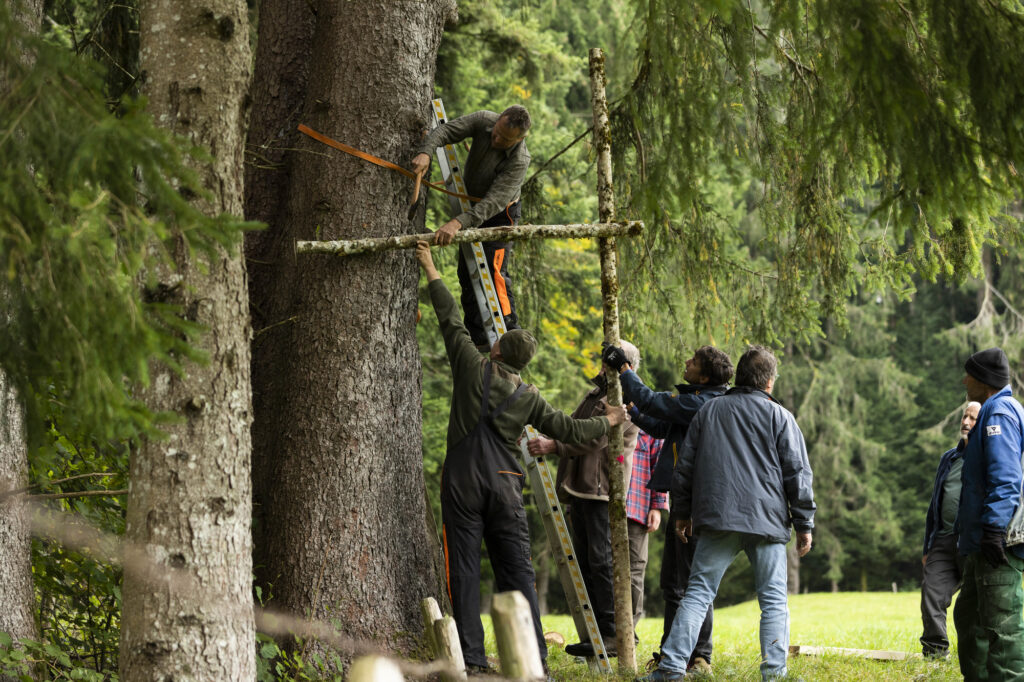
FreeTheBees then reintroduced tree beekeeping to Switzerland in 2014. During an internationally attended tree beekeeping course, the first tree hives were created in Kriens, Lucerne, and aspiring master tree beekeepers were trained. Since then, countless courses have been organised and held not only in Switzerland, but also in Germany, Belgium and England. This was made possible in part by the active support of Dr Frank Krumm, a renowned forest researcher who is also a member of FreeTheBees’ Scientific Advisory Board.
The tree beekeeping movement is growing rapidly and continues to inspire sustainability-minded beekeepers far beyond Europe, as far as California!


Thanks to many years of experience and numerous findings from both older and more recent research, we are now able to create tree cavities to support biodiversity.
Tree cavities are important ecological features that have become rare. In addition to honey bee colonies, countless animal species and species communities benefit from this valuable habitat.
The FreeTheBees tree cavity project aims to create 335 tree cavities in just 3 years. We will soon have completed one third of the planned cavities.
The tree cavities are still created using this ancient cultural craft. Since our focus is on biodiversity rather than beekeeping, we adapt some features of the original tree beekeeper’s cavity. For example, the entrance hole is made more like a woodpecker hole, and use of the cavities is not reserved for bees alone but permitted to all tree-cavity-dwelling species. We also do not smooth the inner walls of the cavities as meticulously as tree beekeepers once did, but instead imitate the natural, textured and rough surface of natural tree cavities.


By creating tree cavities, we provide not only highly important habitats for tree-cavity-dwelling animal species and species communities, but also unique infrastructure for future scientific research projects—an infrastructure that has not existed before.
For honey bees, tree cavities are a key element in protecting and promoting the free-living bee colonies that still occur in very small numbers throughout Switzerland.
Protecting and promoting free-living honey bee colonies is essential:
From a scientific perspective, we currently know relatively little about tree cavities and their inhabitants. There are countless unanswered questions, for example about how tree cavities are used over time and the different relationships between species and species communities.
A single bee colony in a hollow tree appears to live alongside at least 30 other insect species, 170 mite species and 8,000 microorganisms, and very little is known about the relationships between them. And this is despite the fact that our current knowledge gives us good reason to suspect that these relationships are relevant to bee health. Future research will very likely reveal countless connections between honey bees and the biodiversity interacting with them in the fascinating and complex forest ecosystem.
We draw on a considerable number of volunteer hours and your donations to carry out projects of this scale. The scope and professionalism of our work have long exceeded what can be achieved through voluntary work alone.
We have the concepts, knowledge and experience. Your donation determines how quickly we can make progress.
Become part of our innovative, impact-oriented and practical solutions. We would be happy to send you detailed project proposals and reports on completed projects. Find more information about the tree cavity project here.
Find out more about tree beekeeping.
We thank all our patrons and supporters for their support to date!
You can find more information about our projects in our brochure .

On 9 October, a class from Collège du Sud came on a school trip to our site in Vaulruz, right among the bees. The stu...
5 November 2026
0 comments
In our conference series “Bees Without Borders”, renowned bee scientist and breeder Dr. Ralph Büchler showed on 28 Oc...
30 October 2026
0 comments
“I observe how nature works” For over 15 years, Heinz Weder has been observing free-living honey bee colonies. He has...
30 October 2026
0 comments
Important information
Important information: The original texts are published in German. The French, Italian and English versions are translated automatically and checked where possible. Please report any errors to bee@freethebees.ch.