In the article, our FreeTheBees project manager Dr. Francis Cordillot calls for support: Who knows of wild bee colonies in trees?
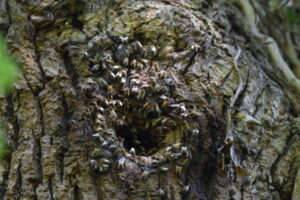
Millions of years ago, honeybees lived in the wild in Western Europe without human assistance. After the last Ice Age and before beekeeping intensified from around 1860, the native «Western honeybee» (Apis mellifera) inhabited mainly forest trees north of the Alps, as they presumably offered the best chance of survival through cold winters and protection from honey robbers.
Today, the authorities responsible for (managed) honeybees assume that honeybees are no longer found in the wild. The «Swiss BeeMapping» project, initiated by ecolingua Cordillot and our association FreeTheBees, therefore investigates whether any free-living honeybee colonies remain in Switzerland.
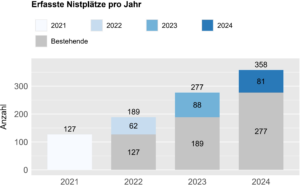
Since 2021, more than 200 reports of free-living honeybee colonies have already been collected, observed and documented. Various stakeholders can help improve our knowledge of honeybees left to their own devices in nature.
Find further information in the article and on our website.
Wild-living honey bees need old trees with cavities and structurally diverse forests. Raphaèle Piaget, member of the ...
We would like to extend our sincere thanks to 20 Minuten and Reto Bollmann for the article published on 7 October abo...
Important information
Important information: The original texts are published in German. The French, Italian and English versions are translated automatically and checked where possible. Please report any errors to bee@freethebees.ch.