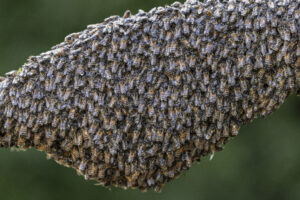
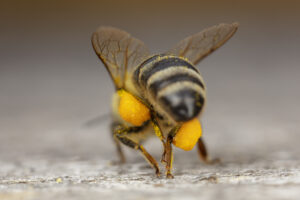
Wild honey bee colonies—both truly wild (in trees and buildings) and simulated wild (in smallhives)—were studied to determine their life-history traits, to see if these traits have changed now that these colonies are infested with Varroa destructor . Most colonies (97%) survive summers, but only 23% of founder (first-year) colonies and 84% of established colonies survive winters. Established colonies have a mean lifespan of 5–6 years and most (87%) have a queen turnover (probably by swarming) each summer. A population model shows that these life-history traits produce a stable population of colonies. Remarkably, the suite of colony life-history traits found in the 2010s (with V. destructor ) matches that found in the 1970s (without V. destructor ). It seems likely that the wild colonies living near Ithaca, NY, possess defenses against V. destructor that are not costly.
Nella nostra serie di conferenze «Api senza frontiere», il rinomato scienziato e allevatore di api Dr. Ralph Büchler ...
Aggiornato al 15 settembre 2026 Il 20 maggio 2026 è stata lanciata l’iniziativa popolare federale «Per garantire l...
Important information
Informazioni importanti: i testi originali sono pubblicati in tedesco. Le versioni francese, italiana e inglese sono tradotte automaticamente e verificate nella misura del possibile. Vi preghiamo di segnalare eventuali errori a bee@freethebees.ch.